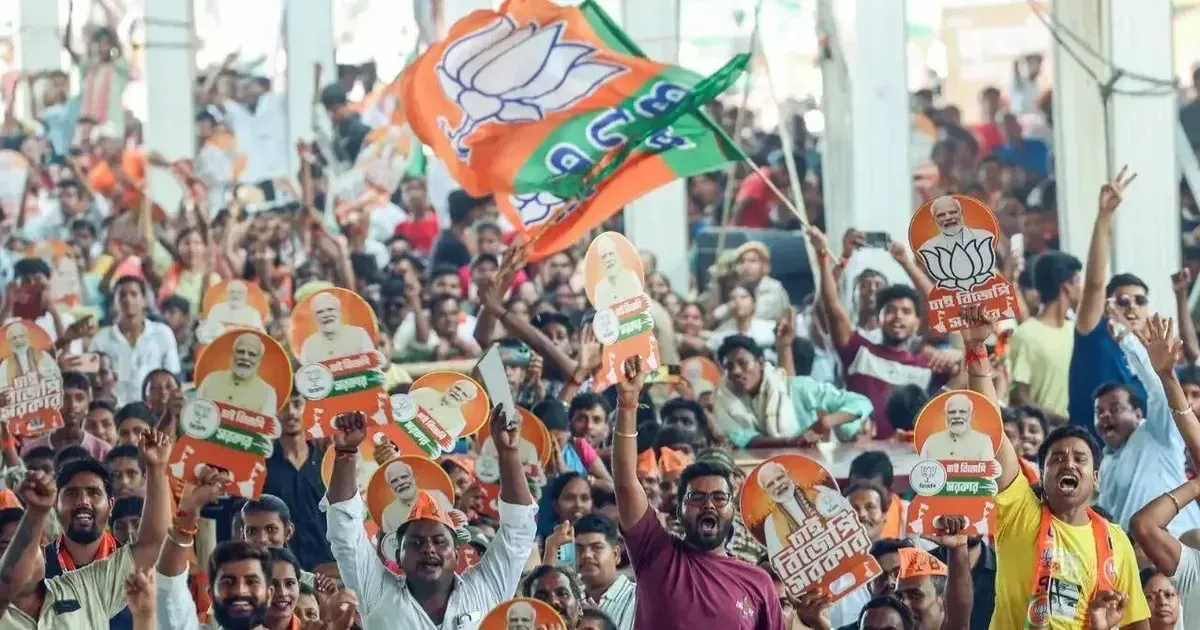
The West Bengal trend gives the BJP a stronger claim in a state long dominated by regional politics. It also forces incumbents to explain whether anti-incumbency, organization or national messaging drove the shift. Election officials are still counting, but the early pattern already changed the political conversation. The result could influence coalition talks beyond the state. Indian state election results revealed a realignment of regional power as counting stabilized across two critical battlegrounds. Early trends on May 4, 2026, indicated a major shift in the political hierarchy of Tamil Nadu and West Bengal, where established incumbents faced unexpected challenges from both new challengers and national opposition forces.
Data from the initial counting rounds showed the Thamizhaga Vettri Kazhagam (TVK) nearing the majority threshold in Tamil Nadu. Actor-turned-politician Vijay appears positioned to displace established political dynasties that have dominated the southern state for decades. Early projections placed the TVK within reach of a governing majority, leaving the veteran AIADMK struggling to maintain its seat share in traditional rural belts.
AIADMK candidates struggled to maintain their presence in traditional strongholds as urban centers swung toward the TVK.
Across the state, counting stations reported a consistent lead for TVK representatives in both urban and semi-urban constituencies. While the AIADMK has historically traded power with the DMK, the 2026 results suggest a departure from this bipolar system. Officials at several counting centers noted that the TVK maintained a narrow but steady lead through successive rounds of tallying. The momentum for Vijay follows a high-energy campaign focused on administrative transparency and a break from legacy party structures.
West Bengal Voting Realignment and Safety Issues
In West Bengal, BJP candidates established leads in over 80 seats, including several traditionally secure Trinamool Congress (TMC) strongholds. The party showed unexpected strength in Muslim-majority districts, which suggests a possible shift in voter allegiances after years of consistent TMC dominance. This pattern emerged as counting progressed in districts that have historically favored secularism-focused campaigns over nationalistic narratives.
Regional Bloc Test
Ratna Debnath, the mother of the RG Kar hospital victim, held a clear lead in the Panihati constituency as a BJP candidate. Her campaign focused heavily on women’s safety and the memory of her daughter, a message that appeared to resonate beyond her local district. Debnath led against TMC representative Tirthankar Ghosh throughout the morning sessions. Her performance is a metric for public sentiment regarding law and order within the state capital's periphery.
Voters in Panihati appeared to prioritize local safety concerns over traditional party loyalty.
Chief Minister Mamata Banerjee urged party workers to stay firm, asserting the TMC is still ahead in many areas. Early figures showed the TMC leading in 71 seats, but the party faces a sustained challenge in converting high voter turnout into actual seat victories. Secularism campaigns used by the TMC struggled to contain the inroads made by the BJP in regions where incumbency fatigue was reported during the various voting phases.
National Trajectory and Majority Thresholds
National tallies reflected a broader surge for the BJP, which held leads on 121 seats across the day’s active counting zones. These figures represent a consolidation of the party's influence in states where it previously functioned as a secondary opposition. Results in Bengal, specifically the gains in Muslim-majority belts, indicate a changing electoral math that complicates the TMC's future strategy. High voter turnout across West Bengal appears to have benefitted the opposition more than the ruling party in several key districts.
Mamata Banerjee urged party workers to remain firm, asserting the Trinamool Congress is still ahead in the overall tally.
Officials confirmed that voter participation remained high throughout the phased election cycle, contributing to the volatility of the early results. Many incumbents within the TMC found themselves trailing by margins that exceeded earlier polling predictions. Reports from local monitors indicate that the shift in the Muslim-majority areas was not isolated to a single district but appeared as a broader trend across the state's eastern borders.
Successful campaigns in these regions often relied on localized grievances rather than broad ideological messaging. Every round of counting further narrowed the gap between the primary contenders in West Bengal. Preliminary data indicates that the BJP surpassed its 2021 performance in almost every analyzed district. This trajectory places the TMC in a defensive posture as the final tallies are verified by the election commission.
Counting will continue into the evening to confirm whether the TVK can officially cross the majority mark in Tamil Nadu. The possibility of a minority government or a coalition remains a topic of discussion among political analysts if the final seats fluctuate. Regardless of the final tally, the 2026 results have already established a new political reality for the two states. Final verification will depend on the last certified rounds of electronic voting machine data and the election commission's official declarations.
BJP Gains and TVK’s Rise Are Breaking Two Regional Political Systems
The emergence of the TVK in Tamil Nadu is a structural break in a political system that has relied on two-party stability for over fifty years. Vijay’s success suggests that celebrity influence still carries immense weight in the south, but it also reflects a deep frustration with the existing administrative machinery. By bypassing traditional alliance structures, the TVK has forced a complete recalculation of how power is brokered in Chennai. The shift could marginalize the AIADMK if it fails to modernize its recruitment and messaging before the next local cycle.
In West Bengal, the BJP’s gains in Muslim-majority constituencies challenge the long-held assumption that certain demographics are immune to its platform. If these leads translate into permanent victories, the TMC will lose its most reliable electoral firewall. The prominence of Ratna Debnath’s campaign further highlights how singular, tragic events can override broader economic or secular narratives. Security and accountability have become the primary currency of Bengal politics. The election signals that regional strongholds are no longer impenetrable, as voters demonstrate a willingness to experiment with alternative governance models when local safety and integrity are perceived to be at risk.