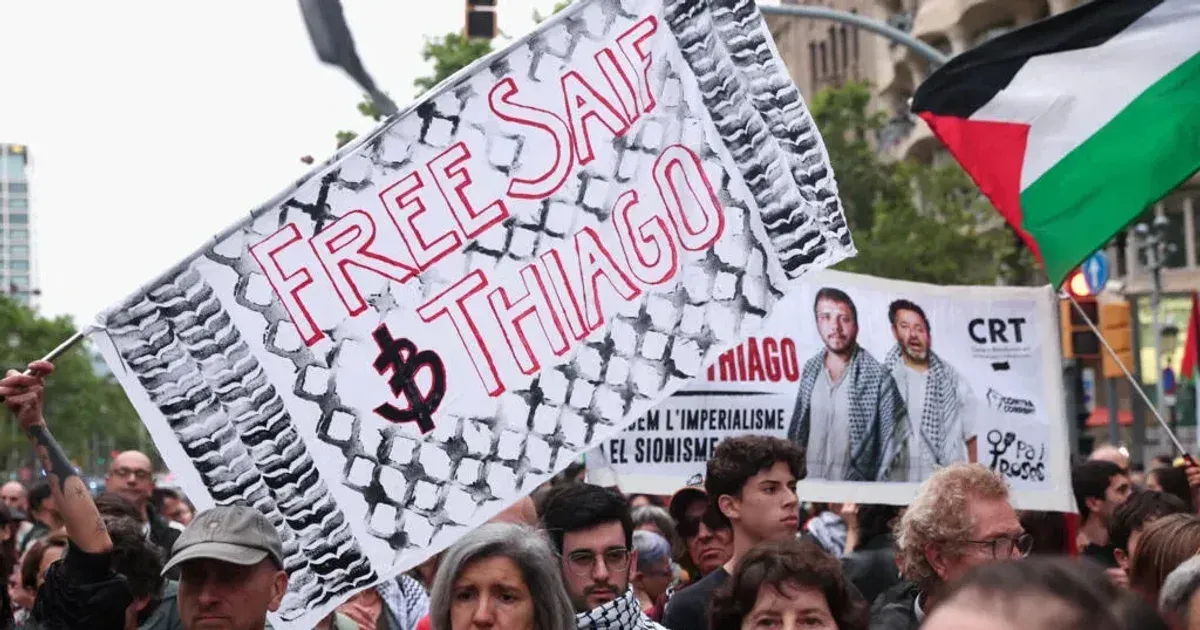
Israeli authorities presented two foreign nationals in court on Sunday following the high-seas interception of a multi-vessel aid convoy earlier this week. Proceedings, which took place on May 3, 2026, involved Spanish citizen Saif Abu Keshek and Brazilian national Thiago Avila.
Rights groups representing the men confirmed that an Israeli judge granted a request by security services to hold the pair for an additional 48 hours. This interrogation period focuses on their participation in a coordinated attempt to breach the maritime blockade of the Gaza Strip. The court session occurred just three days after Israeli naval commandos boarded dozens of vessels in the Mediterranean Sea.
Saif Abu Keshek and Avila were among the 175 people detained during the operation. Legal representatives for Avila raised immediate concerns about his physical welfare during the hearing. The Brazilian activist told his lawyers that he suffered multiple physical assaults while in Israeli custody.
"I was beaten so badly in Israeli custody that I passed out twice," Avila told his legal counsel.
Medical documentation of these injuries was not immediately released to the public, though the defense team insisted that the marks of abuse were visible. Defense lawyers argued that the use of force during interrogation violated international human rights standards and called for an independent medical evaluation. The judge, however, moved forward with the detention extension to allow investigators more time to process evidence from the seized ships.
The Interception of the 50-Vessel Convoy
Israeli naval forces intercepted the flotilla on Thursday as it moved through international waters toward the Palestinian territory. The group of vessels, which numbered more than 50, originated from ports in France, Spain, and Italy. Organizers stated the mission was intended to deliver essential humanitarian supplies and construction materials to civilians in Gaza.
Records from the Israeli military indicate that the boarding operations occurred without large-scale fatalities, though several activists were treated for minor injuries. The 175 individuals on board represented various nationalities, including activists, journalists, and European political figures. Security personnel transferred the majority of the passengers to a processing center before initiating deportation proceedings for most of the group.
Spanish and Brazilian diplomatic officials are monitoring the cases of their respective citizens closely. Madrid has requested regular updates on the legal status of Abu Keshek, while Brasilia sought clarification on the allegations of physical mistreatment involving Avila. Consular access is typically granted in such cases, but the specific security protocols surrounding the flotilla interception have delayed some meetings.
Humanitarian Goals and Blockade Legalities
International maritime law provides a complex framework for such encounters on the open sea. Israel maintains that its blockade is a necessary security measure to prevent the smuggling of weapons into Gaza. Activists argue the blockade constitutes collective punishment and claim their right to deliver aid is protected under the Geneva Conventions. The current legal dispute centers on whether the detention of individuals in international waters complies with these various treaties.
Detailed manifests from the vessels listed medical supplies, food, and solar equipment as the primary cargo. Israeli inspectors are currently offloading these items at the Port of Ashdod to screen for contraband. Officials stated that legitimate humanitarian goods would eventually be transferred into Gaza via land crossings, provided they meet security requirements.
Efforts to challenge the blockade through sea voyages have occurred intermittently for over a decade. This specific 50-vessel mission was the largest organized effort in several years, involving a coalition of European and South American organizations. The court is expected to reconvene on Tuesday to determine if further detention is necessary or if the activists will face formal charges. The additional 48 hours also gives consular officials a short window to press for access before the next hearing.
The Abuse Claim Could Turn Detention Into a Diplomatic Crisis
Judicial outcomes in maritime interception cases often hinge on the specific location of the seizure and the intent of the participants. By extending the detention of Abu Keshek and Avila, the Israeli legal system is signaling a rigorous approach to the interrogation of foreign activists who lead such convoys. The strategy likely aims to uncover the logistical and financial networks supporting the 50-vessel fleet.
A conviction for breaching a closed military zone or resisting the lawful orders of naval personnel could lead to long-term entry bans for the activists. Diplomatic friction may intensify if the allegations of physical abuse are confirmed by independent medical reports. Brazil, in particular, has historically taken a firm stance on the treatment of its nationals in foreign custody. The final ruling in this case will establish whether Israel views these individuals as simple protesters or as active participants in a coordinated breach of state security. The determination will dictate the severity of the sentences and the future of maritime aid efforts.