The Central Australia case has become a legal proceeding inside a grieving community. Police are trying to keep the investigation focused on evidence while public anger remains intense. Northern Territory detectives filed murder and sexual assault charges against a man in connection with the death of a 5-year-old girl. This legal action, confirmed on May 3, 2026, follows a disappearance that has already destabilized the social fabric of the remote interior. Police said the charge followed the discovery of the child's body and an active investigation into the circumstances of her death. Authorities have emphasized that the investigation remains in an active phase as they gather more witness testimony. The child's death has already placed pressure on police, social services and local leaders. Officials have to protect the integrity of the prosecution while acknowledging that the case has deepened mistrust in a region already dealing with safety and justice disputes.
Official records indicate the defendant faces counts of murder and sexual assault. Local officials have not released the identity of the accused to protect the integrity of the ongoing investigation and ensure a fair trial in a region currently experiencing high emotional volatility. The prosecution expects to present a complete brief of evidence when the case returns to court in the coming months.
Legal Proceedings and Initial Charges
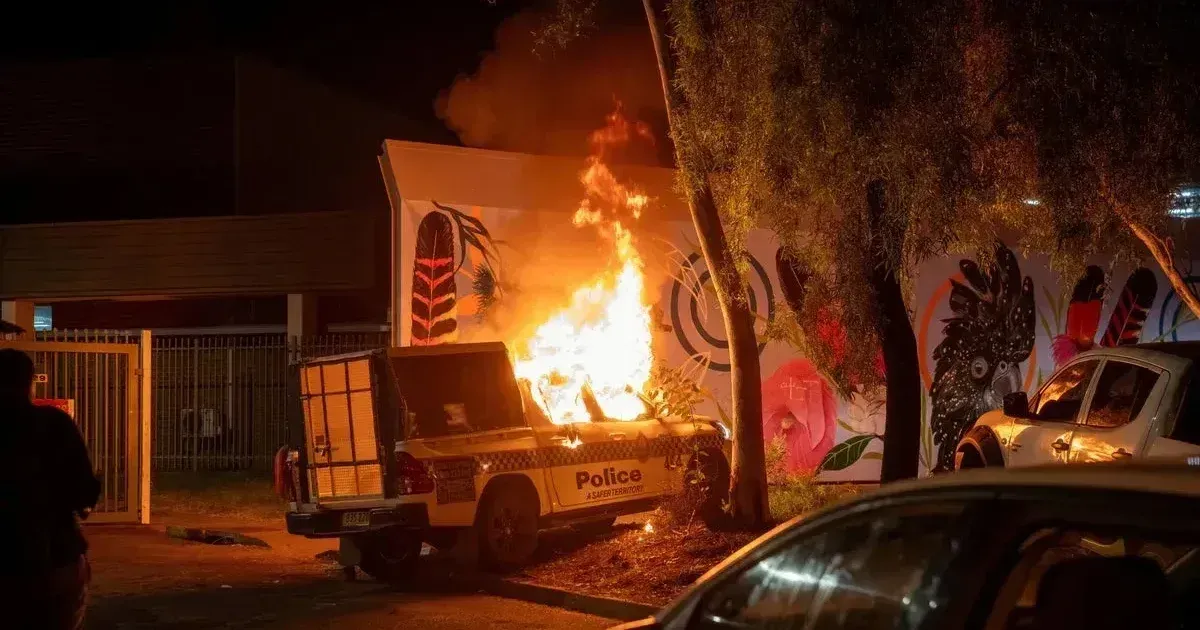
Violence erupted across the central Australian town shortly after the child was reported missing. Residents, gripped by grief and anger, engaged in localized clashes that forced police to deploy additional resources to maintain public order. Several public buildings and private vehicles sustained damage during the first forty-eight hours of the unrest. Law enforcement agencies have since established a restricted zone to prevent further escalation between grieving factions.
Maintaining security became a primary objective for the Northern Territory Police Force as they manage the dual burden of a major crime investigation and civil unrest. Patrolled streets and increased surveillance now define the atmosphere in a town usually known for its isolated quietude. Officers from specialized tactical units arrived via charter flights to strengthen the local presence while the community processes the details of the tragedy.
Tensions remain elevated while forensic teams complete their work at the scene.
Prosecutors must now establish a precise timeline for the events leading up to the discovery of the girl's body. Evidence collection in the arid terrain of Central Australia presents unique logistical hurdles, requiring specialized equipment and experts flown in from coastal cities. Dust and extreme temperatures can degrade biological samples, making rapid recovery essential for the forensic team. Laboratory analysis of these items will likely form the backbone of the state's case against the suspect.
BBC World reported that the girl’s death sparked violence in the Central Australian town where she disappeared.
Community Unrest and Public Safety Measures
Legal experts note that murder cases involving minors in the territory often carry significant weight within the justice system. The intersection of violent crime and community-wide upheaval creates a complex environment for both the defense and the prosecution during early bail hearings. Judges typically consider the risk of further public disturbance when deciding on the remand status of a high-profile defendant. Courts may also weigh security concerns when managing early hearings in such volatile circumstances.
Community leaders have called for calm, urging residents to allow the legal process to move forward without further intervention. These pleas for peace come as local infrastructure sustained minor damage during the initial wave of unrest following the arrest. Support services have been mobilized to provide counseling for those affected by the disappearance and the subsequent violence. Ensuring that the legal system can operate without the threat of outside interference is now a priority for regional administrators.
Grief has effectively paralyzed the small desert settlement.
Additional support could be requested if local police cannot contain continuing instability. Authorities are monitoring social media and communication channels to identify potential flashpoints before they result in more property damage or physical injuries. Public transport routes into the area have been modified to avoid the most sensitive neighborhoods. Officials are desperate to avoid a repeat of the chaos that characterized the hours immediately following the initial police response.
The Murder Case Cannot Survive Another Collapse of Public Order
What happens when a singular tragedy intersects with enduring regional instability? Charging a suspect in this case does more than signal the start of a criminal trial; it acts as a catalyst for deeper societal friction that the region has struggled to manage for decades. Security forces are managing a dual challenge: protecting a complex murder case while preventing further unrest from consuming the township. The logistical strain of maintaining a long-term tactical presence in the interior is immense, and any perception of judicial failure could reignite the violence seen this week.
Future stability in the region depends on a transparent and swift legal process. If the community feels the justice system is too slow or opaque, the fragile peace held by police lines will dissolve. This is an unstable balancing act where the rule of law must be visible enough to satisfy public anger but objective enough to withstand the scrutiny of a high-stakes murder trial. The stakes go beyond a single verdict.