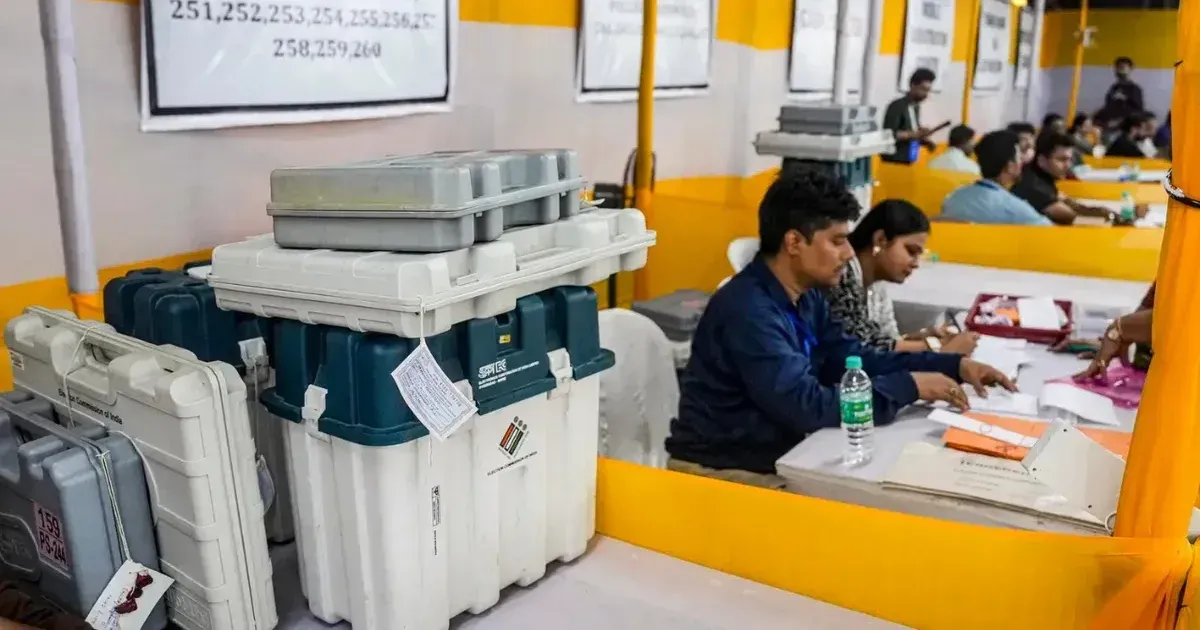
India's state election count is a regional verdict with national implications. The results will show whether local parties can still hold ground against a more centralized campaign machine. Five contests also give analysts a wider map than a single swing state. That makes the count a test of coalition depth. Officials in five Indian states opened counting centers early Sunday to process votes that could reshape the country's political map. These tallying procedures, initiated on May 3, 2026, follow a multi-phase polling cycle that tested the resilience of established regional powers against a centralized national push. Major contests in West Bengal, Tamil Nadu, Kerala, Assam, and the Union Territory of Puducherry are expected to reveal whether the governing coalition can penetrate traditional linguistic and cultural strongholds.
West Bengal is the primary focus for political analysts due to the enduring rivalry between the TMC and the BJP. Political paths in the state have shifted dramatically over the last decade, transitioning from a localized struggle into a national obsession. Statistics from the 2016 cycle showed the BJP holding just three seats with a 10 percent vote share, a figure that surged to 77 seats and 38 percent in the subsequent 2021 election. This counting day determines if that momentum has hit a ceiling or if the incumbent administration under Mamata Banerjee has successfully insulated its territory.
Bengal Battle and the BJP Growth Trajectory
Simultaneously, the logistical scale of this election cycle included seven by-elections held across five different states. Voters in these specific constituencies cast their ballots on April 9 and April 23, 2026, coinciding with the broader assembly phases. These smaller contests often serve as localized barometers for anti-incumbency, providing detailed data on voter sentiment regarding inflation and regional infrastructure projects. Early reports from counting stations suggest high turnout figures in these bypoll seats, potentially complicating the path for established frontrunners.
By contrast, the southern state of Tamil Nadu presents a different set of challenges for national strategists. The DMK maintains a major presence, and the current results will dictate the survival of the opposition INDIA bloc as a viable alternative to the central leadership. Leaders in Chennai have campaigned on a platform of state autonomy and cultural identity, hoping to replicate previous landslides that effectively shut out northern-based political entities. Success here is mandatory for regional parties seeking to maintain a voice in national policy discussions.
Bengal remains the primary battleground for national influence.
In Kerala, the political atmosphere is characterized by deep uncertainty for the main coalitions. Neither the LDF nor the UDF entered counting day with enough clarity to treat the result as settled. Kerala has often shifted between the two fronts, and breaking or restoring that pattern requires a level of voter loyalty that recent surveys suggest may be fluid. Local issues regarding agricultural subsidies and public debt have dominated the discussion in the final weeks of the campaign.
Southern Power Dynamics and the National Mood
Assam and Puducherry provide additional context to the shifting electoral landscape. While Assam has traditionally leaned toward the central governing party in recent cycles, localized opposition over land rights and demographic shifts has created a more competitive environment. In Puducherry, the administration faces a test of its ability to manage a diverse electorate within a restricted administrative framework. These smaller jurisdictions often provide the first indicators of broader trends that eventually sweep through the larger neighboring states.
Assembly poll results in West Bengal, Tamil Nadu, Assam, Kerala, and Puducherry will offer a glimpse into the national political mood.
Results from these five houses act as a collective verdict on the efficacy of regional alliances. The coordination between the DMK in the south and the TMC in the east is a strategic attempt to create a unified front against a singular national narrative. If these regional giants hold their ground, the central leadership could face pressure to moderate its political strategy around a more fragmented federal map. Failures in these regions would, by contrast, embolden the central leadership to accelerate its policy directives across the subcontinent.
Exit polls have provided little clarity for party headquarters in Thiruvananthapuram.
Voters have expressed a mix of concerns ranging from localized governance to the overall direction of national sovereignty. Analysts observe that the counting process is moving at a slower pace in rural districts compared to urban centers, which may delay a final declaration until late evening. The disparity between early leads and final tallies remains a point of contention for party workers stationed at counting booths. Many races in the 294-member Bengal assembly now carry national significance because they test whether state-level identity politics can still blunt the BJP's expansion.
The State Results Will Decide Whether Regional Blocs Can Resist Centralization
Victory in these assembly contests provides more than legislative control; it secures the financial and social capital required to influence the 2029 national cycle. If the BJP continues its trajectory in West Bengal, the party will have successfully dismantled one of the last remaining ideological fortresses in Indian politics. This expansion would signal a decline in the effectiveness of linguistic regionalism as a shield against nationalistic messaging. Such a shift changes the internal mechanics of the federal structure, potentially centralizing more power in New Delhi.
National alliances are currently held together by the performance of these regional anchors. A failure by the DMK or TMC to secure their home turf would likely trigger fresh pressure inside the INDIA bloc, leading to a period of political realignment. Small parties in Kerala and Puducherry are watching these developments closely, ready to shift their allegiances based on which direction the wind blows. The final numbers from today will dictate the legislative priorities of the world's most populous democracy for the remainder of the decade. Political survival now depends on the ability to balance local grievances with a coherent national vision.