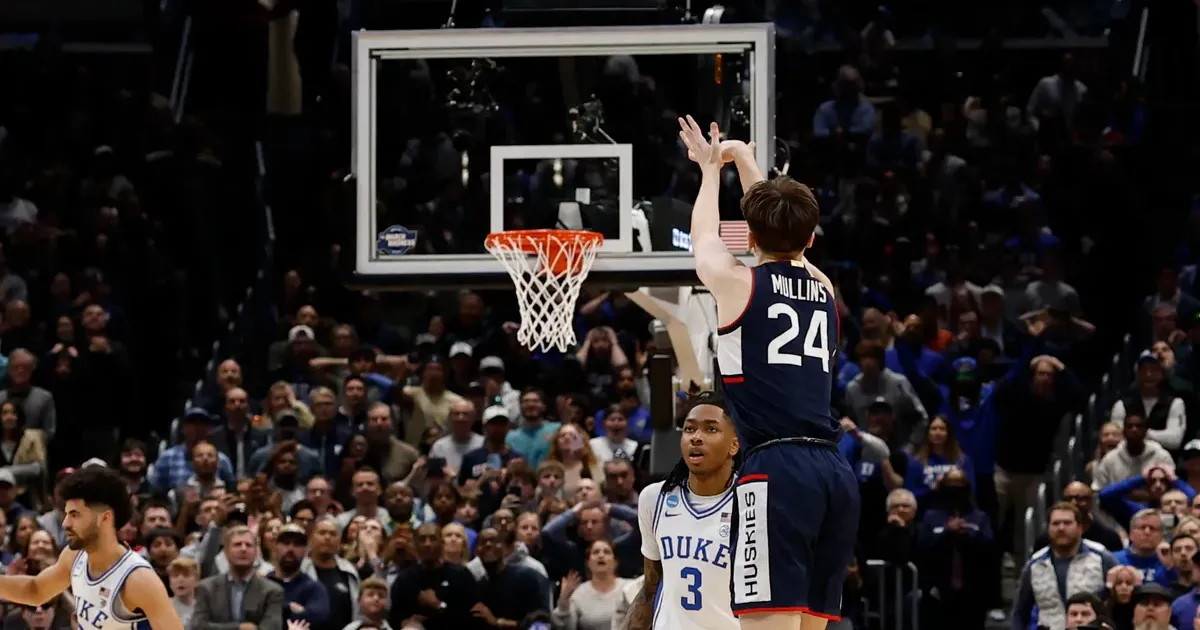
Braylon Mullins turned UConn's East Regional final into another March memory with a 35-foot three that beat Duke 73-72 and sent the Huskies back to the Final Four. The shot came with 0.4 seconds left, after Silas Demary Jr. disrupted Duke's final possession and Alex Karaban moved the ball to Mullins instead of forcing his own look.
The ending was wild enough on its own. The context gave it greater weight. Duke had led by 19 late in the first half and carried a 44-29 lead into the break. A No. 1 seed with that kind of cushion usually controls the emotional terms of the game. UConn instead turned the second half into a possession-by-possession test of whether Duke could keep playing freely while the lead disappeared.
The Shot Finished A Larger Job
Mullins will own the replay because that is how March works. A freshman releasing from deep at the horn is the image that survives. But UConn's comeback was built before the final shot, through defensive pressure, second-half patience and enough trust to keep possessions organized while the scoreboard still looked hostile.
Tarris Reed Jr.'s production gave the Huskies a platform, and UConn's guards kept applying stress after Duke had spent most of the night in control. The Huskies did not need one perfect offensive half. They needed enough stops, enough sound decisions and one final chance. When that chance arrived, Karaban's pass was as important as the release because it turned chaos into the right shot.
Duke Started Protecting The Lead
For Duke, the loss will linger because the game was available. The Blue Devils had the size, talent and first-half rhythm to end UConn's run before it became dangerous. Instead, the final stretch became survival basketball. Late possessions needed spacing, timing and confidence. UConn made Duke play tight, then punished the mistake that followed.
The late turnover was not the whole game, but it became the scene that explained the collapse. A big lead should create freedom. For Duke, it became something to guard. That mental shift is costly in March because the opponent does not need to be better for 40 minutes. It only needs to be calmer when the game narrows to one possession.
UConn's Program Identity Held
One reason the finish felt believable, even from an absurd distance, is that UConn has built a recent tournament identity around structure under pressure. Dan Hurley's teams can look uncomfortable for stretches and still return to defense, spacing and late-game hierarchy without completely losing their shape.
That is the difference between a highlight and a program statement. Mullins made the shot, but UConn had already won the more difficult contest by staying organized after Duke started managing the clock instead of attacking the game. The Huskies turned Duke's cushion into a burden and then forced the final possession to decide it.
The result also reshaped the narrative around both programs. UConn could sell another piece of March evidence: its system travels, and its players keep trusting it when the building gets loud. Duke had to explain how elite talent let a 19-point lead turn into a season-ending scramble.
The shot became more than one shot because of everything that preceded it. Mullins' three sent UConn to the Final Four, but it also exposed the old tournament rule that reputation does not defend the final minute. The team that keeps making the next correct decision usually gets the last look. On this night, UConn got it from 35 feet and still looked ready for it.