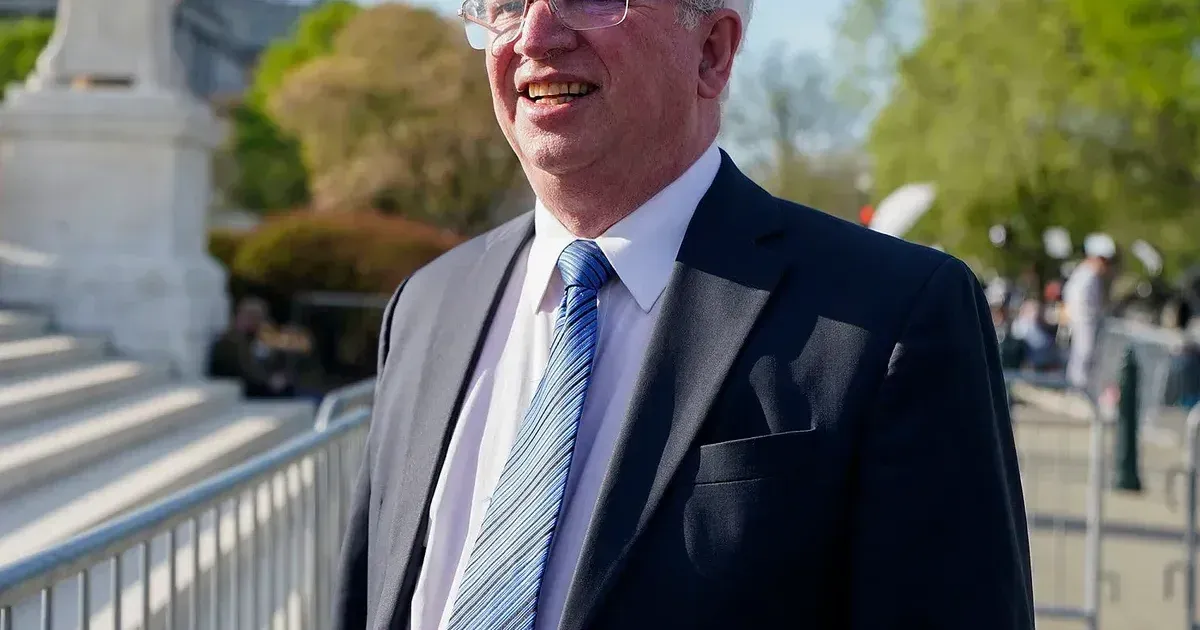
John Eastman lost his license to practice law on April 16, 2026, after California judicial authorities finalized his disbarment for efforts to overturn the 2020 election results. Judicial officials cited his key role in devising a legal strategy intended to disrupt the peaceful transfer of power. This decision effectively ends the professional standing of an architect who once held meaningful influence over the legal theories circulated within the Trump administration. He plans to seek a review of this ruling before the U.S. Supreme Court.

California State Bar leaders argued that Eastman violated his oath of office by promoting false claims of voter fraud. Evidence presented during the proceedings focused on his memos outlining a six-step plan for the vice president to reject electors. Legal challenges to his credentials have persisted for years, culminating in the revocation of his ability to practice in his home state. His defense team maintains that his actions were within the bounds of eager advocacy for a client.

California Bar Strips Eastman of Legal Credentials

Attorneys representing Eastman argued that the court exceeded its authority by punishing a lawyer for complex legal interpretations. They contend that the judicial system is being used to target political opponents through administrative sanctions. California State Bar records indicate that the investigation into his conduct involved thousands of pages of internal emails and drafts. These documents showed the evolution of the theory that eventually led to the January 6 Capitol breach.

Professional standards for attorneys require an adherence to factual integrity and the preservation of democratic institutions. The court found that Eastman failed both metrics when he pressured election officials across multiple states. Some observers suggest this ruling could influence pending disciplinary cases against other legal associates involved in the 2020 challenges. His primary defense remains focused on the First Amendment rights of legal counsel to propose novel interpretations of the law.

President Trump Removes Controversial Religious Imagery

President Trump sparked a different category of controversy on Truth Social by posting an image depicting himself as a Christ-like healer. Sources familiar with the matter revealed that Trump discussed the meme with Bill Pulte before the Sunday night upload. Pulte, who currently is the director of the Federal Housing Finance Agency, reportedly reviewed the imagery during a weekend gathering at Mar-a-Lago in Palm Beach, Florida. The post depicted the president in a role usually reserved for religious figures, prompting an immediate outcry from conservative Christian blocs.

Trump took the rare step of deleting the post after several hours of intense online backlash. Internal advisers noted that the removal was a reaction to the specific offense taken by Orthodox Christian groups. Sunday coincided with the Eastern Orthodox celebration of Easter, a period of heightened religious sensitivity. This interaction preceded a series of even more provocative posts targeting international relations and religious leaders alike.

Everyone thought it was a joke.

One adviser mentioned that the initial reception of the meme among the president's inner circle was lighthearted. Other staff members expressed concern that the imagery crossed a line into blasphemy for core segments of the Republican base. Bill Pulte, however, has declined to comment on his specific role in the exchange. A separate aide friendly with Pulte denied that the housing chief was the original source of the digital rendering.

Federal Housing Chief Bill Pulte Faces New Scrutiny

Bill Pulte maintains a widespread presence in the president's orbit, frequently traveling to Florida for weekend strategy sessions. His role at the Federal Housing Finance Agency involves overseeing trillions of dollars in mortgage-backed securities and national housing policy. Critics argue that his involvement in social media strategy and meme selection is an unusual use of time for a major financial regulator. Pulte is a member of the Mar-a-Lago club and remains a fixture at the president's private dinner table.

Religious controversy deepened when Trump posted a separate threat against Iranian infrastructure on the preceding Sunday. That post included the phrase "Praise be to Allah" after a series of vulgar warnings directed at Tehran officials. The timing of the message, occurring on Western Easter, confused many of his evangelical supporters who prioritize support for Israel. White House officials have not clarified whether the phrasing was intentional or a rhetorical device intended to mock foreign adversaries.

Diplomatic tensions increased further when Trump directed his attention toward the Vatican on Sunday morning. He lashed out at Pope Leo XIV after the pontiff issued a public plea for an end to global warfare. Trump characterized the U.S.-born pope as weak on crime and terrible for foreign policy. He accused the religious leader of catering to the radical left, a move that alienated several Catholic members of his own cabinet.

Tax policy remains the official focus of the administration despite the distractions of social media and legal disbarments. The White House continues to push for a new round of corporate rate cuts as a centerpiece of its economic agenda. A disconnect exists between the professional policy goals of the treasury and the erratic religious messaging emanating from the president's personal accounts. Press Secretary statements have attempted to redirect public attention toward the falling unemployment numbers and stock market gains.

Disciplinary actions against Eastman and the social media fallout for Pulte reflect the dual pressures facing the current administration. One side of the executive branch is struggling to maintain legal legitimacy while the other navigates a series of self-inflicted cultural wounds. These events occurred as the United States tried to finalize a fragile peace agreement in the Middle East. Every action taken by the legal team now faces heightened scrutiny from the Supreme Court.

The Elite Tribune Strategic Analysis

Legal licenses often function as the final gatekeeping mechanism for political loyalty, yet the collapse of the 2020 legal defense network reveals a more structural decay. John Eastman is being treated as a convenient casualty of a system that can no longer ignore the friction between fringe legal theory and constitutional stability. By disbarring him, California is not just punishing an individual but is attempting to re-establish a baseline of reality for the legal profession that had become dangerously blurred.

The Pulte involvement in the Christ-meme incident is perhaps more telling of the administration's current dysfunction. When a housing finance chief, tasked with the stability of the American mortgage market, is spending his weekends vetting religious memes for a president, the machinery of government has clearly stalled. This is a presidency that has replaced policy deliberation with a form of digital theology that serves neither the state nor the church. Trump's rare decision to delete the post suggests he has finally found the ceiling of his base's tolerance for self-deification.

Clashing with Pope Leo XIV while simultaneously using Christ-like imagery shows a desperate need to control the moral narrative. The administration is trying to occupy the space of the sacred and the secular simultaneously, but the result is a messy blend of blasphemy and bad policy. Can a political movement survive when it starts to view its leader as a deity while its legal architects are methodically stripped of their power? One suspects the answer lies in the growing distance between the White House and the voters who find this behavior increasingly unrecognizable.