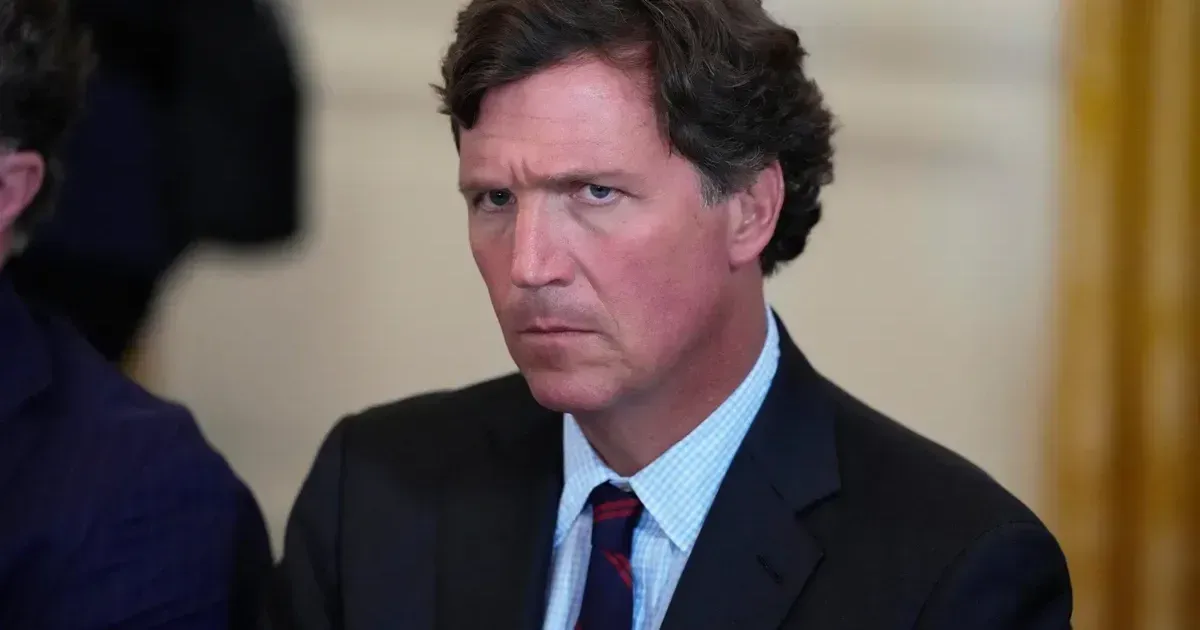
Tucker Carlson's criticism of Donald Trump turned a policy disagreement into a public fracture inside the conservative coalition. His Easter message was less about etiquette than about the direction of U.S. policy toward Iran and the political cost of another Middle East escalation.
The comments circulated on April 7, 2026, after Trump used profane language while defending his approach. Carlson's response showed that anti-intervention conservatives are no longer keeping their objections private when the administration moves closer to open conflict.
Carlson Decries Targets in Iran
President Trump used his platform on Truth Social to issue a direct ultimatum to Tehran. He warned that Tuesday would be Power Plant Day and Bridge Day, all wrapped up in one. The post included explicit profanity and a demand for the opening of the Strait of Hormuz, threatening that Iranian citizens would be living in Hell if compliance was not immediate. Such rhetoric is a departure from the isolationist platform that defined his return to power in the recent election cycle. Carlson pointed out that the welfare of the Iranian people was previously cited as a justification for military intervention.
Critics within the media have noted that the president chose to mock the religion of his adversaries by invoking the name of Allah in a sarcastic context. Carlson stated that no decent person mocks other people's religions regardless of theological disagreements. He questioned the morality of seeking a religious war while simultaneously identifying as a defender of Christian values during a major holiday. The pundit argued that using the U.S. military to destroy civilian infrastructure constitutes a moral crime. Recent polling suggests that this specific escalation has unsettled a substantial portion of the president's primary voting bloc.
MAGA Alliance Fractures Over Foreign Policy
Voters who supported the administration on the promise of ending endless foreign wars now face a reality of expanding Middle Eastern engagement. Carlson explicitly linked the president's current actions to the very policies he once campaigned against during his rise to prominence. He reminded his audience that targeting civilian power plants and bridges violates international protocols regarding the conduct of armed conflict. Legal experts in international law have begun reviewing the Truth Social posts as potential evidence of intent to bypass military necessity. The president has yet to retract the statements or offer a clarification regarding the specific targets mentioned.
Administration officials maintain that the threats are part of a broader psychological operations campaign intended to demoralize the Iranian leadership. They claim that the use of profanity and religious mockery serves to project strength and unpredictability to a foreign audience. This tactical explanation has done little to soothe traditional religious leaders who viewed the Easter post as a desecration of the holiday. Several leading evangelical organizations have released statements calling for a return to more temperate language. Their support was instrumental in the previous election cycle and remains a critical component of the current legislative majority.
“How dare you speak that way on Easter morning to the country? Who do you think you are? You are tweeting out the f-word on Easter morning,” Carlson said.
Public reaction to the monologue has been swift among both isolationist and hawkish factions of the Republican Party. Some observers note that Carlson was previously an occasional visitor to the White House and a frequent defender of the administration's foreign policy. This shift in tone suggests that the internal coalition that secured the presidency is beginning to fragment under the weight of active combat. Pro-war elements in the cabinet argue that aggressive rhetoric is necessary to force a ceasefire. By contrast, the anti-interventionist wing sees the current trajectory as a betrayal of the original America First mandate.
Economic repercussions of the escalating rhetoric are appearing in global energy markets. Oil prices jumped 4% following the mention of the Strait of Hormuz, as traders fear a total shutdown of the world's most essential maritime choke point. Shipping insurance rates for tankers in the Persian Gulf have quadrupled since the start of April. Carlson emphasized that the economic burden of these policies falls primarily on the American working class. He suggested that the administration is prioritizing a personal vendetta over the financial stability of its own citizens. Market volatility is expected to persist as long as the threat to infrastructure remains active.
Mocking the religious beliefs of an entire nation creates long-term geopolitical risks that go beyond the current military campaign. Carlson argued that such behavior invites a reciprocal level of hatred that could manifest in domestic security threats. He focused on the specific timing of the messages, noting that Easter is a day associated with peace and resurrection rather than destruction. This criticism from a formerly staunch ally creates a vacuum in the media ecosystem that the White House is struggling to fill. Loyalists have taken to competing platforms to defend the president, claiming that Carlson is out of touch with the base.
The Coalition Split Is Now Public
The split matters because it comes from inside the audience Trump usually expects to defend him. Carlson does not need to persuade Democrats to create pressure; he only needs to convince enough conservative voters that war policy has broken a campaign promise. That makes the dispute a coalition problem. If Iran policy keeps escalating, the White House may face criticism not only from opponents, but from supporters who see restraint as part of the original bargain.