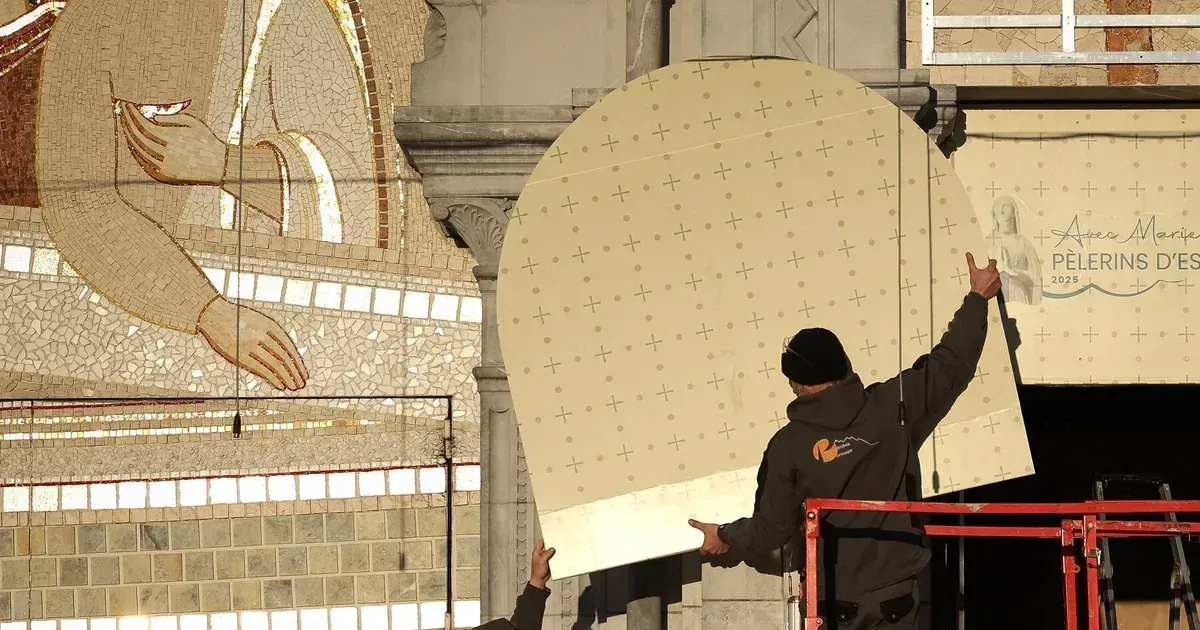
Catholic leaders are weighing whether to remove mosaics by Marko Ivan Rupnik from major shrines as abuse allegations continue to reshape how the Church treats his art. The debate reaches across Rome, Lourdes and Washington because his work appears in prominent spaces built for prayer. Local leaders were already facing pressure from survivors and donors. On April 10, 2026, the central question concerned whether survivors could worship in rooms marked by his imagery, rather than the mosaics’ artistic value.
The controversy is difficult because Rupnik's mosaics are not ordinary museum objects. They were made for liturgy, pilgrimage and spiritual reflection. That function makes the artist's alleged abuse harder for Church officials to separate from the spaces where the work remains visible.
Rupnik Mosaics Under Review
Marko Ivan Rupnik, a former Jesuit priest, was dismissed from the Society of Jesus in 2023 and later faced renewed canonical scrutiny. Allegations from women connected to the Loyola Community describe spiritual and sexual coercion, and advocates argue that his art reflects the same authority he is accused of abusing.
Major shrines now face practical and moral decisions. Removing mosaics can be expensive because many installations are built directly into walls, chapels and facades. Leaving them in place can deepen the pain of survivors who see the works as a continuing institutional endorsement.
Lourdes has become one of the most closely watched cases. The shrine's identity is tied to healing, which makes the presence of contested art especially sensitive. Officials there have studied whether covering, explaining or removing the mosaics would best protect pilgrims and survivors.
Survivors Challenge Sacred Space
The strongest argument for removal comes from survivors and advocates who say sacred space must be safe before it can be beautiful. They reject comparisons with artists whose crimes were separate from their religious authority. In Rupnik's case, they argue that theology, art and alleged abuse were intertwined.
Church leaders who favor caution warn that rapid removal could erase work produced by studio collaborators and donors, not only by Rupnik himself. That argument has limited persuasive power with survivor groups because his signature style and theological language dominate the installations.
The Vatican's response remains central. A formal canonical finding would increase pressure on local bishops and shrine administrators. Continued delay leaves each site to make its own decision, producing a patchwork that satisfies no one and keeps the controversy alive.
Vatican Credibility at Stake
The issue also tests the Church's broader abuse-reform message. If institutions appear more protective of mosaics than of harmed people, official commitments to accountability will sound hollow. That risk is why even temporary coverings have taken on symbolic weight.
Financial concerns are real, but they cannot be the only measure. Donors may object to removal, and replacement work could cost millions. Still, Church leaders have to explain why money should outweigh the pastoral cost of asking survivors to pray beneath images tied to an accused abuser.
The most credible path would combine transparency, survivor consultation and site-specific decisions. Some works may be covered, some removed and some contextualized, but the process has to show that victims are not being treated as obstacles to an aesthetic legacy.
The debate is therefore about more than Rupnik. It asks whether religious institutions can admit that beauty loses its sacred function when it becomes a reminder of betrayal. How the Church answers will shape trust long after the mosaics themselves are settled. The decision also has to be communicated carefully to parishioners who did not follow the abuse allegations closely. A sudden removal without explanation could look like political surrender; doing nothing could look like indifference to victims. Bishops and shrine leaders need a pastoral language that explains why sacred art is different from decorative art and why the use of religious authority changes the moral analysis. The Rupnik case is therefore a governance test as much as an aesthetic one. Church officials must show that survivor testimony can change institutional decisions, even when those decisions are expensive and uncomfortable. If they fail, the mosaics will remain visible symbols of a Church still struggling to place wounded people ahead of institutional self-protection. The longer the process drags on, the more local leaders will inherit responsibility for a Vatican-level failure to decide. Some dioceses may choose coverings as an interim step, while others may wait for the canonical trial. That uneven approach may be administratively convenient, but it leaves survivors facing different standards from shrine to shrine. A durable answer will probably require more than one rule. Shrines need immediate pastoral protection, the Vatican needs a transparent trial process, and donors need to understand that liturgical credibility cannot be measured only by replacement cost. The pastoral burden will not disappear with time. Every month of delay leaves shrine staff, local bishops and survivors negotiating the consequences of a scandal that Rome has not fully resolved. The hardest cases will be sites where the mosaics are structurally embedded and spiritually central to the shrine's identity. Those locations will need more than a legal answer; they will need a pastoral plan that explains what worshippers see and why decisions were made.