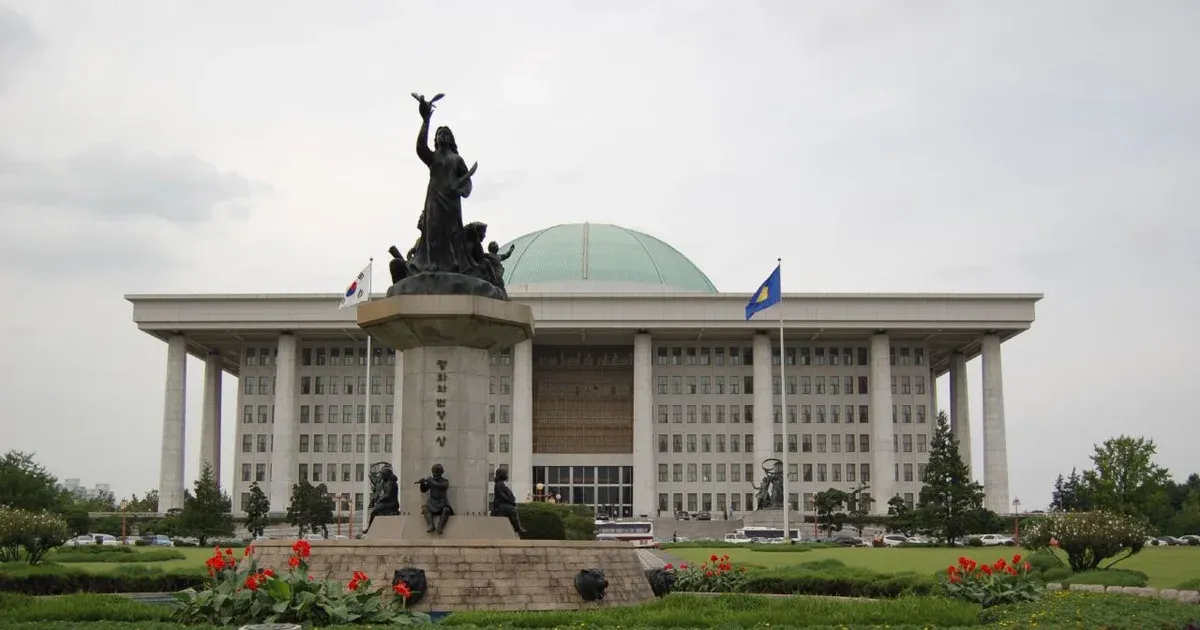
National Assembly members in Seoul finalized a 26.2 trillion-won spending plan to counter the economic shockwaves from the intensifying Middle East conflict. Lawmakers convened in an emergency session to address the rapid rises in energy costs and logistics disruptions that threaten the industrial core of South Korea. Voting records show a rare bipartisan consensus for the primary stimulus measures, although debates regarding the financing of the debt persisted late into the night. The emergency budget was approved on April 10, 2026, as Seoul moved to shield households and industry from war costs. Government data indicates that the supplementary budget aims to subsidize fuel imports and provide liquidity to small businesses facing soaring freight rates.
Energy security dominates the legislative agenda as the Middle East provides more than 70 percent of the crude oil used by South Korean refineries. Rising insurance premiums for tankers passing through the Strait of Hormuz have pushed domestic gasoline prices to their highest level in five years. Seoul officials confirmed that approximately 8 trillion won will be diverted toward direct fuel subsidies for transport workers and lower-income households. This intervention mirrors previous stabilization efforts during the 2022 global energy crunch, but on a far larger scale. State-run utilities are expected to receive 5 trillion won to prevent an enormous hike in electricity bills for manufacturing plants.
National Assembly Approves Energy Subsidies
Industrial giants such as Samsung Electronics and Hyundai Motor rely on consistent energy pricing to maintain global competitiveness. The National Assembly allocated specific funds to ensure that the manufacturing sector does not stall under the weight of utility price increases. Experts at the Ministry of Economy and Finance warned that without this injection, core inflation could breach the 5 percent threshold by the third quarter of 2026. Domestic demand already shows signs of cooling as consumers reduce discretionary spending to cover rising grocery costs. Trade statistics from early April 2026 show a 12 percent drop in container volume leaving Busan port compared to the previous year.
Small and medium enterprises (SMEs) face the most immediate threat from the current economic climate. Many of these firms operate on thin margins and cannot absorb a 30 percent jump in raw material transport costs. Government planners designated 4.5 trillion won for low-interest loans and credit guarantees for exporters struggling with these overheads. Financial institutions in Seoul were instructed to streamline the application process for emergency war-fallout relief funds. Total applications for state-backed logistics support rose fourfold in the last two weeks alone.
Middle East Conflict Strains Logistics Networks
Shipping delays are compounding the misery for the export-reliant economy. While maritime routes around the Cape of Good Hope provide a safer alternative to the Suez Canal, they add 14 days to the journey to European markets. The 26.2 trillion-won package includes provisions for the state-owned HMM shipping company to deploy extra vessels on critical trade lanes. Logistics costs for shipping a standard 40-foot container from Asia to Europe have surpassed $8,000 in recent weeks. Lawmakers believe that subsidized freight costs are essential to prevent a total loss of market share for Korean exporters.
A spokesperson for the National Assembly confirmed the passage of the bill on Friday, noting the immediate necessity of the funds to stabilize the livelihood of citizens.
Vulnerability in the energy supply chain extends beyond crude oil to liquefied natural gas (LNG). South Korea is one of the world's largest importers of LNG, and any prolonged closure of shipping lanes in the Middle East would cause power shortages. The National Assembly directed 2 trillion won toward expanding strategic petroleum and gas reserves. Strategic reserves at the Ulsan and Yeosu hubs are currently at 85 percent capacity. Energy analysts suggest that maintaining these levels is critical if the conflict escalates into a wider regional confrontation. Energy security remains at risk as Iran imposes new tolls on Strait of Hormuz shipping, increasing tanker insurance costs.
Strategic Reserves and Export Protection Measures
Agricultural imports are also under pressure from the disruption of global trade routes. Higher costs for grain shipments from Europe and Africa are trickling down to the price of animal feed and processed foods. The budget includes 1.5 trillion won for the Ministry of Agriculture, Food and Rural Affairs to subsidize the import of essential commodities. Inflationary pressures on the won have further complicated these purchases as the currency weakened against the U.S. dollar. Exchange rate volatility reached a new peak on April 10, 2026, as traders reacted to the budget announcement.
Defense spending is another unexpected beneficiary of the new fiscal plan. Officials in Seoul allocated 1.2 trillion won for the enhancement of cyber defense and intelligence monitoring of Middle East developments. Military planners expressed concern that North Korea might capitalize on the global distraction to conduct provocative tests. Enhanced surveillance equipment and satellite monitoring are listed as priority items in the procurement list. Security on the peninsula is increasingly linked to the stability of global energy markets.
Fiscal Deficit Concerns and Inflationary Pressure
Funding for the 26.2 trillion-won package will come primarily from new government bonds. Critics argue that this will push the national debt-to-GDP ratio toward the 55 percent mark, a level previously considered a red line by conservative economists. The Ministry of Economy and Finance expects the bond market to absorb the new supply, though yields have already started to climb. Higher borrowing costs for the government often lead to higher mortgage rates for the general public. Opposition leaders demanded a more targeted approach, focusing solely on the most vulnerable sectors rather than a broad stimulus.
Tax revenues in early 2026 have fallen short of projections due to sluggish corporate earnings. The National Assembly had to reconcile the need for stimulus with the reality of a shrinking tax base. Corporate tax receipts from the semiconductor sector dropped by 15 percent in the first quarter. Lower profits at major exporters mean fewer funds available for the national treasury. Government debt management strategies are now under intense scrutiny by international credit rating agencies. Standard & Poor's indicated that the fiscal health of South Korea depends on the duration of the Middle East crisis.
Labor unions in the transport and manufacturing sectors have threatened strikes if the budget does not reach workers directly. These groups demand that the fuel subsidies be paid directly to drivers instead of through corporate tax breaks. Negotiations between the government and labor representatives are scheduled for next week in Seoul. A failure to reach an agreement could lead to a nationwide trucking strike, further paralyzing the logistics network. The 26.2 trillion-won stimulus is the largest non-pandemic emergency budget in the country's history.
Energy Dependence Turns the Budget Into a Stopgap
Dependency is the silent killer of the South Korean miracle. For decades, the nation has operated on a high-wire act of importing nearly all its energy and exporting nearly all its output, leaving its economic fate exposed to foreign states, shipping chokepoints and energy producers. By injecting 26.2 trillion won into the system, the National Assembly is applying a temporary bandage to a severed artery. This is not a strategy for growth; it is an expensive ransom payment to maintain the status quo in a world that has fundamentally changed.
Politicians in Seoul are terrified of the voter backlash that would follow a true market adjustment to energy prices. Instead of encouraging efficiency or a rapid pivot away from Middle East fossil fuels, they are choosing to socialize the cost of a war they cannot control. This large bond issuance will haunt future generations, who will be forced to repay the debt of 2026 with a devalued won. The pretense that South Korea can spend its way out of a global supply chain collapse is a dangerous delusion that prioritizes immediate political survival over long-term structural resilience.
The era of cheap, reliable energy is dead. The budget is its funeral procession. The National Assembly must stop subsidizing the past and start financing a future where a regional war five thousand miles away does not bring the South Korean economy to its knees. If they fail to decouple their industrial engine from the volatility of the Levant, no amount of trillion-won stimulus packages will save them. It is the final warning for a nation that has forgotten how to adapt without a safety net of printed money. Voters will soon realize that subsidies are just taxes in disguise. The bill always comes due.