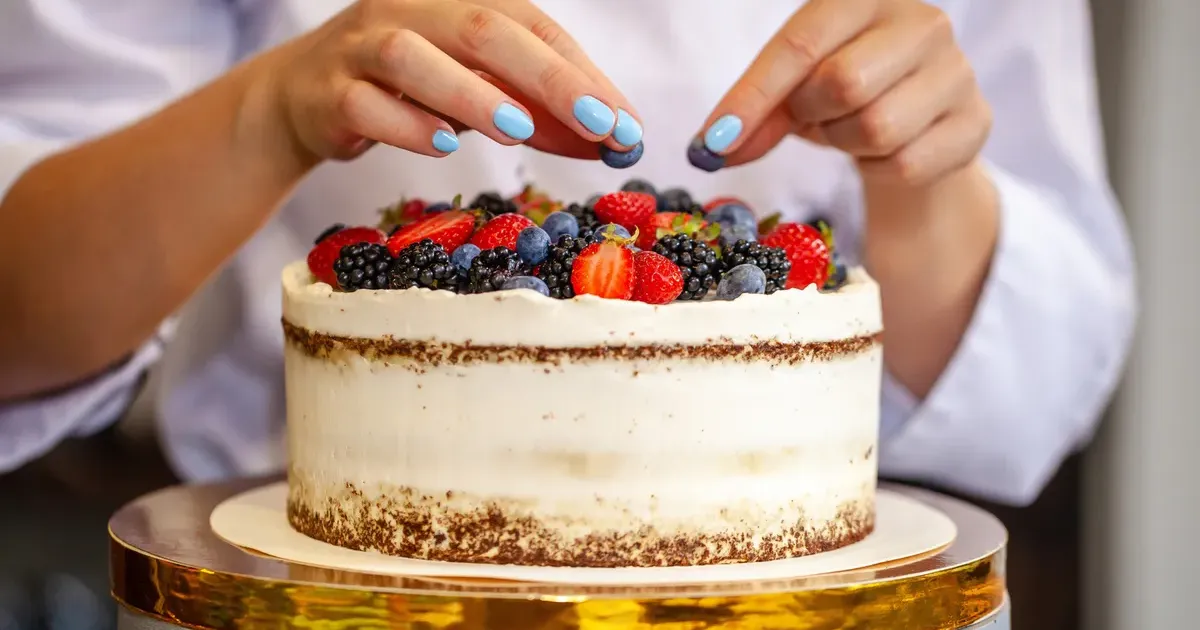
Professional pastry chefs in Manhattan and London often start their mornings not with sacks of flour, but with industrial-sized bags of premade mixes manufactured by General Mills. These preparations, known in the trade as bases or complete mixes, allow establishments to maintain a strict production schedule while ensuring every sponge looks identical. Large-scale operations prioritize the chemistry of consistency over the variability of raw agricultural inputs. Mixes provide a predictable baseline for height, crumb structure, and moisture content that is difficult to replicate with raw ingredients alone.
Industrial cake mixes from companies like General Mills and Pillsbury contain specialized emulsifiers and stabilizers. These additives, including propylene glycol esters and mono-diglycerides, allow the batter to hold more air and water than a traditional scratch recipe. And for a business producing thousands of units daily, the risk of a single batch failing due to a slightly over-whisked egg or a humid kitchen is a financial liability. Commercial kitchens operate on thin margins where predictability is the primary driver of profit.
Industrial Cake Mixes Guarantee Consistent Texture
Yet the secret behind the perfect crumb often lies in the engineering of the ingredients. General Mills and Pillsbury have spent decades perfecting the ratio of chlorinated flour to sugar to ensure that cakes do not sink in the middle. For instance, modified corn starch and xanthan gum are frequently added to these professional-grade powders to provide a silky mouthfeel. A 50-pound bag of mix behaves exactly the same way in a convection oven in Miami as it does in a damp basement bakery in Seattle. Consistency is the product being sold, not just the flavor.
Bakeries that rely on these mixes often use what they call the doctoring method. In fact, many high-end wedding cake designers add sour cream, extra egg yolks, or premium liqueurs to a Duncan Hines or Pillsbury base to create a signature flavor profile. This hybrid approach bridges the gap between the speed of industrial food science and the artisanal expectations of the consumer. Most diners cannot distinguish between a highly doctored mix and a scratch cake in a blind taste test. The chemical leaveners in a mix often provide a lighter, more ethereal texture that the public has come to associate with quality.
Commercial Bakery Labor Costs Drive Mix Adoption
Even so, the primary motivation for using a mix is rarely flavor, but rather the rising cost of skilled labor. Hiring a classically trained pastry chef to scale ingredients for 400 cakes a week is sharply more expensive than hiring an entry-level worker to add water and oil to a pre-measured sack. Pillsbury and Duncan Hines market their products specifically on this ease of use. Labor constitutes roughly 30 to 40 percent of a bakery’s total expenses. Reducing the time spent on the scaling and mixing phase allows staff to focus on high-value tasks like intricate piping and sugar work.
Separately, the supply chain for raw ingredients like King Arthur flour and high-fat European butter has become progressively volatile. To that end, premade mixes act as a hedge against fluctuating commodity prices. General Mills locks in massive grain contracts years in advance, sheltering individual bakeries from sudden spikes in the price of wheat or sugar. Small business owners find security in the fixed cost of a pallet of mix. The stability of the final product ensures that there is no wasted inventory due to human error during the measuring process.
Professional bakeries often find that the chemical precision of a commercial mix outperforms the variability of a scratch recipe in high-stress, high-volume environments.
At its core, the use of mixes is about risk management. Many bakeries that claim to bake from scratch are actually using a culinary base that requires the addition of fresh eggs and milk. King Arthur offers professional-grade bases that leave room for customization while still providing the structural integrity needed for tiered cakes. The internal architecture of a five-tier wedding cake requires a density and resilience that traditional sponge recipes sometimes lack. Duncan Hines products are frequently cited by home-based professionals for their reliable structural strength.
Ingredient Stability in High Volume Production
Industry experts point to the longevity of the finished product as another reason for the prevalence of mixes. Scientists at Pillsbury and General Mills formulate their powders to include humectants that keep the cake moist for several days. For one, a scratch-made cake begins to go stale the moment it cools, whereas a mix-based cake can retain its texture for a week under refrigeration. This extended shelf life allows bakeries to prepare orders in advance without sacrificing the eating experience for the customer. Modern retail baking is a game of logistics and timing.
Still, the distinction between scratch and mix has blurred as ingredient technology advances. King Arthur now produces mixes that exclude artificial flavors and colors, appealing to the clean label movement while retaining the convenience of a pre-blended product. In turn, boutique bakeries can claim a higher standard of ingredients without the logistical nightmare of raw scaling. Custom cake shops often prioritize the exterior aesthetic, and a reliable Duncan Hines base provides the canvas for elaborate fondant work. The structural stability of the cake is non-negotiable when transporting a $16 billion annual industry’s worth of custom orders.
Consumer Transparency and Scratch Baking Standards
In particular, the ethics of transparency remain a point of contention in the culinary world. Custom shops charging premium prices often face backlash if customers discover a box of Duncan Hines in the pantry. By contrast, grocery store bakeries make no secret of their use of frozen pucks or dry mixes, as their clientele prioritizes price and speed. The tension exists primarily in the middle market where bakeries project an artisanal image. King Arthur professional flour remains a staple for those who refuse to compromise, yet even they offer labor-saving blends to the trade.
Premium bakeries often defend their use of bases by highlighting the quality of the finishing touches. A cake might start with a Pillsbury mix, but it is finished with organic raspberry reduction and Swiss meringue buttercream made from scratch. Yet the base remains the silent workhorse of the operation. Most commercial kitchens do not have the square footage required to store the bulk silos of flour and sugar needed for true scratch production at scale. A pallet of Duncan Hines professional mix occupies less than 20 square feet of warehouse space. Efficiency is the final word in the modern kitchen.
The Elite Tribune Perspective
Why do we persist in the fantasy that a five-dollar cupcake originates from a grandmother’s handwritten recipe card? The culinary world is rife with a specific kind of hypocrisy that rewards the appearance of labor while penalizing the reality of industrial efficiency. We demand perfection, symmetry, and eternal freshness, yet we recoil at the very chemicals and processes that make those traits possible. If a baker uses a premade mix to ensure your wedding cake does not collapse under its own weight, they are not cheating. They are practicing engineering.
Consumer obsession with the term scratch-made has forced honest professionals into a corner where they must either lie or risk losing business to inferior products that look better on Instagram. We have been conditioned by the food industry to prefer the texture of General Mills emulsifiers over the dense, unpredictable reality of farm-fresh flour. To demand that a high-volume bakery forgo these tools is to demand that they operate at a permanent disadvantage for the sake of a romanticized ideal that most palates cannot even recognize. The box is not the enemy.
Our refusal to acknowledge the industrial reality of our food supply is the true deception. Stop asking if it came from a box and start asking if it tastes good.