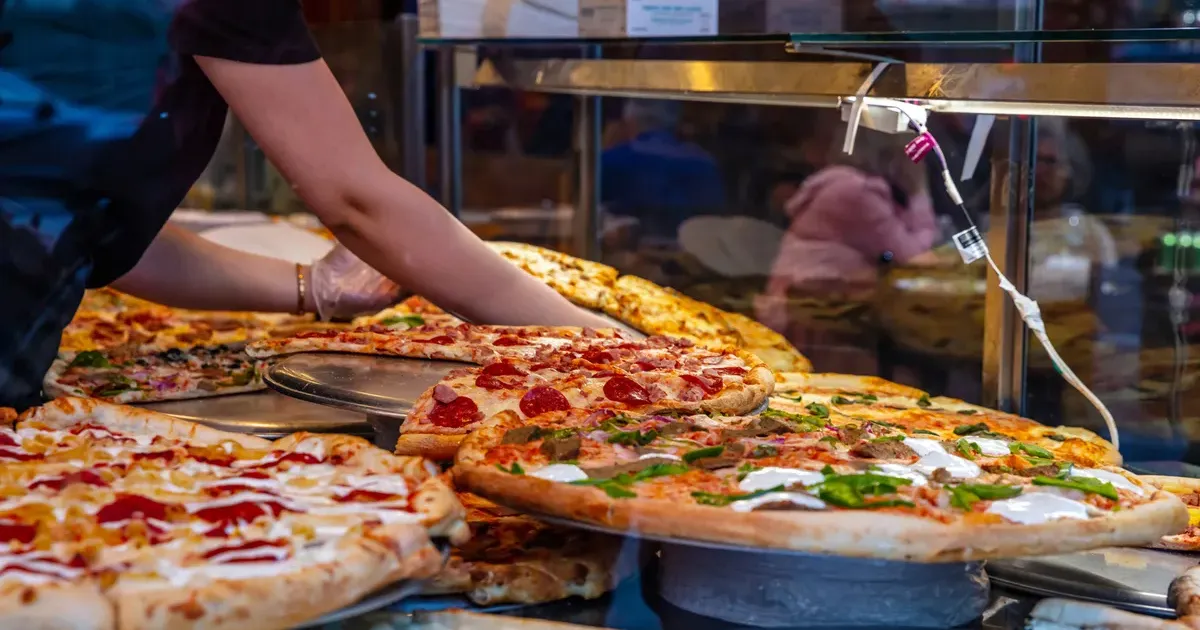
Glass display cases in corner pizzerias act as unintended incubators for airborne pathogens when maintenance fails. Hungry commuters frequently overlook the slight sheen of oil or the dulling color of a pepperoni disc while rushing through lunch. These visual details are not merely aesthetic failures. They are indicators of chemical degradation and potential microbial activity. Most diners assume the heat from a quick 90 second reheat in the oven will neutralize any risks. Professional food safety experts suggest this assumption is often incorrect.
Microbes like Staphylococcus aureus or Bacillus cereus can survive on surfaces that remain in the temperature danger zone for extended periods. Food left between 40 and 140 degrees Fahrenheit provides an ideal environment for rapid reproduction. Countertop displays often hover precisely in this range. New York City health codes require pizzerias to keep prepared food either very hot or properly refrigerated, yet the logistics of a high volume shop often lead to lapses. Slices may sit for hours under a weak heat lamp or on a room temperature shelf.
Daily operations in a high traffic shop prioritize speed over microscopic scrutiny. Patrons see a slice and expect a quick meal. Still, the chemistry of the slice changes every minute it sits under those lamps. Fats begin to oxidize. Proteins in the cheese start to break down into a rubbery, translucent state. Moisture migrates from the sauce into the crust, creating a soggy middle that remains cold even after a superficial reheating. By contrast, a fresh pie will have a distinct separation of textures and vibrant colors.
Temperature Risks In The Pizzeria Case
Heat lamps provide a deceptive sense of security for the average customer. They keep the top of the pizza warm to the touch, but they rarely penetrate the core of the dough or the bottom of the slice. Temperature consistency is the first casualty of an aging display case. If the bottom of the tray feels lukewarm, the slice has likely entered the danger zone. Bacteria can double every twenty minutes under these specific conditions. Health inspectors focus on these cases because they are the most common source of foodborne illness in urban environments.
Properly functioning cases must maintain a temperature of at least 140 degrees Fahrenheit to remain safe. In fact, many older establishments rely on equipment that has not been calibrated in years. According to food safety records, 4 hours is the maximum time a slice should stay on a counter before it is discarded. Many shops push this limit to 6 or 8 hours to reduce food waste and protect profit margins. This practice transforms a standard meal into a biological gamble. To that end, consumers should look for pizzerias that pull fresh pies from the oven regularly rather than relying on a full case of pre-made options.
Even so, the visual appeal of a full case is a powerful marketing tool. It suggests variety and abundance. It draws in passersby who want a visual confirmation of their meal before they pay. But this abundance comes with a hidden cost. The more slices on display, the longer each one is likely to sit before a customer selects it. A sparsely populated case is often a sign of a shop that cooks to order, which is generally a safer bet for the digestive system.
Visual Cues Of Stale Pizza Slices
Observation is the best defense for a hungry diner. Look closely at the cheese. Fresh mozzarella should be creamy and white or slightly off-white with a soft pull. If the cheese looks like a sheet of yellow plastic or has a translucent, oily shimmer, it has likely been sitting for several hours. This moisture is not just fat. It is a sign that the cheese is separating and losing its structural integrity. When cheese reaches this state, it has usually undergone several cycles of cooling and reheating.
Pepperoni provides another clear signal of age. Slices of meat that have curled into tight cups with burnt, darkened edges have been under heat for a long time. While some enjoy the crispness of a curled pepperoni, the darkening of the meat itself indicates oxidation of the nitrates and fats. This can lead to a rancid taste that no amount of oregano can mask. Separately, the crust often tells the real story. A grey or dull brown bottom indicates a slice that has absorbed ambient moisture and then dried out repeatedly. Fresh dough should have a vibrant, toasted gold color.
The most dangerous slice is not the one that looks burnt, but the one that has been allowed to cool to room temperature and then sits for hours before a brief, ineffective flash of heat.
Condensation on the glass of the display case is another major red flag. It indicates a lack of proper ventilation or a temperature imbalance between the food and the air. Moisture trapped inside a warm case creates a tropical environment that is at bottom a petri dish. If you see fogging on the glass, the environment inside is likely enabling bacterial growth on the toppings. Moving parts like fans in the case can also spread dust or contaminants if they are not cleaned weekly.
Industrial Cheese And Pizzeria Preservation
Economic pressures have driven many local pizzerias to switch to high-stability, industrial cheeses. These products are engineered to look fresh for longer periods than traditional mozzarella. They contain higher levels of emulsifiers and stabilizers that prevent the cheese from browning or separating too quickly. While this might look better in the display case, it hides the true age of the slice. Diners are at bottom looking at a chemically preserved facade. $45 billion is the estimated annual revenue for the American pizza industry, and much of that is built on the efficiency of these stable ingredients.
Low-moisture part-skim mozzarella is the industry standard for a reason. It has a longer shelf life and a predictable melt. But even these strong cheeses have a limit. When the oils begin to pool on the surface, the chemical bonds are failing. Meanwhile, the sauce underneath begins to ferment slightly if kept in the danger zone. The fermentation creates a sour, acidic note that is often mistaken for a sharp tomato flavor. In turn, the crust becomes a sponge for these deteriorating liquids.
Industrial pizzerias often use dough conditioners to keep the crust soft for days. These additives prevent the staling process known as starch retrogradation. A slice might look soft and pliable, but it could be 48 hours old. Authentic pizzerias using only flour, water, yeast, and salt cannot hide age this way. Their crusts will turn into hard crackers or soggy mush within a few hours. Choosing a shop with a simpler ingredient list often forces the owner to serve fresher products because they simply cannot fake the quality of an old slice.
Public Health Standards And Pizza Safety
Enforcement of health standards varies wildly between municipalities. In some cities, inspectors visit once a year, while in others, they may appear every few months. FDA guidelines are clear about the time and temperature controls required for potentially hazardous foods. Pizza falls into this category because of the cheese and meat toppings. Yet, the sheer number of establishments makes total oversight impossible. Most pizzerias operate on a system of self-regulation that fluctuates based on the ethics of the management.
Employee training is often the weakest link in the safety chain. High turnover in the service industry means that the person behind the counter may not understand the science of foodborne illness. They might top an old slice with fresh cheese and reheat it to make it look new. The practice, known as refreshing, is a major violation of health codes. It introduces new moisture to an old base, accelerating the decay of the original ingredients. Consumers should watch the behavior of the staff. If they are constantly moving new pies into the case, the rotation is likely healthy.
It is a game of thermal Russian roulette.
Bacteria do not wait for the lunch rush to subside. To stay safe, customers should ask for a fresh pie if the slices in the case look suspicious. Most reputable shops will comply, especially if they are already preparing dough for the evening rush. Choosing a busy shop with high turnover is the most effective way to ensure the slice on your plate was in the oven less than an hour ago. Speed of service should not be the only metric of a good lunch.
The Elite Tribune Perspective
Does the modern diner value convenience so highly that they have lost the ability to recognize decaying food? The ubiquity of the $2.99 slice has encouraged a dangerous apathy toward basic culinary hygiene. We have allowed the industrialization of the pizzeria to replace artisanal standards with a chemical theater of shelf-stable toppings and dough conditioners. It is not just a matter of taste. It is a systemic failure of the urban food system. When pizzerias prioritize the visual aesthetics of a full display case over the biological safety of their customers, they forfeit their right to operate as community staples. We must stop pretending that a flash-reheated slice is a fresh meal.