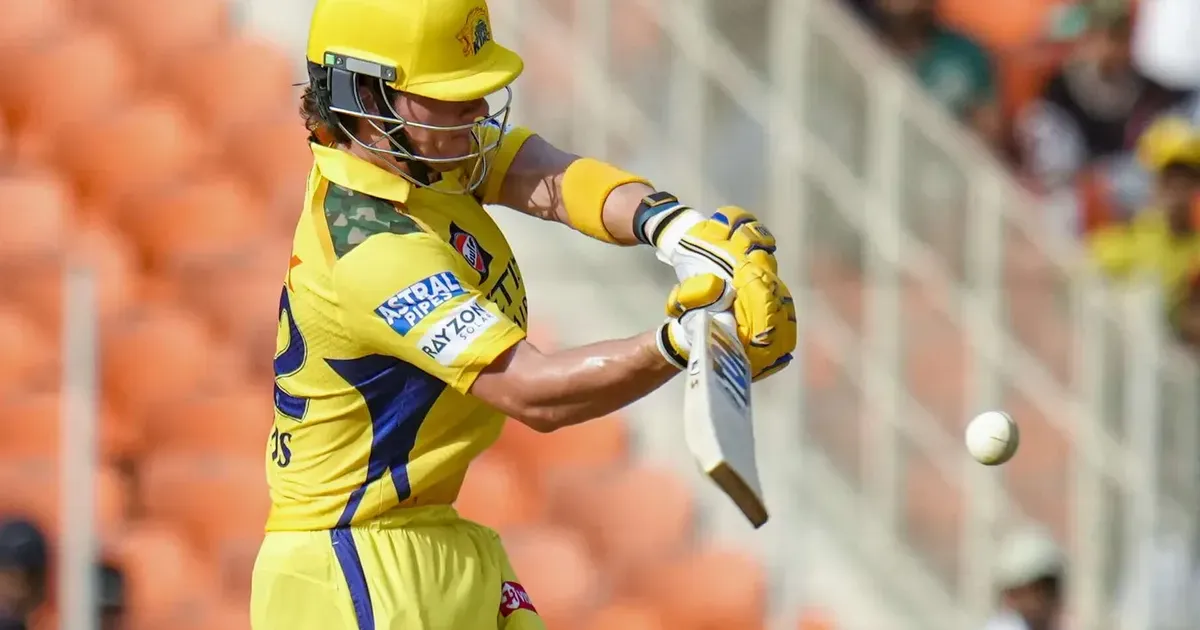
Chennai Super Kings entered their IPL 2026 opener against Rajasthan Royals with their depth under pressure before the first ball. MS Dhoni was expected to miss the opening stretch with a calf strain, Dewald Brevis was unavailable for the Guwahati match because of a side strain, and Nathan Ellis had already been ruled out of the season with a hamstring injury. For a squad trying to settle combinations early, that was not a single selection inconvenience. It was a role map under stress.
The Rajasthan match at Barsapara Cricket Stadium therefore became more than a season opener. It asked whether CSK could absorb losses in three different areas: wicketkeeping authority, middle-order power and death-bowling variation. Good franchises talk about depth every year. Injuries force them to prove whether the depth is real.
Dhoni's Absence Changes The Room
Dhoni's 2026 value was not only about runs. At this stage of his career, his importance sat in wicketkeeping, field placement, pressure reading and the calming authority he still carried inside the CSK environment. Removing that presence, even temporarily, forced the captain, keeper and bowling group to redistribute decisions that Dhoni often simplified in real time.
The absence is clearest in small moments: a field tweak after one boundary, a bowler reassured before the death overs, a review call made without panic, or a batter kept calm during a chase. None of those actions appears as a clean stat. CSK still had enough talent to compete, but the loss of Dhoni's control changed the emotional temperature of the XI.
Brevis Took Away A Flexible Batting Option
Brevis' side strain created a different problem. He offered overseas batting flexibility and the kind of middle-order acceleration that can shift a match before the final overs. Without him, CSK had to rebalance the batting order and overseas combination while already managing the absence of Ellis.
Injuries then become cumulative. One absence can be covered cleanly. Three absences in role-specific positions force compromises. A batting replacement may affect bowling balance. A bowling replacement may affect overseas selection. A wicketkeeping change may alter fielding rhythm. The opener became a test of how quickly CSK could turn disruption into a usable XI.
Ellis' Loss Is A Season Problem
Ellis being ruled out of the tournament was the most difficult injury to solve immediately because death bowling is built on trust. Spencer Johnson's arrival as a replacement gave CSK another left-arm pace option, but replacements rarely solve rhythm on paper. They need match overs, field settings, captaincy belief and clarity over when they are expected to attack or contain.
Death overs punish uncertainty. A bowler who is still learning plans with a new franchise can be targeted quickly, especially if the opposition senses that the captain is searching for a dependable option. Rajasthan had a clear route into the game: pressure the reshuffled middle order, run aggressively at the keeper and force CSK's altered pace group to defend under stress.
Rajasthan Had To Attack The Gaps
The temptation was to turn the injury list into another end-of-era verdict on CSK. That would be lazy. The franchise has survived injuries before because it understands roles better than most IPL sides and usually absorbs noise well. The central question was whether the 2026 squad had enough younger or less-central players ready to perform those roles without waiting for Dhoni to steady the frame.
CSK's aura is no longer enough by itself. Rajasthan did not need to fear the yellow shirt; it needed to attack the gaps behind it. If Chennai's bench responded quickly, the injuries would become a survivable early-season problem. If the replacements hesitated, every absence would look like evidence that the old structure had become too dependent on one man and too slow to refresh around him.