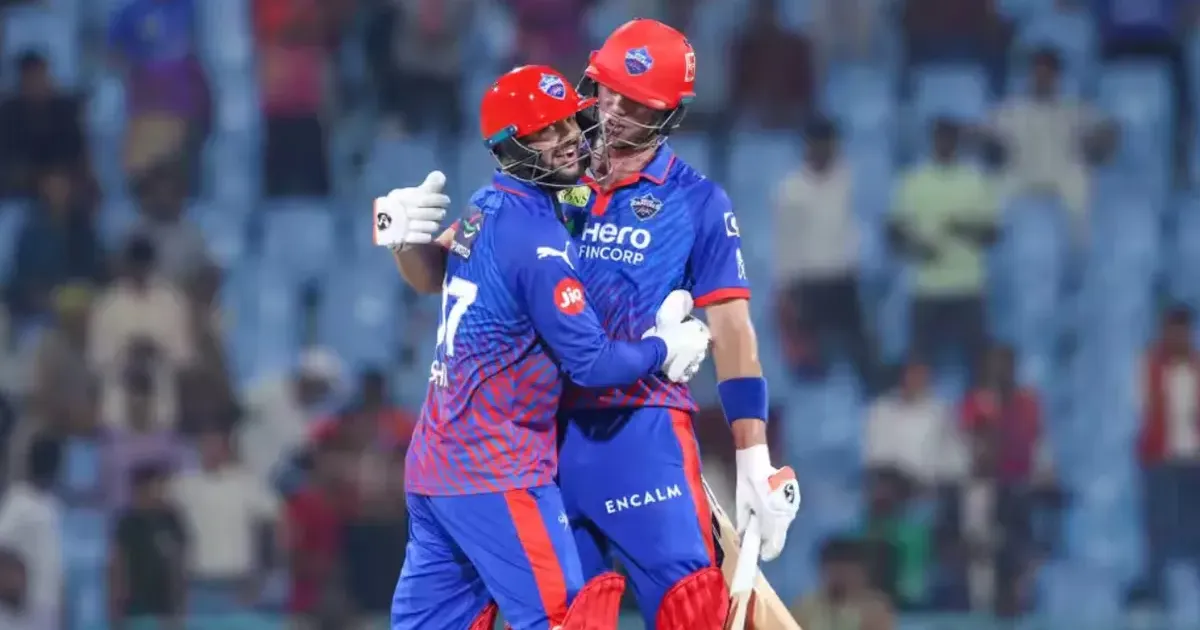
Delhi Capitals turned a poor chase into a six-wicket win over Lucknow Super Giants because Sameer Rizvi and Tristan Stubbs refused to let 26 for 4 become the story. The target was only 142, but Delhi had already lost enough wickets to make the chase feel dangerous. Rizvi changed the match with an unbeaten 70 off 47 balls, while Stubbs stayed with him for 39 not out off 32.
Their unbroken 119-run fifth-wicket stand carried Delhi to 145 for 4 in 17.1 overs. The margin made the finish look calm. The position they inherited was not calm at all.
Lucknow had been bowled out for 141 after Delhi's attack denied the innings a late surge. Lungi Ngidi and T Natarajan took three wickets each, and the rest of the attack kept enough pressure on the surface to make 160 feel out of reach.
Rizvi Played the Score, Not the Panic
Rizvi's innings mattered because it began with Delhi in genuine trouble. At 26 for 4, one more wicket would have exposed the lower order and given Lucknow a clear route back into the game. Instead, Rizvi played the situation rather than the reputation of the chase.
He did not have to force every ball. He waited for length, used the gaps and made the target shrink in small pieces before opening his shoulders later. Such judgment often separates a rescue from a collapse dressed up as aggression.
The innings had enough attack to finish the match early, but its value came from judgment. Rizvi understood that the required rate was not the opponent. Wickets were.
Stubbs Made Lucknow Defend Both Ends
Stubbs gave the stand its balance. His 39 not out was not the headline score, but it stopped Lucknow from loading all the pressure onto Rizvi. Once both batters were scoring, Lucknow could not attack one end without leaving space at the other.
The pair took the game away by refusing to panic after the early collapse. In T20 cricket, the hardest skill is sometimes not finding the boundary. It is waiting until the field and bowler make the boundary available.
Delhi's Bowlers Had Already Made the Chase Possible
The chase will own the memory of the night, but Delhi's bowlers created the win first. Ngidi's pace and Natarajan's control kept Lucknow from building a defendable total. On a slower surface, the lower total mattered.
A target of 141 invited a controlled recovery. A target twenty runs higher would have changed the risk calculation for Rizvi and Stubbs. Delhi's top order failed badly, but the bowlers had left enough room for the middle order to repair the innings.
Lucknow did not collapse in one dramatic over. The innings faded through dot balls, pressure and mistimed attempts to force pace into a surface that was not offering it.
Lucknow Lost the Second Wave
Defending a low total requires two bursts: early wickets, then sustained pressure before the chase settles. Lucknow got the first part. They never found the second.
There was heat in the chase, including visible tension around Stubbs, but the scoreboard made the tactical argument clear. Lucknow needed wickets after the powerplay damage. They instead allowed two batters to settle into rhythm, and once Rizvi crossed fifty, the field began to look defensive.
The home side had used its best chance before the innings was halfway repaired.
Delhi Should Treat the Win as a Warning
Delhi should not hide from the top-order failure. A win from 26 for 4 is a rescue, not a model. Better sides treat that kind of recovery as a warning because repeated collapses eventually catch up with even the strongest middle order.
Rizvi earned the night. Stubbs gave him the support that made it possible. Delhi earned the points. But a franchise that needs a 119-run fifth-wicket stand to clean up a 142 chase should not pretend the structure is sound.
This was a valuable win with a visible crack running through it. Delhi survived because two batters read the match correctly. They should not plan on needing the same escape again.