Authorities in Denver released the identity of a 41-year-old man who died after entering a restricted airfield area. Investigators spent several days tracing the victim's movements through the sprawling airport complex before confirming his identity. The Denver Office of the Medical Examiner officially identified the individual on May 12, 2026, following a forensic review of the incident that took place late last week.
Identification of the man followed days of intense investigation into how a civilian managed to bypass multiple layers of airport security measures. Police reports indicate the individual scaled a perimeter fence at Denver International Airport on the evening of May 8, 2026. Only minutes elapsed between the moment he cleared the physical barrier and his fatal encounter with a moving aircraft, leaving security personnel with a very narrow window for intervention.
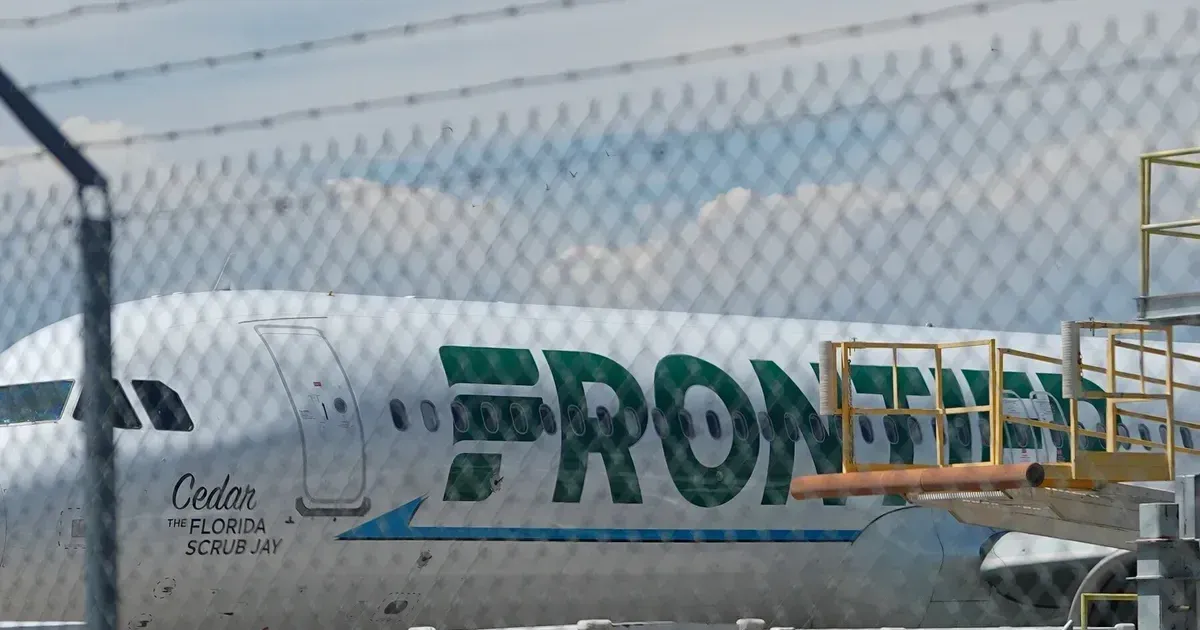
Frontier Airlines Flight 12, which was taxiing toward a designated runway at the time of the collision, struck the man during a critical phase of ground movement. Pilots reported an unusual impact and immediately halted the Airbus jet to allow emergency crews to respond to the scene. Rescue teams from the Denver Fire Department arrived within seconds of the report, but the 41-year-old was pronounced dead shortly after their arrival on the taxiway. Ground operations across the western portion of the airport ceased for several hours as investigators mapped the breach site and secured the aircraft.
Perimeter Security and the Fence Breach
Security footage captured the man approaching the outer boundary of the 34,000-acre facility shortly before the collision occurred. The fence breach occurred in a sector of the airport that relies on a combination of chain-link barriers and advanced electronic sensors designed to detect unauthorized entry. Investigators are now examining whether those sensors triggered a timely alarm or if the speed of the man's movement outpaced the response capabilities of the airport's security dispatch center.
Federal Aviation Administration (FAA) guidelines require commercial airports to maintain rigorous perimeter controls to prevent such incursions. Denver International Airport, being the largest airport by land area in the United States, faces serious logistical challenges in monitoring every mile of its boundary effectively. Patrols conducted by security teams occur regularly along the perimeter, yet the sheer vastness of the airfield creates pockets where rapid entry remains possible for a determined individual.
A spokesperson for Frontier Airlines stated that the company is working closely with the National Transportation Safety Board and the Transportation Security Administration to understand the circumstances of the event.
Frontier Airlines confirmed that the aircraft was removed from service for a detailed inspection. No passengers or crew members sustained physical injuries during the impact, though the flight was eventually canceled to accommodate the investigation. The airline issued a statement expressing sympathy for the victim's family while emphasizing its cooperation with law enforcement agencies.
Frontier Airlines Operational Impact
Impact on flight schedules remained limited to the immediate vicinity of the incident, though several departing flights experienced delays of up to ninety minutes during the peak evening rush. Air traffic controllers diverted incoming traffic to alternate runways to preserve the integrity of the evidence at the primary strike location near the terminal. Such coordination required precise communication between Denver Tower and regional air traffic control centers to avoid further disruption to the busy Friday night schedule.
National Transportation Safety Board (NTSB) officials arrived at the scene on Saturday to begin a formal inquiry into the ground collision. Their focus centers on the visibility conditions at the time of the strike and the specific communication between the cockpit and the control tower during the taxi sequence. Standard operating procedures dictate that any ground-level collision involving a commercial jet undergo a full federal review to determine if runway safety protocols require immediate adjustment.
Forensic teams finished their collection of biological evidence and physical debris late Monday afternoon to allow the runway to return to full operational status.
Findings from the Denver Office of the Medical Examiner suggest the cause of death was blunt force trauma consistent with a high-speed impact with the aircraft. Final toxicology results are expected in approximately six weeks, though officials have not indicated that substance use played a role in the initial breach of the fence line. Public records show no prior history of security violations or criminal activity for the 41-year-old man at the Denver facility.