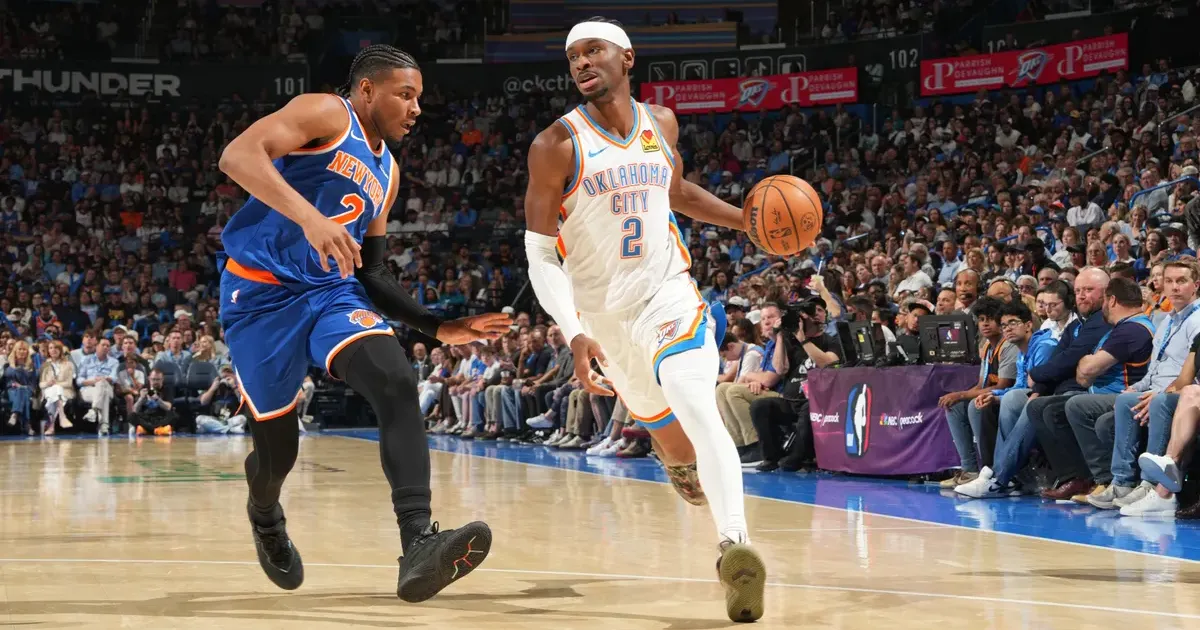
Deuce McBride's March injury scare looked, at the time, like the kind of small rotation problem that can become large in April. He had just returned from sports hernia surgery, lasted only 11 minutes in a 111-100 loss to Oklahoma City, and left after appearing to aggravate the groin area while diving for a loose ball.
That night remains important, but it reads differently now. The Knicks did not collapse around the uncertainty. McBride worked back into the rotation, later started in a playoff closeout when OG Anunoby was unavailable, and became one of the bench pieces who helped New York win its first NBA championship since 1973.
The Scare Was Real At The Time
The concern in late March was not exaggerated. McBride had missed 28 games after core-muscle surgery, and guards depend on exactly the movements that stress that area: cutting, sliding, stopping, absorbing contact and changing direction. A setback that close to the postseason could have left the Knicks with a thinner second unit and fewer defensive answers at the point of attack.
New York's loss to Oklahoma City added to the anxiety because the Thunder exposed the value of reliable guard depth. Shai Gilgeous-Alexander scored 30 points, Oklahoma City controlled the closing stretch, and the Knicks suddenly had one fewer pressure defender available. The box score was less important than the question behind it: could McBride be trusted in playoff-speed minutes?
The Playoff Answer Came In Philadelphia
By the second round, the answer was clear enough. With Anunoby out for Game 4 against the 76ers, McBride started and gave the Knicks one of the most decisive role-player performances of their postseason. He scored 25 points, made seven three-pointers and helped New York finish a sweep with a 144-114 win.
That game changed the meaning of the March scare. McBride was not only available; he was trusted in a high-leverage spot. His shooting stretched Philadelphia's defense, and his defensive activity allowed the Knicks to keep their pressure identity without overloading Jalen Brunson, Josh Hart or Mikal Bridges. In a playoff run, that is the distinction between having a bench body and having a real rotation player.
Depth Became The Knicks' Margin
The 2026 Knicks will be remembered first through Brunson's Finals MVP run, Karl-Anthony Towns' fit, Bridges' two-way value and Mike Brown's adjustments. That is fair. Stars decide championships. But the title run also depended on role players who could enter games without forcing the team to change who it was.
McBride fit that need. He did not require a high-usage role. He could defend, handle enough pressure to keep possessions organized, hit catch-and-shoot threes and survive being targeted. Those traits are easy to overlook in the regular season and difficult to replace in May. When playoff rotations shrink, the eighth man does not vanish. He just has less room to be flawed.
The Injury Still Shapes His Value
The championship does not erase the medical lesson. McBride's 2025-26 season was interrupted by a core injury, and his return was not smooth. That history remains relevant as the Knicks move from celebration to title defense. His contract, his role and New York's guard depth all look different when he is healthy enough to press the ball and shoot without hesitation.
It also changes how the March game should be judged. The issue was never whether one bench guard decided the Knicks' season on a night in Oklahoma City. The issue was whether New York had enough functional depth to survive a long postseason. McBride eventually helped answer yes.
From Rotation Question To Championship Piece
Title parades often hide the scares that disappear from the parade version of the story. McBride leaving that Thunder game could have become the first line in a familiar Knicks complaint about bad timing and thin depth. Instead, it became a checkpoint in a different story: a guard recovering in time to give the champions exactly enough when the bracket demanded it.
That does not turn McBride into the central figure of the title. It makes him something more specific and just as valuable: proof that New York's roster had more than headline talent. The Knicks needed Brunson to be great. They also needed players like McBride to be ready when the bracket found the weak spots. In 2026, enough of them were.