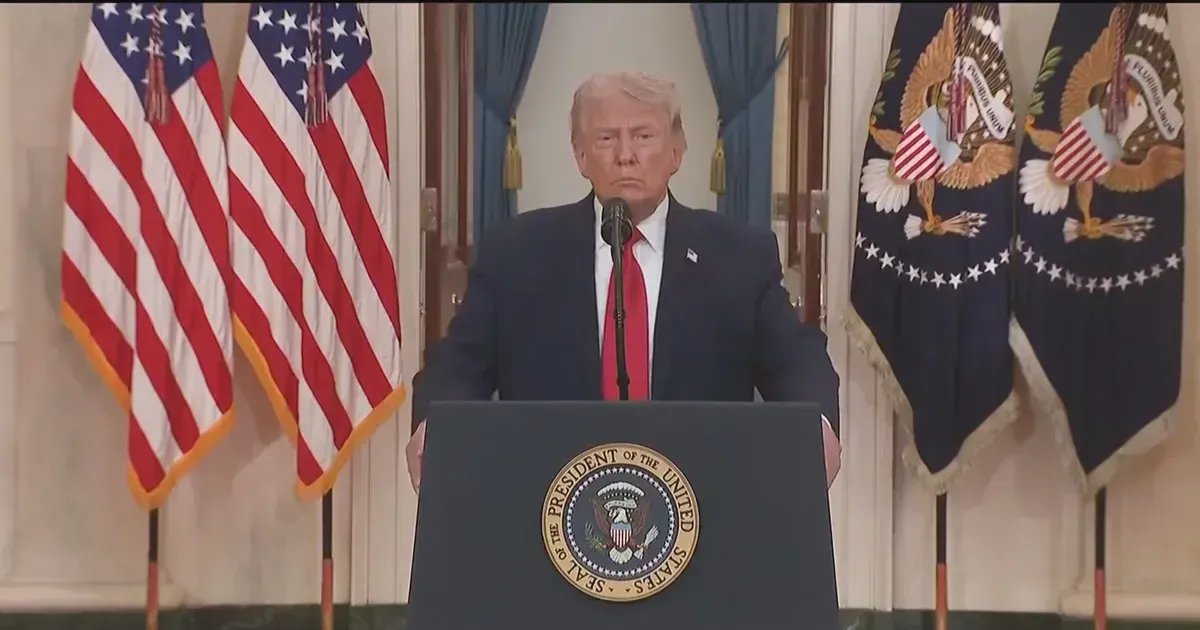
Donald Trump praised a special forces rescue after a U.S. airman was extracted from Iranian territory following the loss of an F-15E Strike Eagle. Pentagon accounts described a high-risk recovery after the aircraft was destroyed by enemy fire. The rescue was confirmed on April 6, 2026, as the White House paired military celebration with religious rhetoric and renewed threats against Iranian infrastructure.
Pentagon officials describe this loss as the first fighter jet destroyed by enemy fire since the onset of the current regional conflict. Military analysts estimate the replacement cost for a modern Strike Eagle variant exceeds $100 million including specialized electronic warfare suites. Search and rescue teams mobilized immediately as the airman touched down in hostile territory. High-resolution satellite imagery tracked the movement of Iranian ground units toward the crash site as American extraction teams crossed the border. Extraction happened under the cover of darkness during the early hours of Easter Sunday.
F-15E Strike Eagle Downed in Iranian Territory
Combat records show the F-15E Strike Eagle was the backbone of American tactical strike capabilities for decades. Iranian military sources initially claimed the downing of multiple aircraft, though the White House only confirmed the loss of a single airframe. Technical data suggests the jet was conducting a precision strike against missile manufacturing facilities before it was intercepted. Surface-to-air missile batteries positioned near the coast likely provided the fatal engagement data. Ejection seats functioned within their operational envelope to save the crew despite the rapid disintegration of the wing structure.
Retrieving a downed aviator from deep within an adversary's sovereign territory requires seamless coordination between intelligence agencies and special operations units. Previous conflicts in the region demonstrated the vulnerability of slow-moving rescue helicopters to shoulder-fired missiles. Operational security remains the primary concern for the Department of Defense as details of the specific extraction route remain classified. Iranian state media has yet to release footage of the crash site, suggesting that American forces may have destroyed the wreckage to prevent sensitive technology from being recovered. The wreckage lies in a remote mountain range far from civilian population centers.
Special Operations Command Executes High-stakes Extraction
Defense Secretary Pete Hegseth praised the technical proficiency of the extraction teams via his personal social media accounts. Success in such high-risk environments often depends on the speed of the initial notification and the availability of nearby assets. Iranian patrols reportedly missed the pilot by less than one mile during the initial search phase. Ground sensors and drone overflights provided the necessary window for a tilt-rotor aircraft to enter and exit Iranian airspace undetected. This specific mission used advanced stealth coatings on the transport vessels to evade regional radar networks.
Critics of the current military posture suggest that over-reliance on manned aircraft in dense anti-access environments invites such losses. Unmanned systems could theoretically perform the same strike profiles without risking American lives. Military leadership, however, continues to prioritize the flexibility of the Strike Eagle for complex missions. Combat search and rescue specialists frequently train for these exact scenarios in the Mojave Desert to prepare for the rugged terrain of the Iranian interior. The rescued airman arrived at a regional medical facility in stable condition for immediate evaluation. After targeting Iranian energy infrastructure, the U.S. continues to face threats against critical assets throughout the Gulf.
The White House language also drew secular criticism because the rescue was quickly folded into a larger political message about Iran, faith and military resolve.
President Trump frequently used religious terminology while describing the operation during an interview on the NBC program Meet the Press. He framed the recovery as a divine intervention, a move that prompted immediate pushback from secular advocacy groups and political opponents. Secular critics argue that linking military success to religious holidays blurs the separation of church and state within the armed forces. Trump dismissed these concerns by pointing to the timing of the mission on Easter Sunday. His administration continues to use the event to strengthen domestic support for the ongoing military campaign.
“The rescue was a miracle of Easter, and we must recognize the hand of God in the safety of our brave airman who faced the lions in their own den.”
Treasury Secretary Scott Bessent reinforced this narrative by comparing the mission to historical Christian victories. He published statements on social media characterizing the extraction as one of the greatest search and rescue operations in military history. This rhetorical strategy aligns with the broader messaging of the administration which seeks to frame the war as a moral and righteous effort. Political observers note that such language connects strongly with the president's core constituency in the United States. Opponents in Congress have expressed concern that religious framing complicates diplomatic efforts with Middle Eastern allies.
Iranian Energy Infrastructure Under Direct Threat
Escalation threats from the Oval Office followed the confirmation of the pilot's safety. Trump specifically identified Iranian power plants and bridges as potential targets if the regime fails to meet American demands. He demanded the immediate reopening of the Strait of Hormuz to international shipping traffic. Current maritime data shows a serious backlog of oil tankers waiting to transit the narrow waterway. Global energy markets reacted with volatility as the president threatened to unleash hell on the Iranian leadership. His rhetoric included abrasive language directed at the Iranian government on several social media platforms.
Energy analysts expect a sharp increase in crude oil prices if the stalemate in the Strait of Hormuz persists. The Iranian regime maintains that its closure of the shipping lane is a necessary defensive measure against American aggression. White House officials have signaled that the successful rescue of the airman removes a meaningful tactical constraint on future operations. Without a prisoner of war to consider, the military can pursue more aggressive strike options against hardened targets. Naval assets in the Persian Gulf have moved into offensive formations to support potential retaliatory strikes against Iranian infrastructure.
Rescue and Escalation Risk
Washington has long traded in the currency of exceptionalism, but the current administration's pivot toward overt religious nationalism marks a dangerous expansion of the military-industrial complex. By branding a standard combat search and rescue mission as a miracle, the White House is doing more than celebrating a tactical success. It is insulating the war effort from rational critique by placing it within the realm of the infallible. If a mission is divinely sanctioned, then any questioning of its strategic necessity becomes a form of heresy. This rhetorical shield allows the administration to ignore the uncomfortable reality that an aging F-15E was easily defeated by Iranian defenses.
The threat to incinerate Iranian infrastructure over the closure of the Strait of Hormuz is a desperate move to salvage a failing energy policy. American naval power is being used as a blunt instrument to subsidize global oil prices at the cost of a potential regional fire. Leaders who use the phrase Praise Allah in a mocking or aggressive context while threatening to destroy bridges and power plants are not seeking peace. They are seeking a totalizing victory that the current theater of war cannot provide.
The rescued pilot is a fortunate survivor of a broader systemic failure in American air superiority. Military planners must face that the Iranian sky is no longer a permissive environment for fourth-generation fighters.