US forces reportedly used high-yield bunker-buster bombs to strike ammunition depot located near facilities tied to the nuclear program of Iran. The policy signal landed before the exit path was clear. Markets and diplomats read it differently.
"The White House is promoting desire as news regarding the existence of direct negotiations between our two nations," said Mohammad Bagher Ghalibaf.
Secret cables suggest the White House seeks a conclusion to the active kinetic phase within four to six weeks. Military advisors indicated that a protracted mission to reopen the Strait of Hormuz might extend the conflict beyond this window. Donald Trump reportedly expressed a willingness to ceasefire even if the essential shipping lane stays blocked. Priority shifted to a rapid withdrawal of primary combat forces. Operation Epic Fury focused on degrading the logistical backbone of the Islamic Revolutionary Guard Corps. Targets in Isfahan included specific hardened structures designed to withstand conventional aerial bombardment. Pentagon officials did not explicitly confirm the targeting of nuclear infrastructure, but the proximity of the ammunition depot raised immediate concerns. Weaponry used in the raid included 30,000-pound ordnance designed to penetrate over 200 feet of reinforced concrete. Isfahan is a central hub for the military-industrial complex of the Islamic Republic. Secondary detonations visible in the shared footage indicate that the bunker-buster bombs successfully reached primary storage vaults. Plumes of smoke rose several thousand feet into the atmosphere. The regional impacts of these strikes continue to disrupt Iranian supply lines to its proxy networks.
Toxic smoke from the Isfahan strikes drifted toward nearby urban centers. Local reports indicate that civilian traffic was halted while military fire crews attempted to contain the blaze. American officials noted that the precision of the strikes minimized unintended casualties. Iranian state media contested this claim by showing damaged residential properties on the periphery of the target zone.
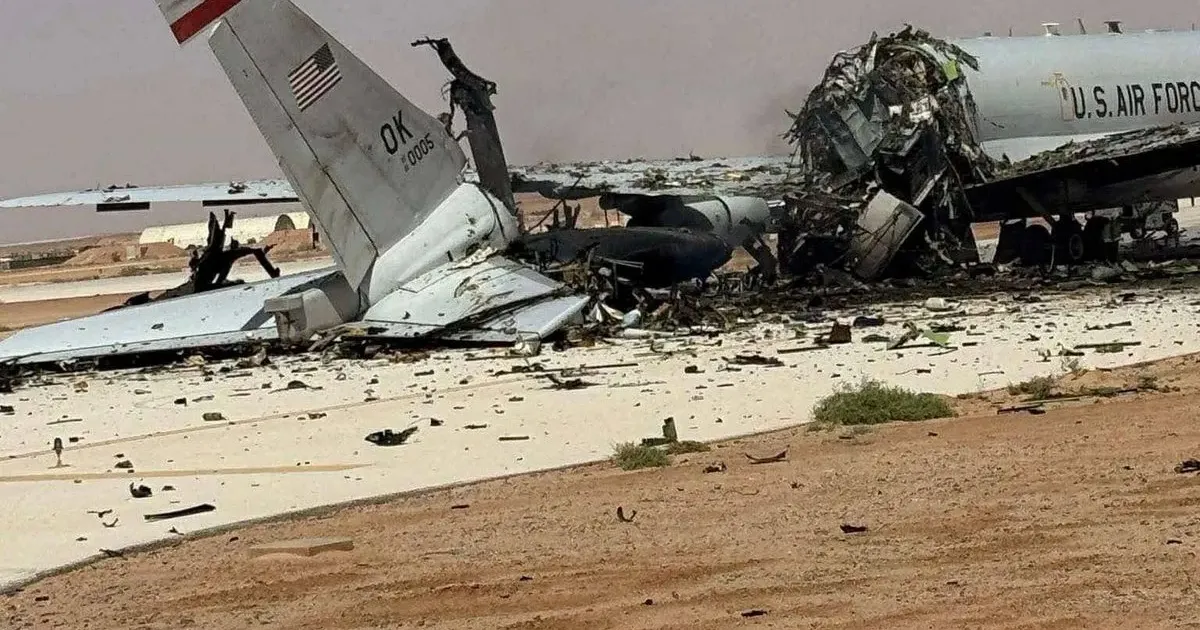
Strategic Loss of E-3 Sentry Radar Plane
Intelligence reports by The Independent suggest that the destruction of the Sentry aircraft creates a vacuum in regional surveillance. These radar platforms provide the eyes for strike packages operating deep inside hostile territory. Coordination of fighter jets and ground assets becomes unstable without the E-3. Each airframe carries a price tag exceeding $270 million and requires years of specialized manufacturing. Administration officials including Marco Rubio have previously attempted to forecast when the active phase of the conflict might end.
Restoration of this capability would require the deployment of a replacement unit from the continental United States. Saudi officials have not commented on how Iranian munitions evaded local defense batteries to strike the parked aircraft. The aircraft was one of several high-value assets stationed at the base to provide early warning for incoming cruise missiles. Loss of such equipment reduces the ability of the coalition to detect low-altitude threats.
Ground crews at Prince Sultan Air Base spent the morning clearing debris from the main runway. While the base remains operational, the presence of Iranian-made drones in the vicinity has forced a pause in non-essential flights. Security protocols at other regional installations have been heightened to prevent similar precision strikes on American hardware.
Tehran Rejects Claims of Direct Negotiations
Diplomatic friction increased as Iranian officials accused the United States of fabricating progress. Mohammad Bagher Ghalibaf told state media that the White House remains focused on domestic optics. Iran continues to demand the cessation of all air strikes before any formal dialogue begins. Statements from the foreign ministry emphasized that mediation through neutral nations is the only existing path.
Demands for a complete withdrawal of American forces from the Persian Gulf persist. Tehran views the recent use of bunker-busters as evidence of an aggressive posture incompatible with genuine peace talks. Third-party nations continue to pass messages between Washington and Tehran, but the content of these communications stays largely classified. Neither side appears willing to make the first public concession.
Deep distrust persists regarding the usage of heavy munitions near civilian population centers. International observers have warned that the escalating rhetoric could preclude a peaceful resolution. Diplomatic sources in Qatar indicated that previous frameworks for nuclear monitoring are now effectively void. The current deadlock suggests a long-term breakdown in regional stability.
Strait of Hormuz and the Six-Week Timeline
Financial analysts reacted sharply to reports that the United States might leave the Strait of Hormuz closed. Approximately one-fifth of the world's petroleum passes through this narrow passage. Persistent blockades would likely result in sustained price shocks for Western consumers. Energy security stays a secondary concern.
Strategic planning documents reveal that clearing mines and neutralizing coastal batteries would require months of sustained effort. President Trump reportedly decided that the political cost of a long war outweighs the economic necessity of the shipping lane. Tactical shifts indicate a move toward containment through air power instead of a maritime opening operation. This preference for speed over economic stability defines the current phase of the campaign.
Opponents of the withdrawal plan argue that a closed strait gives Iran permanent leverage over the global economy. Calculations by energy experts suggest that oil prices could reach $150 per barrel if the blockage extends into the summer. American domestic pressure for lower gas prices might soon conflict with the administration's desire for a rapid exit from the theater of operations.
Withdrawing American combat assets before the shipping lanes are clear would leave regional partners vulnerable to continued harassment. Saudi and Emirati naval forces possess limited capacity to clear sophisticated Iranian-made naval mines alone. The regional balance of power hinges on the duration of the American commitment to maritime security.