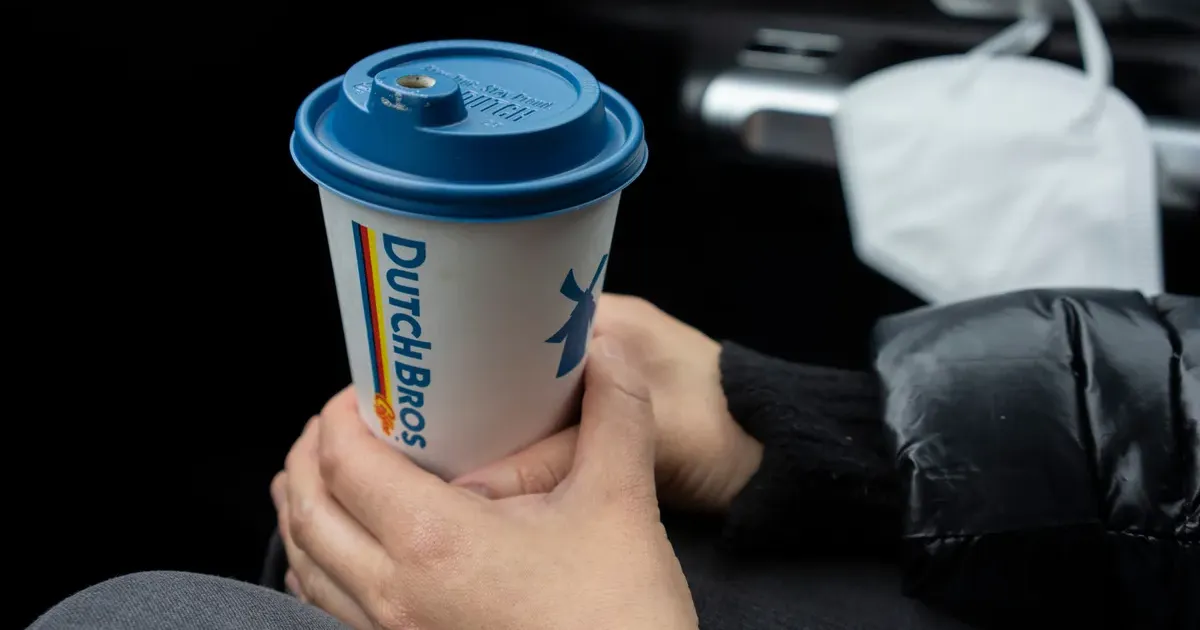
Grants Pass, Oregon, remains the spiritual home of a caffeine empire that is rapidly outgrowing its bean-based origins. Recent financial disclosures and reports from $1.6 billion indicate a seismic shift in consumer behavior at Dutch Bros, where the traditional latte is losing ground to brightly colored, customized energy stimulants. Data published by the Wall Street Journal confirms that non-coffee beverages, primarily the proprietary Blue Rebel energy drink line, now constitute 25% of the company's total sales volume.
Investors have watched the drive-thru specialist transform from a regional curiosity into a national powerhouse since its 2021 initial public offering. But the latest revenue mix suggests the brand is no longer tethered to the fluctuations of the global Arabica market. Instead, it is competing directly with beverage giants like Red Bull and Monster. This transition follows a multi-year effort to diversify the menu beyond standard espresso drinks, targeting a younger demographic that favors cold, carbonated, and highly customizable caffeine sources.
Blue Rebel, the private-label energy base exclusive to the chain, serves as the foundation for hundreds of flavor combinations. Customers frequently add fruit syrups, coconut milk, or soft top foams to these drinks, creating a high-margin product that requires less labor-intensive preparation than a traditional cappuccino. The efficiency of the drive-thru model relies on this speed. Baristas can pump syrups and pour pre-mixed energy bases faster than they can pull double shots of espresso or steam milk to specific temperatures.
Blue Rebel Energy Drink Market Expansion
Market analysts point to the afternoon slump as the primary driver for this specific growth. While coffee sales typically peak before 10:00 a.m., energy drink consumption remains steady throughout the day and spikes again in the mid-afternoon. By capturing this second wave of traffic, the company has effectively extended its peak operating hours. Internal data shows that the Blue Rebel line is particularly popular during the 2:00 p.m. to 5:00 p.m. window when students and office workers seek a metabolic boost.
Customization remains the core of the brand's appeal to Generation Z. Unlike traditional energy drinks sold in cans at convenience stores, the Dutch Bros versions are hand-crafted and served over ice. Flavors like Electric Berry, Aftershock, and Shark Attack utilize vibrant colors that are specifically designed for visual appeal on social media platforms. In fact, the aesthetic of the drink is often as important to the consumer as the caffeine content itself. This visual marketing strategy requires zero advertising spend as customers share photos of their neon-hued beverages.
Proprietary formulations offer a significant competitive advantage over rivals who must stock third-party cans. By manufacturing its own energy base, the company retains a larger portion of the profit margin that would otherwise go to a distributor or a brand like Rockstar. The cost of syrup and carbonated water is negligible compared to the premium prices customers are willing to pay for a large, customized beverage. This financial structure has allowed the chain to maintain profitability even as inflation impacts dairy and coffee bean prices.
Our energy category continues to be a primary driver of our afternoon daypart, allowing us to maintain high throughput even after the morning coffee rush subsides.
Operational simplicity is another factor contributing to the 25 percent sales figure. The Blue Rebel base is delivered in concentrated form or pre-canned units that do not require the specialized storage conditions of fresh milk or the precise grinding requirements of coffee beans. Still, the company continues to invest in high-end espresso equipment for its core coffee business, ensuring it does not alienate its original customer base while chasing new trends.
Dutch Bros Financial Performance and Revenue Streams
Wall Street has responded favorably to the diversification of the revenue stream. Analysts from J.P. Morgan have noted that a quarter of sales coming from a proprietary non-coffee line reduces the company's exposure to volatile commodities. If the price of coffee spikes due to a poor harvest in Brazil, the energy drink segment provides a financial cushion. The resilience is critical for a company that is currently in a rapid expansion phase across the Sun Belt and the Midwest.
Annual revenue for the company has climbed steadily, reaching the $1.6 billion mark as it opens hundreds of new locations. Each new shop is designed for maximum speed, often featuring double drive-thru lanes and runners who take orders on tablets. The integration of the energy drink line into this high-speed workflow is smooth. In particular, the cold beverage focus reduces the need for complex heating elements and steaming wands in every corner of the small-footprint kiosks.
Profitability per transaction tends to be higher for the Blue Rebel line. A large energy drink with three added syrups and a gummy bear garnish can retail for over seven dollars, while the cost of ingredients remains low. By contrast, a specialty latte involves expensive milk alternatives and higher-grade coffee beans that are subject to global supply chain disruptions. The disparity explains why the company aggressively promotes its energy offerings through its mobile app and loyalty program rewards.
Customization Trends in Modern Beverage Retail
Consumer behavior in the beverage industry has moved toward the beverage as a snack rather than a simple morning ritual. Many customers now view a 32-ounce energy drink as a meal replacement or a treat. To that end, the brand has introduced sugar-free versions of its energy base to cater to health-conscious consumers who still want the caffeine kick without the caloric load. The flexibility has prevented the brand from being pigeonholed as a sugary soda alternative.
Regional tastes influence the flavor menu sharply. In hotter climates like Arizona and Texas, cold energy drinks outperform hot coffee by a wide margin for most of the year. The company's expansion strategy into these territories relies heavily on the success of the cold beverage category. Meanwhile, in the cooler Pacific Northwest, the split between hot coffee and cold energy drinks remains more balanced, though the trend is shifting toward cold liquids even in winter months.
Competitors are taking notice of this 25 percent milestone. Starbucks has recently expanded its Refreshers line and introduced more cold-pressed energy options to capture the same market segment. Separately, Dunkin' has launched its own version of sparked energy drinks to keep pace with the changing demands of younger commuters. Yet, the Dutch Bros culture, characterized by loud music and high-energy baristas known as bro-istas, remains difficult for more traditional chains to replicate.
Expansion Strategy Beyond the Pacific Northwest
Aggressive scaling is the current priority for the executive team. The company plans to open thousands of locations over the next decade, moving deep into the Eastern United States. The expansion requires a menu that appeals to a broad cross-section of Americans, not just the specialty coffee aficionados of Portland or Seattle. The universal appeal of caffeine and sugar transcends regional coffee cultures, making the energy drink line a perfect vehicle for national growth.
Labor costs are a constant concern for any retail operation, but the energy drink category helps mitigate these pressures. Training a new employee to mix an energy drink is sharply faster than training a skilled barista to master the art of espresso extraction. The lower barrier to entry for staff training allows the company to staff new locations quickly in a tight labor market. The result is a more expandable business model that can be replicated in any suburban parking lot across the country.
Technological integration also plays a role in the rise of non-coffee sales. The company's mobile app tracks individual flavor preferences and suggests new energy drink combinations based on previous orders. If a customer frequently orders a strawberry-flavored coffee, the app might offer a discount on a strawberry Blue Rebel. The data-driven approach ensures that the 25% sales figure is not a peak but a baseline for future growth. The final quarter of 2025 saw the highest adoption rate of the loyalty program in the company's history.
The Elite Tribune Perspective
Dutch Bros is no longer a coffee shop, and pretending otherwise is an exercise in corporate nostalgia. By pivoting a full quarter of its business to a proprietary energy drink, the company has successfully gamified caffeine addiction for a generation that finds the taste of actual coffee repulsive. It is a brilliant, albeit cynical, financial maneuver that decouples the company from the artisanal risks of the specialty beverage industry. While Starbucks struggles to maintain its identity as a third place for intellectual gathering, the Oregon-born disruptor has embraced its role as a high-speed sugar dispensary.
The move toward Blue Rebel dominance exposes the frailty of the traditional coffee model in a high-speed, low-attention economy. We are watching the complete commoditization of the stimulant market where the brand is the flavor, not the bean. Investors should be thrilled by the high margins of carbonated syrup water, but consumers should be wary of the nutritional void replacing their morning brew. The shift is not about innovation; it is about the ruthless optimization of the drive-thru lane. As long as teenagers demand neon blue liquids that taste like melted candy, the company will continue to print money. The coffee bean is now just a secondary actor in a play written by chemical flavorists and logistics experts.