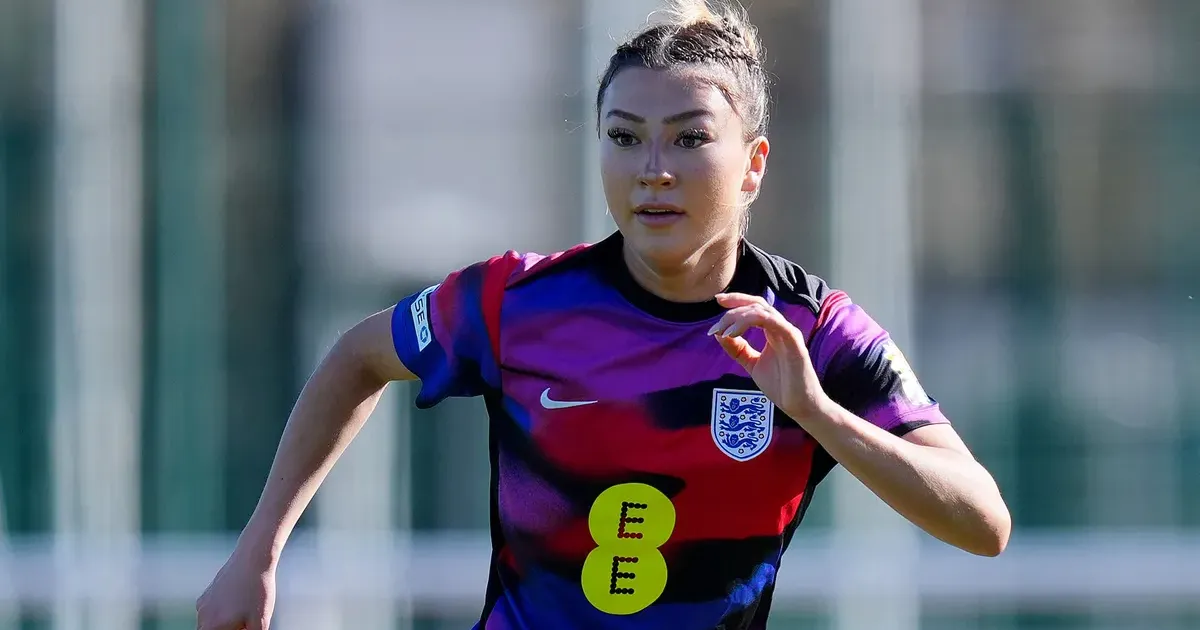
Erica Meg Parkinson's first England senior call-up was surprising in March. By July, after her move to the North Carolina Courage, it looks more like a route map for the modern Lionesses pathway.
The midfielder was 17 when Sarina Wiegman brought her into the senior squad for World Cup qualifiers against Spain and Iceland. She had been born in Singapore, raised partly in Portugal, developed outside the Women's Super League academy glare and was playing for Valadares Gaia in the Portuguese top division.
The selection felt unusual, but not random. England scouts had already seen a technical, dynamic midfielder who had moved quickly through youth levels. Injuries to Ella Toone and Grace Clinton opened midfield space, but Parkinson was there for a real football reason. She was evidence that England's talent map has widened.
The Call-Up Was a Scouting Signal
Wiegman did not need Parkinson to carry the senior team immediately. The useful part of the camp was the test itself: training speed, tactical detail, physical duels, communication and how quickly a teenager could process information beside established internationals.
This was different from handing a prospect from handing a prospect a symbolic cap. England could look closely without pretending that one camp should settle her future. Parkinson could feel the level without being asked to solve a midfield problem she had only just entered.
For the FA, the call-up sent a message to players with English eligibility outside the domestic system. If the performances are good enough, location is no longer a wall.
Her Background Complicates the Old Pathway
Parkinson's route does not fit the tidy English academy story. She was born in Singapore to an English father and Japanese mother, later moved to Portugal and became eligible to represent several countries. England's advantage was early attention and a pathway that made her feel wanted.
International football now includes now includes a scouting race for dual- and multi-national players. Japan, Singapore and Portugal were all part of her wider identity story. England could not assume that heritage alone would keep her.
The call-up therefore worked on two levels. It helped Wiegman assess a midfielder. It also told the player that England saw her as a serious long-term option, not only a youth prospect filed away for later.
The Courage Move Changes the Test
North Carolina Courage announced Parkinson's signing on July 1, giving her a deal through the 2029 NWSL season with a club option for 2030. The move from Valadares Gaia to the NWSL changes the weekly evidence available to England staff.
The NWSL will test her differently from Portugal. The games are faster, more transitional and more physically demanding. Midfielders have to defend space, handle pressure, move the ball quickly and survive repeated duels against experienced professionals.
The move can accelerate development if the minutes are managed well. It can also expose a young player if the expectation moves faster than the adaptation. Parkinson's next step is not only about talent. It is about whether her club environment gives her the right blend of minutes, coaching and patience.
Wiegman Can Keep the Door Open
The senior call-up does not have to mean immediate international minutes. England's midfield still has established options and a tournament-standard core. Parkinson's value to Wiegman may be as a player to monitor closely through club form rather than rush into a qualifying lineup.
The patient approach is sensible. The best use of a teenage call-up is evidence gathering. A coach learns how the player responds to a senior camp, then watches whether the club season confirms or softens the impression.
If Parkinson handles the NWSL, England will have more than a good youth story. It will have a midfielder tested in a league that rewards speed, pressure resistance and tactical maturity.
The Risk Is Branding Before Readiness
Parkinson's story is easy to overpackage: multilingual teenager, Singapore birth, Japanese-English family, Portugal development, England call-up, NWSL move. Those details make her interesting, but they should not replace the football judgment.
The central question is still simple. Can she influence senior matches week after week? Can she protect the ball, defend transitions, read pressure and make decisions quickly enough against top professionals?
England's pathway becomes stronger when it finds players like Parkinson early and then resists rushing them. The call-up opened the door. The Courage move gives the next evidence. The job now is to let performance, not novelty, decide how fast the story moves.