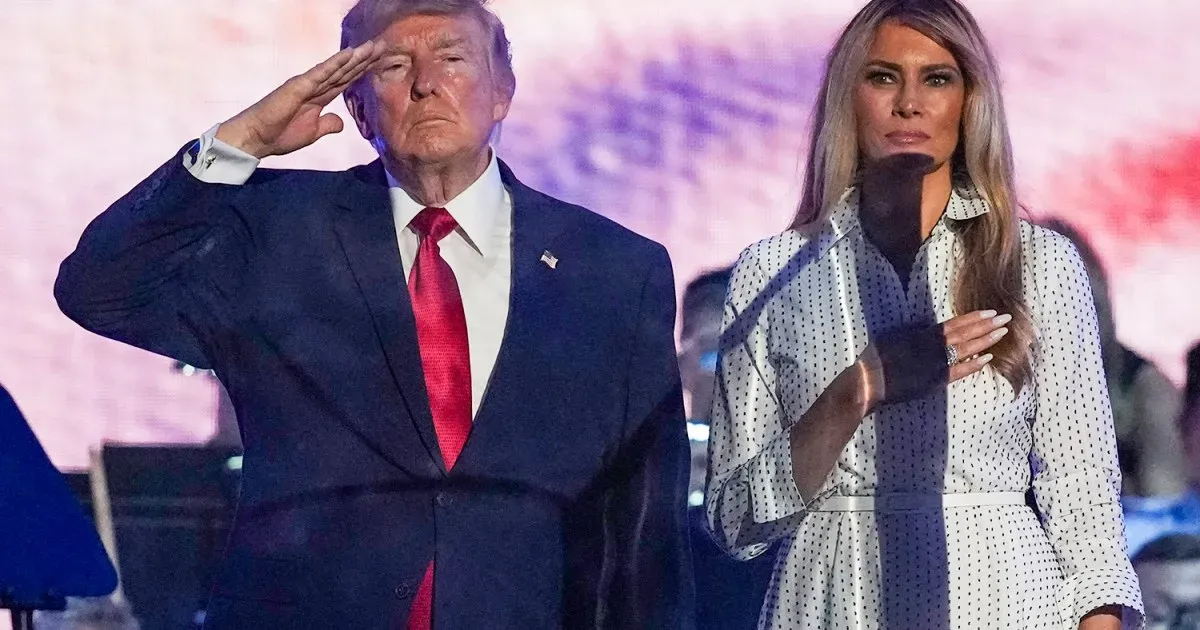
America's 250th anniversary celebration was meant to project civic unity, but extreme weather and political staging turned the Washington event into a revealing test of how the country now commemorates itself.
Severe heat and storms disrupted crowds, schedules and security planning around the National Mall before the evening program resumed with fireworks, flyovers and a presidential address. The interruption mattered because the event depended on mass movement, medical readiness and a clear public-safety message at the exact moment organizers were trying to project confidence.
The event quickly became a contest over tone: whether the anniversary should function as a broad civic ritual or as a stage for the governing coalition that happened to control Washington during the milestone year. That tension is difficult to avoid at any presidential ceremony, but the semiquincentennial raises the stakes because it asks the country to describe itself across generations, regions and political identities.
Al Jazeera reported on July 5, 2026, that President Donald Trump described the milestone as one of the most joyous moments in US history while delivering a campaign-style speech during the celebration. The Guardian also reported that storms forced disruption around the event and that Trump's remarks blended patriotic ceremony with partisan themes.
Weather Disruption Became Part of the Story
The weather problem was not a minor logistical inconvenience. Large public events depend on predictable crowd movement, medical readiness and clear evacuation guidance. Extreme heat adds risk before storms arrive because dehydration, long security lines and crowded transport can stress attendees and emergency workers.
America 250 therefore became a stress test for public-event planning as much as a national birthday. A celebration designed around scale had to manage the same climate volatility that has increasingly shaped summer gatherings across the United States.
That matters because national commemorations are supposed to create shared memory. When attendees remember the heat, evacuations and delays as much as the ceremony, the event becomes a snapshot of a country trying to stage symbolism under more unstable conditions. The practical burden falls on local police, medical crews, transit agencies and event staff who must keep the celebration functioning while political leaders control the cameras.
Trump Put His Stamp on the Milestone
The political dimension was just as visible. Trump's speech honored American history and military service, but reports also described language and themes familiar from his second-term political messaging.
National Mall celebration events have always carried political meaning, but the semiquincentennial carries a special expectation of broad ownership. It marks the country, not one administration. That is why the tone of the program drew attention from critics who saw the event as too closely aligned with Trump's personal brand and agenda.
Supporters are likely to argue that presidents always shape national ceremonies and that Trump's framing reflected the mandate he claims from voters, the same political logic visible in Trump deportation policy fights. Critics will see something different: a civic anniversary pulled toward partisan display at the moment it most needed a common language.
The Civic Question After the Fireworks
The deeper issue is whether the United States can still hold a national ritual without immediately turning it into a loyalty test. The 250th anniversary should be large enough to include soldiers, immigrants, dissenters, founders, civil-rights organizers, workers and communities whose claims on the country have often been contested.
When the event narrows around one leader's narrative, it becomes easier to celebrate power than citizenship. That does not erase the grandeur of fireworks or flyovers, but it changes the meaning attached to them. A national anniversary can tolerate disagreement, but it becomes brittle when attendance, applause and symbolism are read as partisan alignment.
The weather disruption added an accidental metaphor. A country trying to tell a clean story about itself had to stop for heat, storms and operational strain. The practical realities intruded on the script, just as social division and climate risk intrude on patriotic language. Organizers can reschedule ceremonies and reopen viewing areas, but they cannot easily repair the sense that shared symbols now arrive with disclaimers, security plans and partisan interpretation already attached.
A Birthday Cannot Hide the Stress Lines
The 250th celebration showed that national identity is now contested infrastructure. It must be maintained, widened and protected from capture, just like bridges or power grids. The danger is not that a president speaks at a national ceremony. The danger is that the ceremony becomes unintelligible to citizens who do not belong to the president's coalition. A durable anniversary would leave room for pride and argument at the same time; a fragile one asks the public to confuse patriotism with agreement. That is why the weather and the speech belong in the same story: both exposed how much planning national unity now requires.
America's next decade will require public rituals that can hold disagreement without collapsing into propaganda. The semiquincentennial could have been a rare civic reset. Instead, the event exposed the same pressures that define the country: climate volatility, security complexity and a political culture that turns shared symbols into campaign assets. A republic can survive storms. It has a harder time surviving when every flag is treated as factional property and every shared ceremony arrives already divided into audiences, opponents and campaign footage.