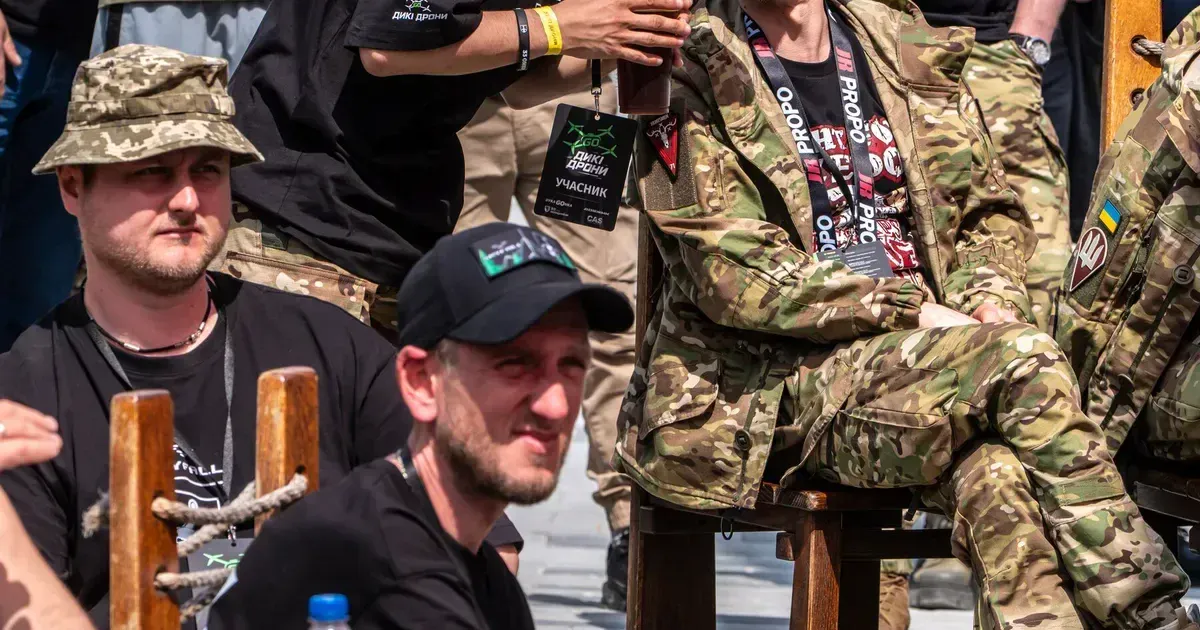
Families, soldiers and drone makers gathered in western Ukraine for a weekend that looked partly like a fair and partly like a military technology expo. The barbecue and music gave the gathering a festival surface. The aircraft overhead made clear that the war was never far away. The gathering was reported on June 12, 2026.
The event showed how deeply drones have entered Ukraine's military culture. First-person-view pilots who normally fly in lethal conditions watched racing drones run through obstacles for trophies, prizes and reputation. Families stood near booths where manufacturers and unit representatives displayed equipment that has become central to the battlefield. The atmosphere was relaxed by wartime standards, but the security logic was strict: gatherings of soldiers remain vulnerable to Russian attack.
Drone Racing Becomes Wartime Respite
Wild Drones competition began as a morale project and has grown into a subculture around pilots, technicians and the families who support them. Le Monde reported that the 2026 event drew around 300 soldiers from Ukraine's eastern front to the foothills of the Carpathians. For many of them, the trip required long road travel and a temporary shift from combat routine to public competition. That distance from the front was part of the point.
Racing drones are not the same as combat drones, but the hand skills overlap. Pilots must judge speed, angle and depth while reacting through a headset rather than direct sight. The competition format turns that pressure into sport. It also lets other soldiers and civilians see the skill involved in a form of warfare that can otherwise feel abstract, remote or hidden behind short battlefield videos.
The event's structure also helps explain why families were present. A race can be watched, understood and cheered in a way that combat footage cannot. That shared experience gives relatives a safer language for talking about dangerous work. It does not make the front less severe, but it gives pilots a public identity beyond the losses and stress of their units.
The public mood did not erase the danger. Organizers limited advance publicity and treated location details carefully because a concentration of soldiers can become a target. The event also carried the discipline of a military gathering. When an air raid warning interrupted the fair, participants moved toward shelter rather than treating the siren as background noise. The contrast between barbecue smoke and air-defense caution captured the strange balance of Ukrainian daily life.
Manufacturers and Soldiers Share the Same Space
The fairground setting gave drone companies direct contact with the people who use their equipment. Stands displayed unit insignia, drone parts, ground robots and products tied to Ukraine's growing unmanned systems industry. FPV drone pilots could compare field experience with engineers who need battlefield feedback to improve range, durability and resistance to jamming. That exchange is one reason the races matter beyond morale.
Ukraine's drone ecosystem depends on speed. Small teams test, adapt and redeploy designs faster than traditional procurement systems normally allow. Events like this help turn informal battlefield lessons into shared knowledge. A pilot who explains why a frame fails, a signal drops or a battery overheats can shape the next production decision. The competition is entertainment, but it also functions as a live user conference for wartime technology.
The human side is just as important. Soldiers who spend months around trenches, drones and artillery rarely get a setting where their families can see part of their work without entering the front line. Children, partners and friends could watch races on screens, visit booths and understand why pilots talk about drones with the intensity of athletes and engineers. That visibility helps explain why the event has become part of Ukraine's wartime identity.
There is a recruitment layer as well. Young visitors see drone work presented through skill, teamwork and technology rather than only through casualty reports. That framing can attract engineers, gamers and mechanics who might not see themselves in older military roles. For commanders, the value is practical: a wider talent pool means more people who can learn to fly, repair and adapt unmanned systems.
Military Culture Extends Beyond the Front
The gathering also points to a longer-term shift. Ukraine is not treating drones as a temporary tool that will disappear when one battle ends. The country is building training centers, manufacturing networks and social rituals around unmanned systems. Ukraine drone culture now includes competitions, songs, unit branding and public events that blend military necessity with community life.
That development carries both strength and sadness. It shows resilience, technical creativity and public support for soldiers. It also shows how normal war has become after years of invasion. A weekend of racing, barbecue and prizes would have been an odd hobby event in another country. In Ukraine, it becomes a way to rest, recruit, test technology and prepare for the next return to the front.
The event fits a broader pattern in which Ukraine's war effort increasingly depends on unmanned systems, volunteer networks and small technical teams. Wild Drones is not only a race. It is a snapshot of a country learning to live with technology that is both a shield and a reminder of the war's cost.