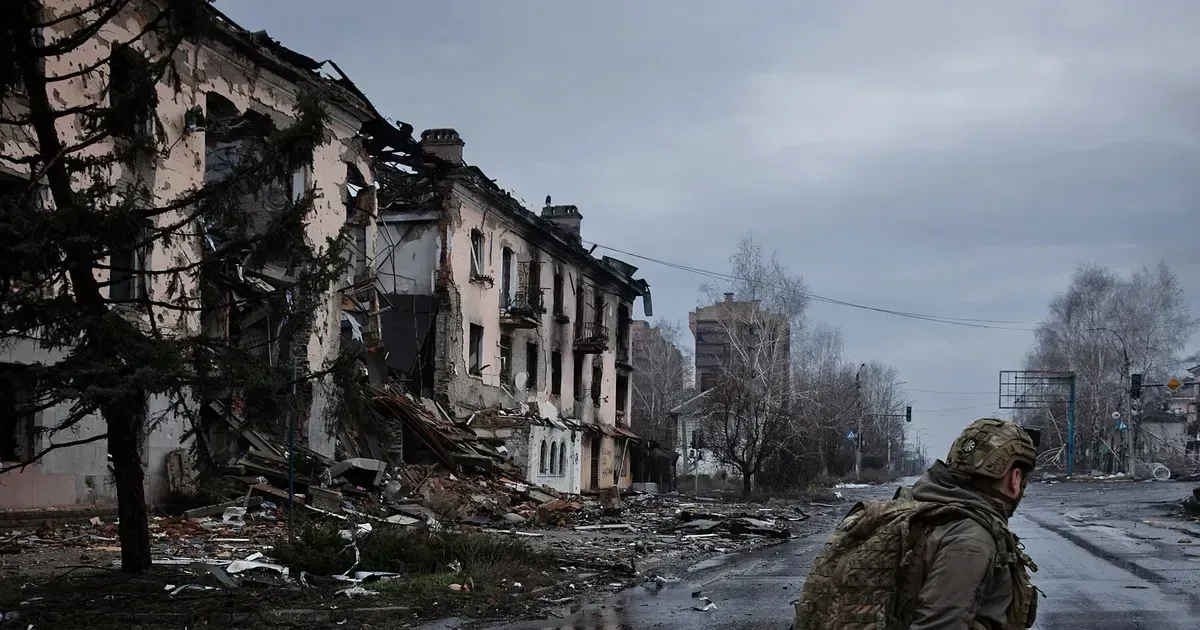
The full-scale war in Ukraine has crossed a grim historical marker, lasting longer than World War I and forcing Europe to think again about the endurance of industrial warfare. The duration is changing how allies think about patience and shaping defense debates far beyond Ukraine. The milestone also underlines how slowly modern front lines can move when drones, mines and artillery reinforce one another. By June 11, 2026, the conflict had exceeded the 1,568-day span between the outbreak of World War I and the armistice that ended it.
The comparison is not exact in scale, geography or global mobilization. World War I drew empires into a worldwide conflict that reshaped the twentieth century. Ukraine's war is more geographically concentrated, but its duration and battlefield character have revived questions many European governments thought belonged to a previous era.
The strongest parallel is attrition. Front lines across eastern and southern Ukraine have often moved slowly, with artillery, trenches, mines and exhausted infantry shaping the war more than rapid maneuver.
Attrition Has Defined the Front
Russia and Ukraine have both built dense defensive systems. Minefields, anti-tank obstacles and trench networks make large advances costly and visible. A unit that moves in daylight can be detected by drones, satellites or electronic signals before it reaches its objective.
That transparency has made surprise harder. Modern weapons are more precise than the artillery of 1916, yet they have not restored easy mobility. In many sectors, technology has made the battlefield more lethal without making it more fluid.
The human experience remains brutally familiar. Soldiers rotate through muddy positions, endure shelling and live under constant observation. The tools have changed, but the pressure of holding ground under fire remains central to the war.
Drones Changed the Old Trench Logic
The conflict is not a simple return to the Western Front. Cheap drones, satellite communications and electronic warfare have changed how commanders see and strike the battlefield. Small units can identify targets quickly, while loitering munitions turn exposed vehicles into immediate risks.
That technological layer helps explain why breakthroughs have been so hard. Armored formations need concealment, timing and logistical depth. In Ukraine, those conditions are difficult to sustain because every movement can generate a digital trail.
Both sides have adjusted by dispersing forces, hiding equipment and relying on smaller assaults. Those adaptations can reduce losses, but they also slow the pace of operations. The result is a war that consumes men, shells and drones at a rate that tests national production capacity.
Industrial Capacity Is the Strategic Test
The duration of the war has forced governments to relearn the importance of ammunition stockpiles. Precision weapons matter, but so do artillery shells, air defenses, spare parts and repair crews. A long war rewards the side that can keep replacing what the battlefield destroys.
Russia has expanded war production and leaned on external suppliers. Ukraine depends heavily on Western military aid while building more domestic drone and defense capacity. The balance between those systems will shape the next phase as much as any single offensive.
The political burden is also growing. Kyiv cannot easily trade territory for quiet, while Moscow has tied the war to regime credibility. That leaves diplomacy constrained by the fear that compromise will be read as defeat.
Long War Forces Europe Back to Industrial Defense
Passing the length of World War I is a warning about assumptions. Modern wars do not necessarily end quickly because the weapons are advanced. They can become longer when defensive technology, political stakes and industrial mobilization reinforce each other.
For Europe, the lesson is immediate. Defense planning can no longer be built around short crises and small stockpiles. The continent is watching a major land war prove that endurance is not a historical footnote.
The strategic risk is that the conflict becomes normalized while remaining dangerous. A long front can look stable from a distance, but it still drains economies, shapes alliances and keeps escalation risk alive. The milestone does not mean Ukraine's war is the same as World War I. It means Europe is again living with a war whose duration has become part of its power.