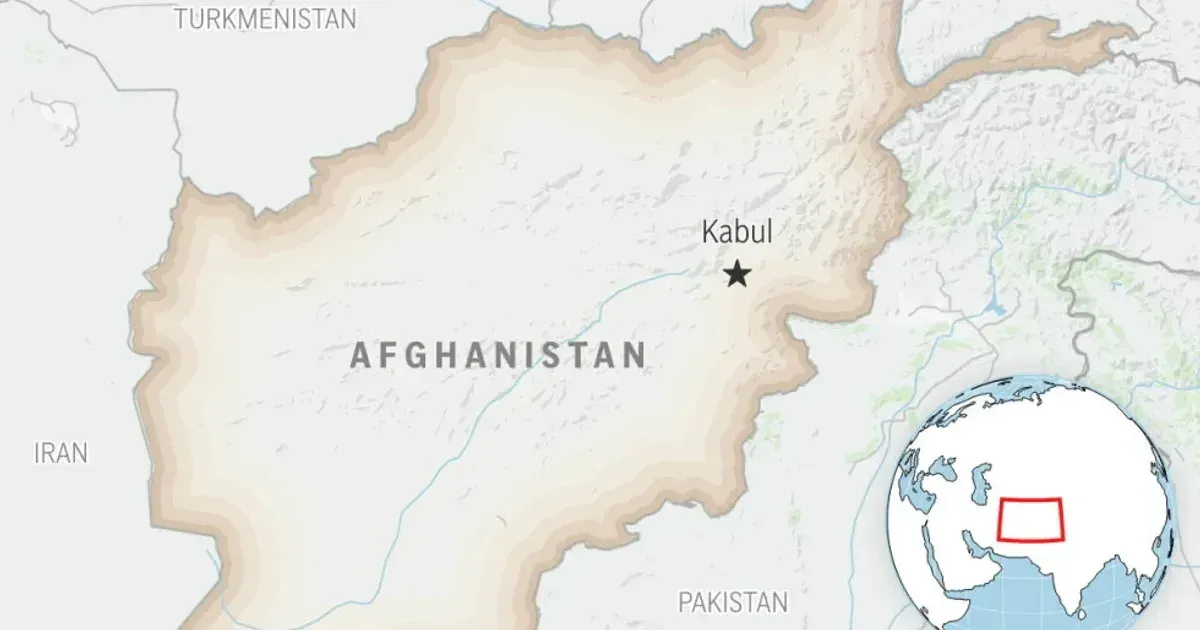
Pakistan has carried out airstrikes inside Afghanistan, opening another dangerous phase in a border dispute that neither Islamabad nor the Taliban government in Kabul has been able to contain.
Afghan officials cited by AP said the strikes killed at least 13 people in eastern Afghanistan. The next official statements may matter almost as much as the strikes themselves. The attacks add pressure to a border region where militant networks and state forces already overlap. The attacks were reported on June 10, 2026, in areas close to the Pakistan border, where Islamabad says militants have used Afghan territory to plan or support attacks across the frontier.
The Taliban government condemned the strikes as a violation of Afghan sovereignty. Pakistan has not treated the border issue as a narrow law-enforcement matter, arguing instead that militant sanctuaries across the Durand Line have become a direct national security threat.
Border Security Turns Into Air Power
The most important shift is the method. Cross-border accusations have been common since the Taliban returned to power in 2021, but airstrikes raise the cost of miscalculation. A raid meant to pressure militant networks can also trigger retaliation, domestic anger and military alerts on both sides. Pakistan has faced repeated attacks blamed on the Pakistani Taliban, also known as the TTP. The group is separate from Afghanistan's Taliban rulers, but it shares ideological and historical links that make the issue politically sensitive. Islamabad wants Kabul to act against militants more decisively; Kabul does not want to appear to be policing Afghanistan on Pakistan's terms.
Islamabad says fighters and commanders move through Afghan border areas with too much freedom. Kabul denies providing sanctuary and argues that Pakistan is exporting its internal security problems across the border.
That dispute leaves civilians exposed. Border provinces are often the first to absorb shelling, raids, closures and trade disruption. When homes or villages are hit, the political space for quiet de-escalation shrinks quickly because each government faces pressure to answer publicly.
The episode also lands during a wider period of regional volatility. Pakistan is also balancing economic stress, domestic political pressure and a security establishment that has little patience for cross-border attacks. Afghanistan is balancing isolation, sanctions pressure and the need to show that the Taliban can govern without surrendering territory to a neighboring army.
Taliban Rule Has Not Settled the Frontier
There is also an economic channel. Border closures, truck delays and visa restrictions can hurt traders before they change militant calculations. That gives both governments tools short of war, but it also means ordinary Afghans and Pakistanis can pay for a security dispute they do not control. Pakistan initially expected that Taliban rule in Kabul might give it more leverage over militant networks. Instead, the relationship has grown more brittle. The Taliban wants international recognition and economic relief, but it also resists being seen as taking orders from Islamabad.
For Pakistan, that is a strategic disappointment. A friendly government in Kabul was supposed to reduce pressure on the western border. If the border remains porous and militant violence continues, Pakistani leaders will face more demands for military action even when that action risks turning Afghanistan into a more hostile neighbor.
For Afghanistan, the strikes deepen the Taliban dilemma. Kabul can protest diplomatically, threaten retaliation or use border controls to signal anger, but every option carries costs. Too little response looks weak. Too much response risks a conflict with a larger military power and threatens the trade links many Afghan families rely on.
The government must show it can defend sovereignty, but it also needs trade routes, humanitarian channels and at least limited cooperation with Pakistan. Retaliation may satisfy domestic politics while worsening the economic pressure that already shapes daily life.
Regional Stakes at the Durand Line
The strategic risk is that both sides are learning to use escalation as leverage. A pattern of raids, denials and retaliatory warnings can become self-sustaining even when neither capital wants a full confrontation. The most dangerous moment is often after the first exchange, when commanders believe the other side has already crossed a line.
Pakistan can signal that it will not wait for Kabul to police militant groups. The Taliban can signal that outside strikes will not go unanswered. Each message may be aimed at deterrence, but together they make the next incident more dangerous.
A durable off-ramp would require intelligence cooperation, clearer border mechanisms and a political understanding over militant groups that neither side trusts the other to enforce. Outside powers have limited leverage because Pakistan frames the issue as self-defense and the Taliban frames it as sovereignty. That leaves crisis management mostly in the hands of two governments whose domestic incentives point toward toughness.
Without that, the frontier will remain a place where local attacks can become national crises. The airstrikes therefore matter less as a single operation than as proof that the old Pakistan-Afghanistan bargain is still broken.