Donald Trump threatened further military strikes on Iran after Washington said an Iranian drone brought down a U.S. Apache helicopter near the Strait of Hormuz. The warning came after American strikes on Iranian military targets and pushed a fragile diplomatic track back toward direct confrontation. It also gave Gulf governments, energy traders and U.S. commanders a clearer signal that the conflict could move in repeated rounds rather than one contained exchange.
The remarks were reported on June 10, 2026, as U.S. and Iranian officials traded blame over the helicopter incident and the latest strikes. Trump accused Tehran of stalling talks and said American forces were prepared to hit again if Iran continued the fight. That made the statement more than campaign-style rhetoric: it attached a military threat to a specific battlefield event.
The immediate trigger was the Apache downing, but the wider story is larger than one aircraft. The Iran war has already pulled in Gulf bases, air defenses, energy markets and Israel's expanding campaign against Hezbollah in Lebanon. Each new episode gives another actor a reason to harden its position before diplomats can narrow the crisis.
"We're going to be attacking," Trump said as he warned Iran that further strikes could follow.
Apache Downing Raises the Cost of Talks
U.S. officials have described the response as tied to protecting American forces and deterring another attack near the Strait of Hormuz. Iran has rejected Washington's framing and warned that it will defend itself if attacked again. Those competing accounts matter because they shape whether the next strike is presented as self-defense, retaliation or escalation.
A threat to strike is not the same as an open-ended war plan. The administration still has to decide whether its next move is a limited operation, a negotiating signal or the start of a broader campaign against Iranian military infrastructure. That decision will affect U.S. allies as much as Iran, because Gulf bases and air-defense systems could become the first places Tehran tests American resolve.
Diplomats are trying to keep the April ceasefire framework alive, but the helicopter incident narrows their room. A deal requires each side to sell restraint at home. A downed aircraft and fresh airstrikes make restraint look politically expensive, especially when leaders are speaking in public rather than behind closed doors.
Lebanon Front Adds Pressure
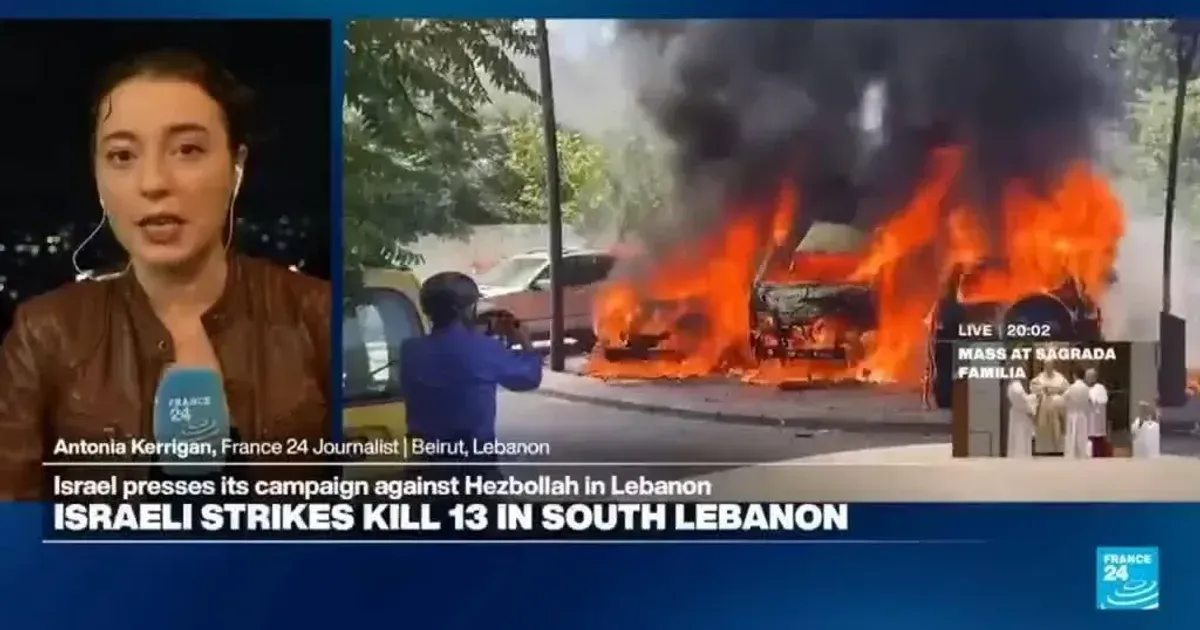
The same day, southern Lebanon saw another deadly wave of Israeli attacks. Lebanese sources said strikes killed at least 13 people as Israel pressed its campaign against Hezbollah, while footage from Sidon showed vehicles burning after a car strike. That Lebanon front matters because Tehran and Washington are not negotiating in isolation.
Hezbollah remains one of the channels through which Iran can pressure Israel without making every move a direct state-to-state attack. Israel, meanwhile, is trying to weaken the group while avoiding a settlement that leaves the northern front unstable. The more Lebanon bleeds into the Iran track, the harder it becomes to separate diplomacy from battlefield momentum.
Energy and Base Security Become Flashpoints
Markets are watching Hormuz because even limited strikes can affect tanker insurance, energy prices and shipping confidence. The helicopter incident occurred near a route that carries a large share of global oil traffic. A single aircraft loss does not close a shipping lane, but it can change how buyers, insurers and governments price the risk of moving through it.
U.S. bases in the Gulf are another pressure point. If Iran or allied groups answer American strikes with missiles or drones, Washington may face pressure to expand air defenses and retaliate again. That can turn a narrow response into a recurring military cycle. The most dangerous scenario is not one dramatic announcement; it is a sequence in which each side treats the last strike as proof that the next one is unavoidable.
Trump's Threat Narrows the Diplomatic Exit
The strategic test is whether Trump's warning creates deterrence or locks both sides into a harder public position. A president who promises to hit Iran "hard" gains leverage only if the threat is paired with a credible exit route. Without that exit route, the warning can become a public commitment that leaves less room to accept a quiet diplomatic compromise.
Iran faces its own calculation. Backing down after the Apache episode could look weak at home, but escalating around Hormuz and U.S. bases risks bringing far more American firepower into the conflict. That is the tension now driving the crisis: both sides want to signal resolve, yet each signal increases the cost of restraint.
For the region, the question is whether diplomacy can still separate the Iran track from the Lebanon front. If those conflicts merge politically, every strike in Sidon, every missile alert in the Gulf and every statement from Washington will carry the same message: the war is becoming harder to compartmentalize.