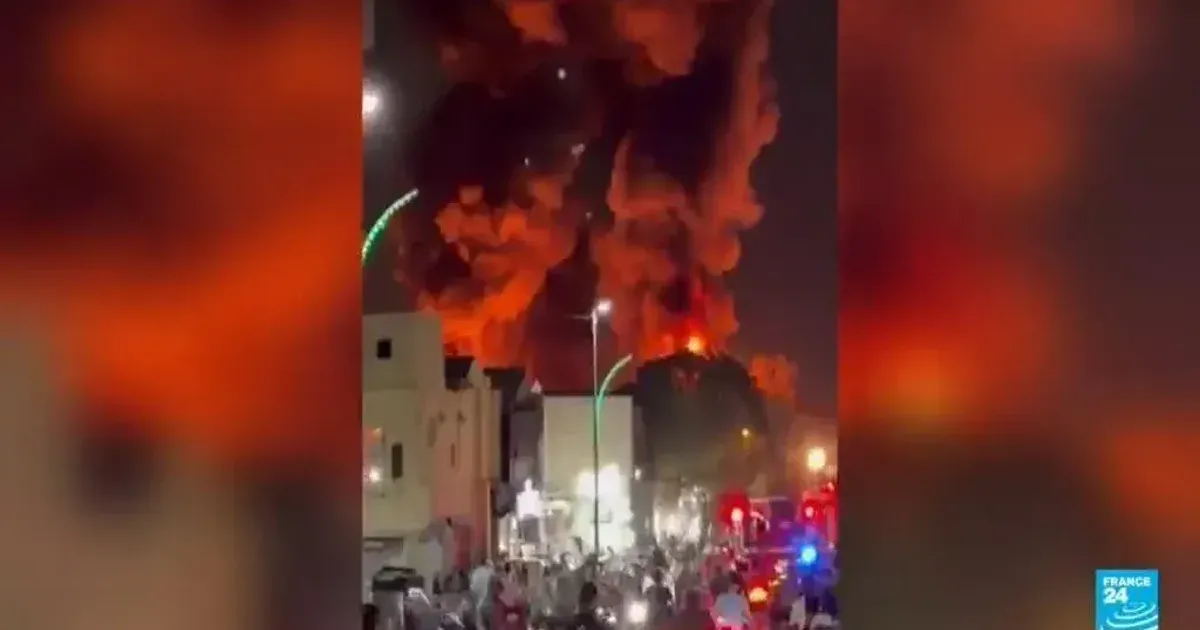
President Donald Trump said he had halted planned strikes on Iran while arguing that a peace deal was close. The statement immediately put military planning, diplomacy and credibility under the same spotlight. The White House comments came on June 11, 2026. Donald Trump abruptly halted planned military operations against Iranian targets despite earlier promises to strike the nation very hard. Tension reached a peak earlier in the day when the administration signaled that an attack was imminent, only for the president to reverse course during a briefing where he asserted that a preliminary peace accord was within reach.
White House officials stated that the final points of an initial peace agreement have been approved by the American side. Detailed plans for a signing ceremony are currently under development, according to statements from the Oval Office. Trump described the situation as one where Tehran was in submission, claiming his strategy of maximum pressure had forced the Iranian leadership to the negotiating table. He also used the announcement to criticize media coverage of the conflict, suggesting that reporters had underestimated the effectiveness of his approach.
Iranian officials offered a conflicting account of the diplomatic situation through state-aligned channels. Reports from the Fars news agency indicated that Tehran has not approved the text of any agreement. This denial contradicts the American narrative that a deal is nearly complete, creating a period of strategic ambiguity as both nations observe a tense pause in hostilities. Skepticism remains high among international observers who have heard similar claims of imminent peace from the White House since mid-March 2026.
Contradictory Claims on Peace Agreement Framework
Negotiations continue against a backdrop of ongoing maritime restriction. While missile and air strikes are currently suspended, Donald Trump confirmed that the naval blockade of Iranian ports will stay in place to ensure compliance. This tactical pivot suggests the administration intends to use economic strangulation as its primary lever during the final stages of talks. Military planners had reportedly finalized targets across several Iranian provinces before the stand-down order was issued on Thursday afternoon.
President Donald Trump called off new U.S. military strikes on Iran, saying "final points" of an initial peace deal had been approved and details of a signing ceremony would be announced shortly.
France 24 reporters Carys Garland and Monte Francis noted that the president has repeatedly claimed a resolution was close over the last three months. Every previous instance of these claims coincided with a temporary de-escalation of rhetoric followed by renewed threats. The current suspension of strikes represents the most serious pause in military planning since the conflict began, though the presence of carrier strike groups in the region ensures that kinetic options remain available on short notice.
Tehran maintains that any agreement must include the immediate lifting of the naval blockade and the restoration of oil export rights. Fars news agency reported that the Iranian leadership views the American claims of submission as domestic political rhetoric rather than a reflection of the actual diplomatic state. No specific timeline for a meeting between high-level representatives from both countries has been confirmed by neutral intermediaries.
Egyptian Economic Risks and Regional Pressures
Egypt's economic risks complicate the regional picture. The government of Egypt is currently navigating a delicate diplomatic path as it attempts to shield its fragile economy from the wider regional fallout. Gulf allies, including Saudi Arabia and the United Arab Emirates, have reportedly voiced dissatisfaction with Cairo, suggesting that Egyptian support against Iran has been insufficient. These allies provide critical financial support to the Egyptian state, making their criticism a matter of meaningful national security for President Abdel Fattah el-Sisi.
Economic stability is the primary driver for Egypt's cautious posture. A prolonged war in the Middle East threatens to disrupt Suez Canal transit fees and tourism, which are two of the most essential sources of foreign currency for the country. Cairo has resisted calls for direct military involvement, choosing instead to focus on mediation and regional de-escalation efforts. The stance has created friction with regional partners who view the Iranian threat as an existential priority requiring a unified military front.
Regional markets have reacted with volatility to the shifting signals from Washington and Tehran. Oil prices fluctuated as the threat of strikes vanished, only to be replaced by the reality of a persistent naval blockade. Analysts in Cairo suggest that a partial deal that does not include maritime freedom will fail to stabilize the regional economy. Egypt continues to advocate for a wide-ranging settlement that addresses both security concerns and the free flow of commerce through the Red Sea.
Sustained Naval Blockade and Military Readiness
American naval forces in the Persian Gulf remain at a high state of alert. The blockade is designed to prevent the export of Iranian crude oil and the import of specialized technology, a policy that Donald Trump believes will eventually force a verifiable signature on a peace treaty. Commanders on the ground have received orders to maintain their positions even as the immediate threat of air campaigns recedes. The strategy relies on the assumption that Iran cannot withstand the economic pressure of a total maritime shutdown indefinitely.
Peace remains a disputed concept in Tehran. While the American president speaks of a deal, state media in Iran continues to present the country as preparing for continued isolation. Iranian state media also broadcast images of military readiness and civilian resilience, countering the American narrative of a government close to collapse. The discrepancy between the two accounts suggests that the upcoming signing ceremony mentioned by the White House may face serious delays or cancellation.
Diplomacy in this theater has historically been marked by sudden reversals and secret back-channel communications. The coming days will reveal whether the current pause is a genuine breakthrough or a temporary lull used by both sides to reposition their forces. Washington has not yet released the specific text of the approved points, leaving the international community to speculate on the concessions made by either party. Military assets remain positioned to resume strikes if the diplomatic process fails to produce a signed document by the end of the month.
Blockade Strategy Tests the Claim of Imminent Peace
The current pause in kinetic operations reveals a meaningful tension between the White House's desire for a quick diplomatic victory and the reality of a deeply entrenched regional conflict. Donald Trump is betting that he can maintain an aggressive naval blockade while simultaneously projecting an aura of successful peacemaking. The dual-track approach seeks to satisfy a domestic audience weary of war while keeping Iranian leadership under enough pressure to prevent them from walking away from the table. However, the explicit denial from Tehran regarding the approval of any text suggests that the two sides are operating on entirely different sets of facts.
Egypt's predicament highlights the fragmentation of the anti-Iran coalition. When a primary regional power like Cairo prioritizes economic survival over collective security, the unified front desired by the White House begins to show structural cracks. The persistent use of a naval blockade as a negotiating tool may successfully drain the Iranian treasury, but it also risks collateral damage to the global energy market and the internal stability of allies like Egypt. The outcome depends less on the rhetoric of a signing ceremony and more on whether the underlying economic pressure becomes a permanent feature of the regional landscape.