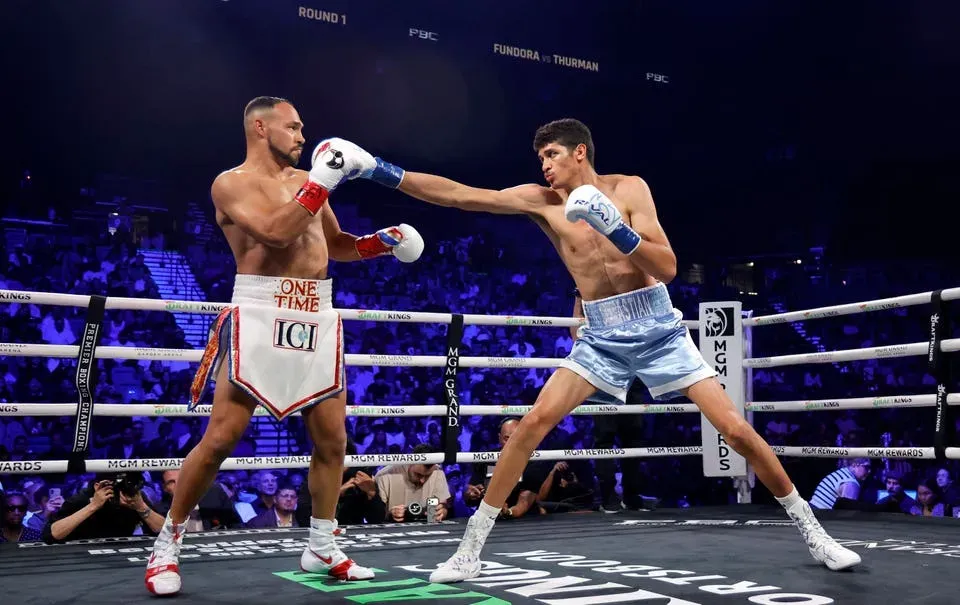
Sebastian Fundora, Joe Pyfer and Alexa Grasso fought in different settings with different stakes, but the weekend kept returning to one combat-sports rule: reputation can sell the matchup, while timing decides the exchange.
Fundora defended his WBC super welterweight title on March 28, 2026 at MGM Grand Garden Arena in Las Vegas, stopping Keith Thurman at 1:17 of the sixth round. At UFC Seattle on the same date, Pyfer stopped Israel Adesanya in the second round, and Grasso finished Maycee Barber in the first. The names were different. The pressure point was similar: a familiar fighter could not buy back half a beat once the younger, longer or calmer opponent started landing first.
Fundora turned reach into control
Fundora has always been an unusual physical problem at 154 pounds. The lazy reading is to reduce every win to height and reach. Against Thurman, the better reading is that Fundora used his frame with discipline. He kept Thurman at uncomfortable range, filled space with volume and made the former welterweight champion reset before his counters could arrive.
Thurman's name still carried danger into the ring. His timing did not. Inactivity and the move against a younger, larger champion were difficult to hide once Fundora's pressure started stacking rounds.
The stoppage matched the direction
The referee's intervention annoyed Thurman and some viewers who wanted the veteran to get more time. The direction of the fight was less debatable. Fundora had made Thurman react, then react again, until the fight no longer looked like a veteran solving a problem.
The win did more than protect a belt. It showed a cleaner version of Fundora's style: not chaos for its own sake, but volume, range and pressure arranged into control.
Pyfer made rhythm expensive
Adesanya's legacy remains secure, which is part of why the Pyfer result landed with force. He did not lose to a novelty act. He lost to a younger middleweight whose power and willingness to force exchanges made the familiar Adesanya rhythm costly.
The second-round stoppage came after Pyfer made the fight more physical than elegant. Adesanya could still see openings. Seeing them was no longer enough once Pyfer reached the finishing layer first.
The win changes Pyfer's burden
Pyfer still has tests ahead. A win over Adesanya does not answer every question about five-round reliability, wrestling defense, pacing or how he handles elite counter-strikers closer to their prime. It does change how the division has to treat him.
He no longer profiles only as a dangerous puncher climbing the rankings. He now has a result that forces matchmakers and contenders to account for him immediately.
Grasso stopped Barber's momentum
Grasso's finish of Barber gave the weekend another version of the same idea. Barber entered with momentum and physical confidence. The fight had the ingredients of a long flyweight test. Instead, Grasso's composure and timing ended it quickly.
The finish was not only a highlight. It was a reminder of how quickly pressure can become a liability against a fighter who stays calm under fire. Barber pushed forward. Grasso found the cleaner beat and left no time for the bout to become a longer argument.
Matchmaking has to follow timing
The weekend did not prove that every veteran is finished or every rising fighter is title-ready. It showed how dangerous the middle ground can be, where a known name remains marketable but the athletic and stylistic math no longer favors them.
Fundora should be measured against another elite junior middleweight who can punish mistakes in real time. Pyfer needs an opponent who can drag him through phases instead of only trading danger. Grasso needs a fight that tells the flyweight division whether the Barber finish was a restart or a peak moment. Reputation got the public to watch. Timing owned the results.