G7 leaders agreed to expand military support for Ukraine, with air defense systems placed at the center of the new commitment. Member nations finalized the arrangement during high-level talks on the war and its wider economic effects. The promise also reflected a growing concern that Russia is adapting its missile and drone patterns faster than allies are delivering protection. Ukrainian officials pressed for schedules, not only statements, because each delay leaves cities exposed. The June 16, 2026 session focused on protecting civilian infrastructure from cruise missiles, drones and repeated attacks on Ukraine's power grid.
The pledge gives Kyiv a clearer diplomatic signal after months of pressure for faster deliveries. Air defense has become one of the most urgent needs because Russia's long-range strike campaign can damage cities far from the front line. A stronger shield over major population centers would help protect civilians, preserve electricity supply and reduce the economic shock created by repeated infrastructure attacks.
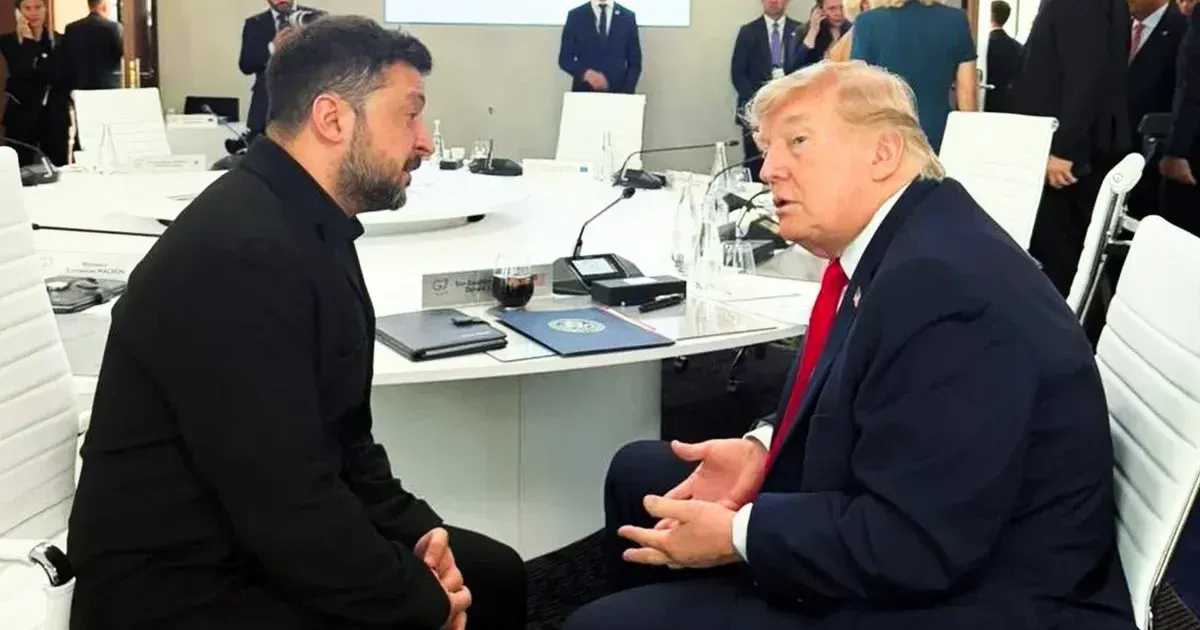
Negotiations also included a private meeting between Donald Trump and Volodymyr Zelenskyy. Both leaders described the exchange positively, with Trump calling it good and Zelenskyy calling it very good in public remarks afterward. The meeting mattered because Ukraine's military planning depends heavily on predictable American support, even when the broader G7 package includes European and Canadian contributions.
"G7 leaders agreed that Putin was not winning the war," Zelenskyy said in a statement released after the session.
Ukraine Air Defense Moves to the Center
Defense officials are now expected to coordinate the transfer of surface-to-air missile batteries, interceptors and maintenance support. The hardware is only one part of the challenge. Crews need training, spare parts, radar integration and reliable resupply so the systems do not become symbolic assets with limited battlefield value. The focus on Ukraine air defense also reflects the character of the war in 2026. Russia has used drones and missiles to stretch Ukrainian defenses, forcing Kyiv to choose which cities, energy sites and military targets receive coverage. Additional systems can reduce that pressure, but they cannot eliminate it unless ammunition supply keeps pace with the volume of attacks.
Germany and Italy are expected to play important technical roles because several European systems require specialized maintenance. NATO territory may become the support base for repairs and training, allowing Ukraine to keep systems active without moving all technical work into contested areas.
The pledge also affects European defense planning. More air defense for Ukraine means governments must decide whether to draw from existing national stocks, accelerate production or finance new purchases through joint mechanisms. Each path has political costs because European capitals are also trying to rebuild their own inventories after years of transfers to Kyiv.
Ukraine will also need predictable interceptor supply. Launchers without enough missiles provide limited protection, and Russia has repeatedly tried to overwhelm defenses by mixing drones, decoys and higher-value missiles in the same attack wave. That makes industrial capacity as important as diplomatic unity. The G7 statement therefore has to be followed by procurement decisions, production schedules and a realistic plan for keeping Ukrainian crews supplied through winter, when attacks on power infrastructure usually carry the heaviest civilian cost and drive new displacement across already strained regions.
What the Summit Signals
The air defense pledge is a test of delivery, not language. Ukraine has received repeated promises during the war, and the value of this summit will be measured by when systems arrive, how many interceptors follow and whether civilian infrastructure becomes harder to strike. A public statement without hardware would not change the battlefield.
The summit therefore leaves an immediate deadline: deliver the defenses Ukraine needs before the next wave of attacks.