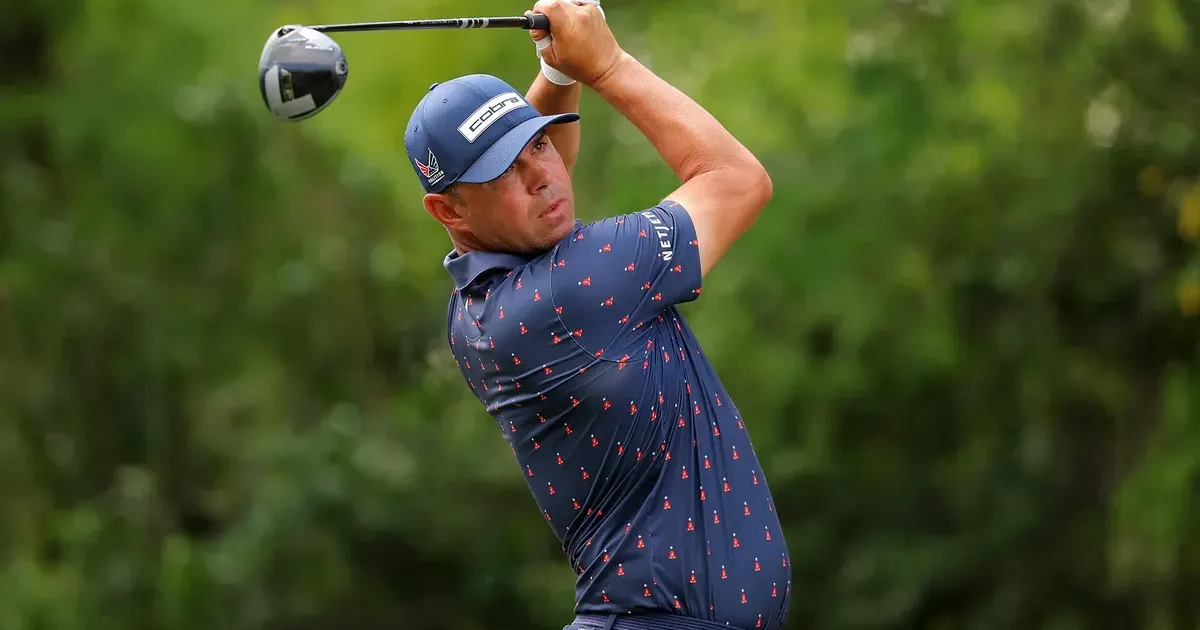
Gary Woodland's victory at the 2026 Texas Children's Houston Open was more than a return to the winner's circle. It was his first PGA Tour title since the 2019 U.S. Open, his fifth career PGA Tour win and a five-shot statement after brain surgery and a public struggle with PTSD.
The numbers gave the comeback its force. Woodland finished at 21-under 259 at Memorial Park, with rounds of 64, 63, 65 and 67, setting a tournament-record 72-hole score and beating Nicolai Højgaard by five. A sentimental finish would have been powerful. A record-setting win made the story competitive first.
The Margin Removed The Fluke Argument
A narrow victory can be explained by one lucky bounce, one opponent's mistake or one hot putter at the right time. A five-shot win over four rounds is different. Woodland controlled the tournament, carried a Sunday lead and closed without letting the emotional weight of the moment leak into the scorecard.
Long droughts on the PGA Tour are difficult to break, which gives the margin added weight. New stars arrive, courses get longer, equipment changes and a player returning from health problems has to rebuild rhythm while the rest of the field keeps moving. Woodland did not simply reappear. He made his game functional again under tournament pressure.
The Medical Road Was Not Background Noise
Woodland underwent brain surgery in September 2023 after experiencing frightening neurological symptoms tied to a brain lesion. He later spoke publicly about PTSD, anxiety and the mental strain of trying to compete while recovering. Golf demands balance, vision, touch and calm under pressure. Those are exactly the areas a serious medical event can threaten.
The Houston win therefore carried weight beyond the leaderboard. The victory did not erase the medical history, and it should not be used to simplify it. Recovery is not a straight line. But Woodland turned recovery work into scoring work, and that is the piece professional sport actually measures.
The Win Rebuilt His Competitive Status
The Houston title also changed Woodland's calendar and status. It earned him a Masters invitation and returned him to the category of current winners, not only a past champion trying to find old form. The shift affects exemptions, confidence, scheduling and how other players read him when he appears near the top of a leaderboard.
Professional golf can be ruthless to veterans. A player who loses form, health or confidence can slide quickly from major champion to afterthought. Woodland's Houston result pushed back against that logic. It showed that experience still has value when the body and mind can be rebuilt enough to trust the swing again.
The Comeback Was Earned On The Scorecard
The emotional layer is unavoidable, but it should not soften the competitive reading. Woodland won because he played better than the field, not because the field granted him a sentimental exception. The comeback story explains the meaning of the win. It does not explain away the performance.
Golf's uncompromising scorecard is also what makes this victory powerful: the scorecard does not reward survival by itself. Woodland had to beat everyone else. He had to drive it, putt it, manage the lead and finish the final round without handing the tournament back. His Houston win is therefore not just an inspirational note. It is proof that the comeback reached tournament-winning form.