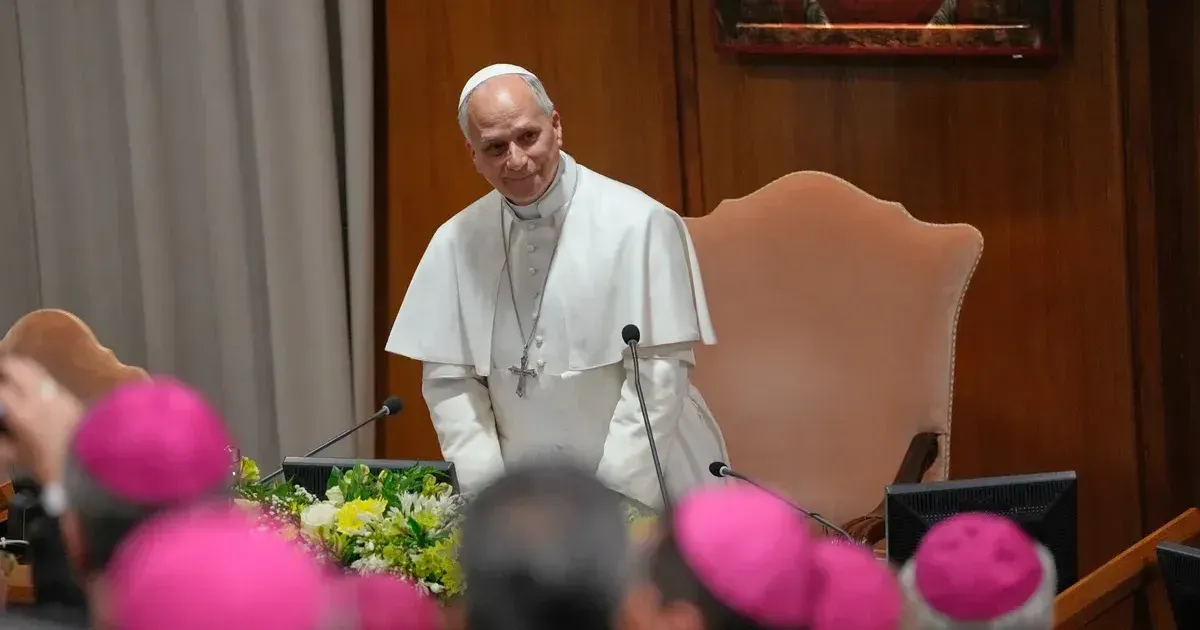
Ghanaian officials welcomed an apology from Pope Leo XIV for the Holy See's historical role in legitimizing slavery, calling the statement an important moment in the pursuit of truth and reconciliation. Ghana's response gives the papal apology a specific national audience and a deeper historical frame. The reaction also shows why church language about slavery is still judged against memory, restitution and public accountability. The government response came on May 27, 2026, two days after Leo issued the apology in his first encyclical, Magnifica Humanitas. The statement was watched closely in West Africa because it linked a present-day appeal for human dignity with a direct admission about the Church's own institutional past.
The apology addressed the Vatican's record in giving religious and legal cover to systems that enabled the enslavement of non-Christian peoples. For Ghana, the message carries particular force because the country's coast was one of the major departure points in the transatlantic slave trade. Forts and castles at sites such as Elmina and Cape Coast still stand as public evidence of that history. They also remain central to diaspora visits, school curricula and official remembrance programs that frame slavery as a living political question rather than a closed chapter.
Ghana's government said the Pope's words should support a wider international conversation about historical justice, colonial extraction and the long aftermath of slavery. Officials in Accra framed the apology as a moral opening, not a final settlement. The response was welcomed by civil society groups that have long pressed churches, governments and former colonial powers to acknowledge the structures that made human trafficking appear lawful.
Why Ghana's Response Matters
The apology matters in Ghana because memory of the slave trade is not abstract. Coastal communities still live beside the architecture of captivity, where holding cells, chapels, trading offices and military installations were built into the same fortified spaces. Those sites have become places of mourning for Ghanaians and for members of the African diaspora who travel there to trace family histories broken by forced removal.
Leo's statement went beyond earlier papal expressions of sorrow by directly confronting the role that past popes and the Holy See played in legitimizing slavery. Historical documents such as Dum Diversas, issued in 1452, gave Christian monarchs language used to justify conquest and enslavement. That record has made the Vatican a central target for scholars and advocates who argue that religious authority helped turn exploitation into policy.
The Ghanaian government described the apology as a significant act of moral courage and a step toward historical truth, justice and human dignity.
Church leaders in West Africa also face a delicate pastoral challenge. Catholic communities across the region continue to grow, yet many believers know that missionary expansion and colonial power were often intertwined. Acknowledging that past does not erase the Church's present work, but it does require a clearer account of how religious institutions benefited from systems of domination.
Justice Beyond Words
Reparations advocates said the apology should lead to practical steps, including access to archives, educational partnerships and support for communities still shaped by the economic damage of slavery. Ghana has been a leading voice in pan-African calls for reparative justice, using cultural diplomacy and heritage tourism to connect the country with descendants of enslaved Africans abroad. Officials have also tied the issue to development, arguing that historical extraction weakened institutions and trade patterns in ways that still shape inequality.
The Vatican has not announced a financial reparations package, and Ghana's official response did not present the apology as a completed process. Instead, the statement pointed toward continued dialogue on historical accountability. That leaves open questions about what the Holy See might do next and whether other European institutions will face renewed pressure to account for their own role in the trade.
The timing also gives the apology broader significance. Leo released the statement in an encyclical focused on human dignity in an era of artificial intelligence, connecting older forms of enslavement with modern systems that can reduce people to instruments of profit or power. For Ghana, that framing keeps the issue from being sealed in the past. It also gives church and state officials a language for discussing labor exploitation, migration and digital surveillance alongside older demands for historical repair.
Ghana Will Judge the Apology by Archives, Education and Reparations
Ghana's acceptance of the apology is both diplomatic and strategic. It recognizes a rare admission from the head of the Catholic Church while preserving room for demands that go beyond symbolic language. That balance allows Accra to welcome the moral statement without giving up its wider push for restitution, archives and institutional accountability.
The apology may also shift pressure onto other governments, churches, banks and monarchies whose wealth or authority was shaped by the slave trade. If the Vatican can acknowledge its role, advocates are likely to argue that secular institutions have even less reason to remain silent. For Ghana, the apology will matter only if it produces archive access, educational and museum partnerships, reparations talks and sustained historical work rather than remaining a symbolic statement noted only during the news cycle.