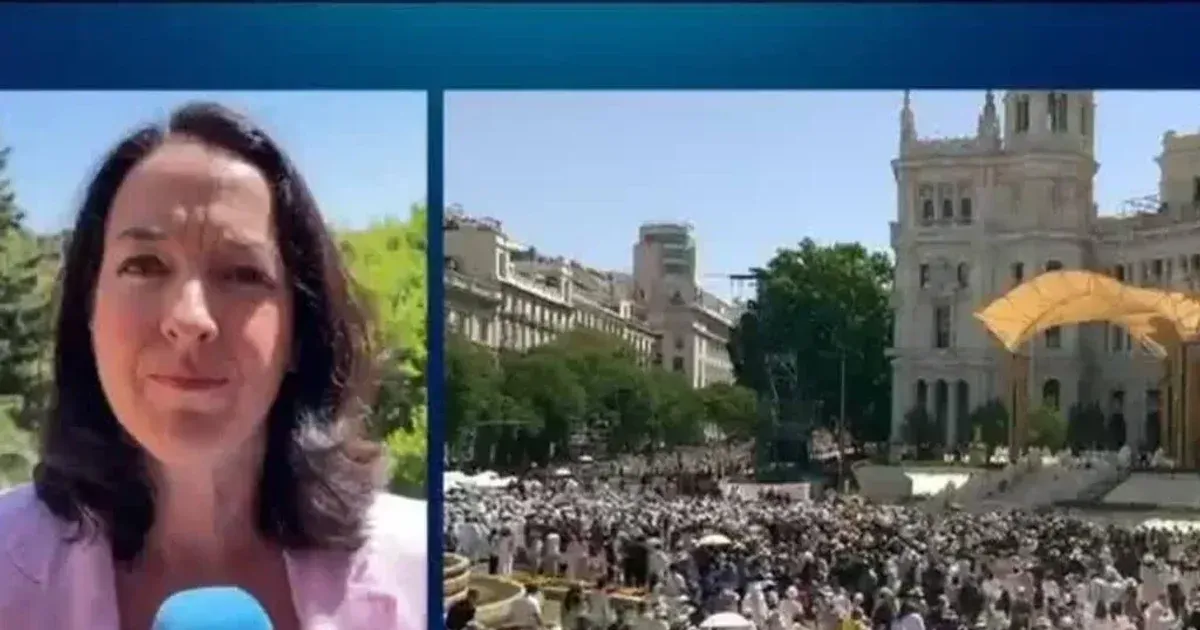
Madrid officials estimated more than one million people gathered in the city center for a large religious gathering that transformed the urban landscape into a vast cathedral. The Madrid Mass gave the new pope a visible test of crowd connection beyond Rome. The turnout gave the visit a scale rarely seen in recent European religious events. Pope Leo XIV presided over the open-air Mass on June 7, 2026, during his first official visit to a European Union member state outside Italy. Crowds began forming before dawn, lining the boulevards leading to the landmark Plaza de Cibeles where the central altar was constructed. Leo arrived in his white popemobile to a chorus of cheers and rhythmic chanting from the assembly. The pontiff waved at those gathered from his vehicle as he navigated the dense corridors of pilgrims.
Citizens tossed flower petals from balconies and street-level barriers as the motorcade approached the square. Spanish authorities deployed extensive security resources to manage the flow of people, who carried flags representing dozens of nations and regions. Witnesses described the scene as the largest event of the pontiff's current five-day trip to Spain. Organizers used large screens and professional sound systems to ensure the liturgy reached attendees standing several blocks away from the main stage. Plaza de Cibeles was the primary gathering point for the huge congregation.
Attendees and political figures heard a sermon focused on the dangers of social fragmentation. Leo urged world leaders to stop dividing electorates and emphasized the necessity of respecting the dignity of every human being. His words arrived during a period of heightened political polarization across the continent. Such messages have become a hallmark of his papacy, which frequently emphasizes the humanitarian costs of modern political rhetoric. Madrid police confirmed that the total attendance surpassed initial projections by several hundred thousand people.
More than a million voices joined in the liturgical responses across the square.
Calls for Political Unity in Europe
Europe's political climate was the implicit backdrop for the day's pastoral message. Leo warned against the tactical use of division to gain power, suggesting that such strategies erode the social fabric of democratic societies. Respect for human dignity, he argued, must outweigh partisan objectives in the public sphere. These comments were received by a diverse crowd that included families, students, and religious orders from throughout the Iberian Peninsula. He framed the message around the concept of genuine human values that go beyond national or political borders. His itinerary includes subsequent meetings with government officials to discuss these specific societal challenges.
Vulnerable populations remain a central focus of the current Spanish tour. Leo plans to spend portions of his remaining schedule meeting with migrants and homeless individuals in various Spanish cities. This outreach aligns with his broader efforts to prioritize marginalized groups within the church's global mission. Outreach to these communities reflects a desire to address the root causes of displacement and social exclusion. Catholic organizations in Spain have coordinated with local municipalities to enable these private meetings. Such encounters highlight the practical application of the themes discussed during the morning Mass.
Spanish traditions played a visible role in the aesthetic of the religious service. Elaborate flower carpets, a hallmark of popular piety in the region, decorated the pathways around the altar. France 24 reports that these carpets represent one of the most iconic expressions of local devotion, blending artistic craftsmanship with religious observance. Leo described this centuries-old tradition as a school of faith for the modern world. Piety in this form connects contemporary believers to a historical lineage of public worship. The visual display attracted nearly as much attention from photographers as the papal motorcade itself.
The Diplomatic Context of the Spanish Visit
Rome has viewed this trip as a critical step in strengthening ties with EU member states. Spanish leadership welcomed the visit as an opportunity to showcase the country's religious heritage and commitment to social stability. Itinerary details show that the pontiff will travel to several other regions before returning to the Vatican. Faith leaders in Madrid noted that the enormous turnout confirms the enduring relevance of the church in Spanish public life. Local businesses in the hospitality sector reported near-total occupancy as pilgrims flooded the capital from neighboring provinces and abroad. These economic ripples reflect the logistical scale required to host a million-person event.
Catholicism in Spain continues to balance traditional practices with contemporary social demands. The success of the open-air Mass suggests a high level of engagement with Leo's specific pastoral style. His focus on human values and the protection of the vulnerable connects with a public navigating economic and social shifts. Security officials noted that the event concluded without major incidents despite the unmatched density of the crowds. Public transportation remained at maximum capacity for hours after the final blessing as attendees dispersed. The five-day visit is expected to set the tone for future papal travel within the European Union.
What the Visit Signals
Does the large turnout in Madrid signal a resurgence of institutional influence, or is it a personal endorsement of Leo's specific rhetoric? The presence of more than a million people suggests that the pontiff's message on political division has found a receptive audience in a region often characterized by its partisan volatility. By choosing Spain for his first EU visit outside Italy, Leo has anchored his humanitarian agenda in a country that is a bridge between European policy and Mediterranean migration realities.
The emphasis on migrants and the homeless goes beyond a charitable gesture; it is a calculated diplomatic signal to Brussels. As the continent struggles with the rise of populist movements, the Vatican is positioning itself as a stabilizing force that champions social cohesion over electoral gain. The visual power of the Plaza de Cibeles gathering provides the papacy with meaningful cultural capital when negotiating with secular leaders on human rights issues. Whether this moral authority translates into real policy changes regarding migration or social welfare remains the primary question for observers in both Madrid and Rome.
One verdict is already clear: Leo's ability to mobilize the masses is undiminished.