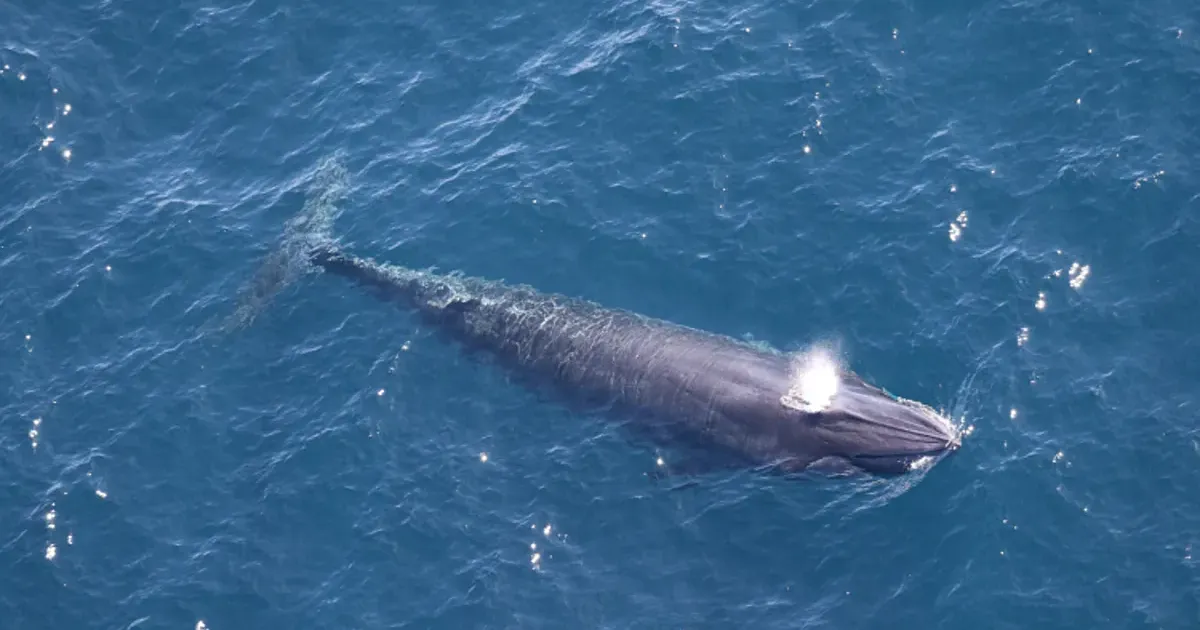
The federal exemption for Gulf of Mexico oil and gas activity turned Rice's whale protection into a national-security and energy-policy fight. On March 31, 2026, the Endangered Species Committee, the rarely convened panel often called the God Squad, voted to exempt broad Gulf oil-and-gas activities from parts of the Endangered Species Act after the administration tied Gulf production to wartime energy security during the Iran shock. The decision moved the dispute far beyond one permitting file.
The exemption matters because the Rice's whale has almost no biological margin. Scientists estimate that only about 50 remain, and the species lives only in the Gulf. Oil and gas activity, vessel traffic, seismic noise, spill risk and habitat disruption all land on a population too small to absorb repeated losses. For drillers, the decision promises fewer legal obstacles. For conservation groups, it looks like a precedent that can turn emergency language into a broad industrial carveout.
The Committee's Vote Was Extraordinary
The Endangered Species Committee exists for rare cases where the government decides that a project should proceed despite serious endangered-species risk. It had not been used in decades, which is part of why the Gulf decision drew immediate scrutiny. The panel was not weighing a single road, dam or local project. It was dealing with an offshore energy system that touches multiple species, permits and industrial activities.
The Gulf-wide scope changes the legal and political meaning. A narrow exemption can be argued as a painful exception. A Gulf-wide energy exemption begins to look like a new doctrine: when supply stress is politically urgent, species protections can be subordinated to production. Environmental groups therefore moved quickly toward litigation and congressional critics demanded answers about process and industry coordination.
Rice's Whale Has No Recovery Cushion
The Rice's whale is not a symbol chosen at random. Its estimated population is so small that each death matters. Ship strikes, chronic noise, pollution and oil-spill exposure are not abstract threats for a species with only a few dozen animals left. A healthier population might survive years of regulatory delay. This one may not.
The ethical problem is blunt. The government is balancing a living species close to extinction against fuel supply, offshore investment and political fear over energy prices. Regulators can write mitigation plans, adjust vessel speeds and revise drilling conditions, but those tools lose force if the larger legal protection is waived. Once extinction happens, no court ruling or later administration can restore the animal.
Energy Security Became the Legal Argument
The administration's case rested on national-security logic: Gulf production helps protect U.S. energy independence during a period of Iran-war volatility and oil-market stress. The Gulf is a major source of U.S. crude, and policymakers wanted to reduce any regulatory uncertainty that could slow offshore production or investment.
The security argument has political power, especially when gasoline prices and Hormuz risk dominate headlines. It is also vulnerable. Expanded drilling does not always deliver immediate relief at the pump, and long-cycle offshore investment is not the same as emergency supply. Critics therefore see the national-security claim as a way to convert a price shock into a lasting deregulation tool.
Drillers Gain Certainty but Not Peace
For offshore producers, the exemption sends a clear short-term signal. Gulf projects are expensive, and companies want predictable rules before committing capital. Removing or narrowing endangered-species constraints can make permits easier to defend and schedules easier to plan.
But certainty gained through a controversial exemption can carry its own risk. Lawsuits, future rule changes, investor scrutiny and public backlash can follow projects approved under a decision seen as hostile to endangered wildlife. A permit that looks stronger under one administration can become a political liability under the next. The exemption reduces one kind of risk while creating another.
The Wider ESA Rollback Raises the Stakes
The Gulf decision also landed inside a broader shift in endangered-species policy. The administration later narrowed the definition of harm by removing habitat destruction from the rule's reach, opening more space for development, mining, logging and drilling in areas important to imperiled species. The broader rollback makes the Gulf exemption part of a larger pattern rather than an isolated wartime action.
For conservation lawyers, the pattern is the danger. If habitat protection is weakened and broad exemptions become easier to justify through economic or national-security claims, the Endangered Species Act loses much of its practical force. The law can remain on the books while its strongest tools are hollowed out in the places where species actually live.
The Precedent Is Bigger Than One Whale
Rice's whale is the immediate test because its population is so small and its habitat overlaps directly with offshore energy activity. But the precedent reaches sea turtles, Gulf sturgeon, coral, manatees and future species conflicts on land and water. Once the government proves it can waive protection at broad industrial scale, other sectors will study the route.
That is the severe lesson of the Gulf decision. Energy security is real, and supply shocks can hurt households quickly. Extinction risk is also real, and it is permanent. The exemption places those two claims against each other in a way that gives oil a powerful constituency and the whale almost none. The fight will now move through courts, agencies, Congress and offshore balance sheets, but the biological clock is not waiting for the legal one.