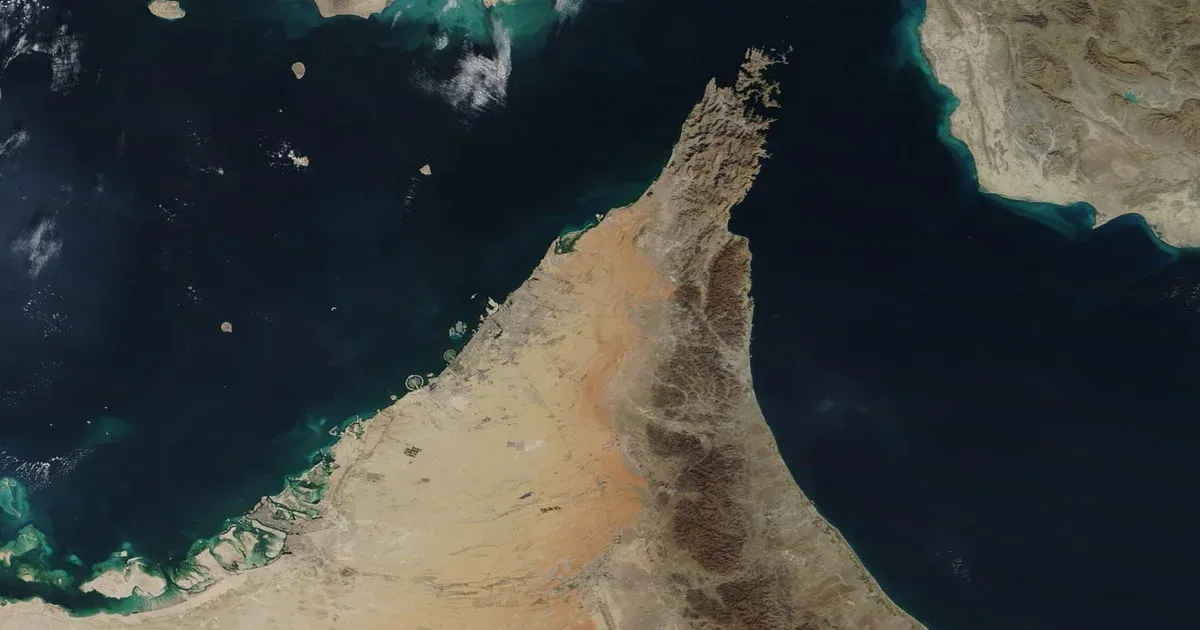
Gulf diplomats gathered in Muscat to discuss a legal framework for the Strait of Hormuz, the maritime chokepoint at the center of global energy risk. Regional officials argue that law, not improvisation, is needed to prevent a crisis from closing the strait. The April 11, 2026, talks focused on replacing ad hoc security practices with clearer rules for transit, hotlines and data sharing.
Regional leaders insist that existing international maritime protocols lack the specificity required to manage modern naval frictions. Iran and its neighbors face increasing pressure to codify transit rules that accommodate both commercial traffic and sovereign security concerns. Previous disruptions have demonstrated that market volatility responds instantly to any perceived threat in these waters. Financial stability hinges on a predictable legal environment rather than military deterrence alone.
Energy markets watched closely as delegates from six nations reviewed draft language for a multilateral treaty. Reliable passage through the strait is more than a regional priority; it is a global economic necessity. Projections show that a week-long closure could spike crude prices by 30 percent or more. Every ship captain navigating the 21-mile-wide passage operates within a legal gray zone that has persisted for decades.
International Law and the Strait of Hormuz
International legal experts point to the 1982 United Nations Convention on the Law of the Sea (UNCLOS) as the primary point of contention. While Oman has ratified the treaty, the Islamic Republic of Iran has signed but never ratified the agreement. Disparate interpretations of "transit passage" versus "innocent passage" frequently lead to maritime confrontations. Tehran often asserts that its territorial waters grant it greater control over foreign warships than UNCLOS allows.
Legal definitions dictate whether a vessel must maintain a continuous and expeditious transit or if it can engage in maneuvers. Customary international law suggests that all ships enjoy the right of transit passage through straits used for international navigation. Reconciling these global standards with local security laws requires a subtle diplomatic approach. Negotiations in Muscat aimed to bridge these gaps by creating a localized maritime code of conduct.
Success depends on establishing a clear protocol for boarding and inspection. Currently, naval forces frequently shadow commercial tankers, leading to incidents of harassment or seizure. A governing arrangement would provide a plan for resolving disputes without resorting to kinetic action. Clearer rules would likely lower maritime insurance premiums for global shipping firms.
Historical Conflict in Regional Waters
History suggests that without a formal agreement, the risk of miscalculation remains high. During the Tanker War of the 1980s, hundreds of merchant vessels suffered attacks as regional conflicts spilled into the sea. More recent incidents involving limpet mines and drone strikes have resurrected these fears among shipowners. Security analysts argue that the absence of a hotline between regional navies worsens these tensions. Tensions regarding the Strait of Hormuz are further complicated by recent moves to impose new shipping tolls.
Military commanders on both sides of the strait frequently operate with limited information regarding the intentions of the other. Misunderstandings during routine exercises have nearly triggered broader escalations on multiple occasions. Saudi Arabia and the United Arab Emirates have expressed interest in a pact that guarantees the flow of commerce regardless of political disputes. Such a guarantee would protect the large infrastructure investments currently expanding along the coastlines.
Formal arrangements for the strait must be grounded in both international law and the physical reality of the waterway to ensure permanent stability for global trade.
Vessels must adhere to a strict Traffic Separation Scheme to avoid collisions in the congested lanes. Two-mile-wide inbound and outbound lanes are separated by a two-mile-wide buffer zone. Navigating these narrow corridors requires precision and constant communication with coastal authorities. A regional agreement would formalize these communications to prevent accidents during high-traffic periods.
Economic Stakes of Persian Gulf Transit
Global demand for liquefied natural gas (LNG) has placed even more emphasis on the strait's reliability. Qatar remains one of the world's largest exporters of LNG, and every cubic meter must exit through the Hormuz chokepoint. Market analysts at hedge funds managing $11 billion track every vessel movement using satellite data. Even a minor delay in transit schedules causes ripples throughout the European and Asian power grids.
Crude oil exports from Iraq, Kuwait, and Bahrain also rely entirely on this single exit point. Alternative pipelines through Saudi Arabia exist, but their capacity cannot fully replace the volume carried by sea. Constructing new bypass routes would take years and cost billions of dollars in infrastructure investment. Maritime transit remains the most cost-effective and efficient method for moving these resources to market.
Insurance providers have historically increased "war risk" surcharges during periods of heightened tension. These added costs are inevitably passed down to the consumer at the gas pump or in utility bills. A binding regional agreement could eliminate these surcharges by providing a legal guarantee of safe passage. Stability in shipping costs is essential for long-term global economic growth. Diplomats face the difficult task of balancing sovereignty with international access. National pride often dictates maritime policy, making concessions difficult for domestic audiences. Washington maintains a significant naval presence to ensure the free flow of commerce, which often irritates regional powers. Any new agreement would have to address the role of non-regional navies in these sensitive waters. Verification and enforcement mechanisms represent the most difficult parts of the negotiations. Who would chair a regional maritime council? How would violations be penalized? These questions remained central to the talks as April 11, 2026, drew to a close. Smaller nations fear being overshadowed by their larger neighbors in any collective decision-making body. Transparency in military movements could serve as an initial confidence-building measure. Sharing data on naval exercises would reduce the likelihood of accidental contact. Participants at the Muscat summit agreed to form a technical working group to study these possibilities. Progress will be measured in small, technical steps instead of overnight breakthroughs.
Law as Risk Control
History proves that paper treaties rarely stop steel warships when national survival is at stake. The sudden push for a regional agreement in the Strait of Hormuz is less about a newfound love for international law and more about a desperate need for economic survival. Regional actors realize that as the global energy transition accelerates, they cannot afford the risk premium associated with perpetual instability. Investors flee from volatility, and the Persian Gulf is currently a theater of unpredictable risk. A signature from Tehran or Muscat is unlikely to change the behavior of a fast-attack craft commander. The fundamental flaw in these negotiations is the assumption that all parties value law over leverage. Control of the world's most essential chokepoint is the ultimate geopolitical bargaining chip, and it is unlikely that any power will voluntarily surrender it for the sake of maritime clarity. This initiative is a performance of stability designed to reassure jittery markets while the underlying tensions remain untouched. Global powers like China and the United States will never truly cede oversight of these waters to a regional council. Their economies are too dependent on the flow of oil to trust a local bureaucracy with the keys to the engine room. The Muscat talks are likely to produce a toothless memorandum of understanding that looks good in a press release but fails the first time a drone enters the buffer zone. Realists know that a signature on a page will not disarm a single drone in the Persian Gulf. Diplomacy is currently the only weapon left in an exhausted arsenal. Success is unlikely.