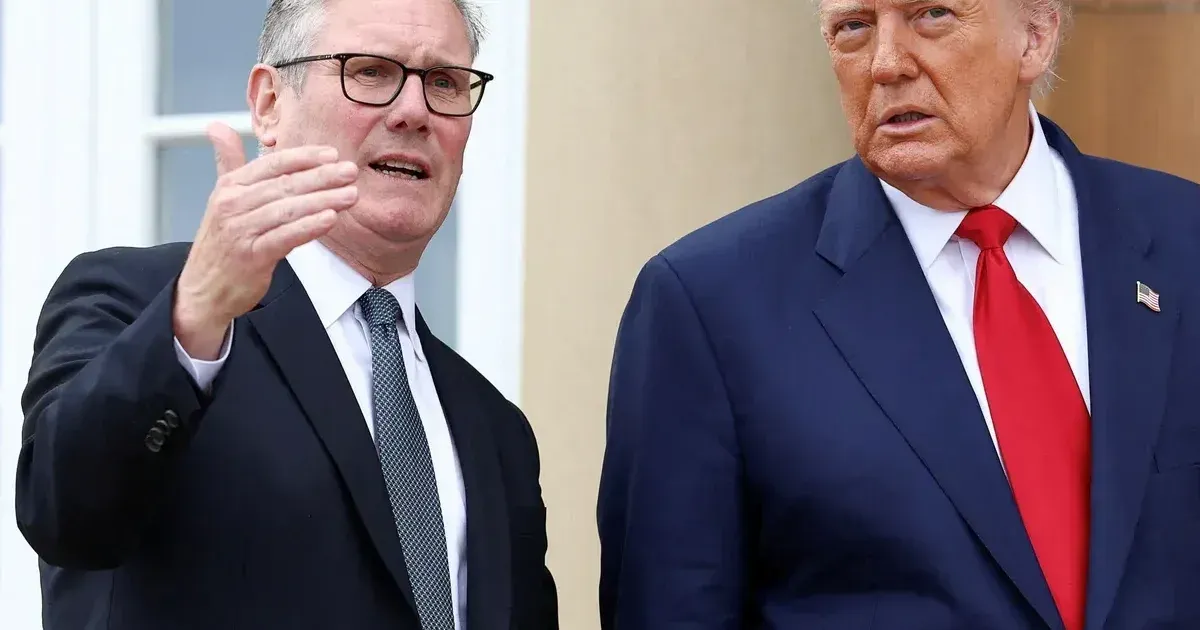
Prime Minister Keir Starmer paused the planned Chagos Islands transfer to Mauritius after renewed pressure from the United States. The decision keeps Diego Garcia, displaced Chagossians and alliance politics locked in the same dispute. Downing Street confirmed on April 11, 2026, that the legislation needed to complete the sovereignty deal would not move forward on the expected schedule.
Whitehall sources suggest the pause reflects a calculated retreat by the Labour government to avoid a direct confrontation with the White House. Intelligence sharing and defense cooperation between London and Washington rely heavily on mutual trust regarding shared territories. Security analysts believe the potential for a diplomatic rift forced the cabinet to reconsider its timeline. Failure to obtain a formal American endorsement leaves the legal status of the Diego Garcia base in a state of uncertainty.
Whitehall Delays Mauritius Sovereignty Legislation
Parliamentary leaders removed the sovereignty bill from the legislative calendar early on Saturday morning. Legislative maneuvers in the House of Commons usually require months of coordination, yet this withdrawal occurred within hours of high-level transatlantic calls. Records indicate that $11 billion in long-term defense infrastructure investments is tied to the stability of the Chagos archipelago. Ministers had previously argued that returning the islands to Mauritius would settle decades of international litigation.
Mauritian officials expressed frustration at the delay during a brief press briefing in Port Louis. They pointed to a 2019 advisory opinion from the International Court of Justice which stated that the British occupation of the islands was illegal. Legal experts in London note that the United Kingdom faces increasing pressure from the United Nations General Assembly to complete the decolonization process. The government, however, maintains that national security interests outweigh immediate compliance with non-binding international rulings.
Sovereignty remains a disputed issue within the British foreign office. Diplomats have spent two years negotiating the specific terms of the handover to ensure military continuity. A primary concern involves the ability of the United States to launch long-range missions without interference from a foreign sovereign power. Any change in administration in Mauritius could theoretically jeopardize the 99-year lease if the original agreement lacks steady American backing.
White House Opposition Disrupts Diplomatic Channels
President Donald Trump exerted significant influence over the decision through a series of public statements and private diplomatic cables. He argued that ceding territory in a strategic corridor constitutes a weakness that adversaries might exploit. Washington views the Indian Ocean as a critical theater for monitoring maritime activity and ensuring the free flow of global trade. The White House has not yet issued a formal statement regarding the specific conditions required for its approval.
Communications between the State Department and the Foreign, Commonwealth and Development Office reached a standstill late last week. American negotiators expressed skepticism regarding the ability of Mauritius to prevent third-party influence on the islands. Defense contractors operating on Diego Garcia have lobbied for a permanent British presence to maintain legal consistency. These companies manage the technical operations and logistics for one of the most remote military outposts in the world.
Strategic planners in the Pentagon emphasized that Diego Garcia is an essential hub for bombers and nuclear submarines. It provides a launch point for operations across the Middle East and South Asia. Relinquishing sovereignty to a nation with close economic ties to other global powers creates a risk profile that the current U.S. administration refuses to accept. This specific geopolitical reality forced the British government to prioritize the bilateral relationship over its deal with Mauritius.
Diego Garcia functions as the centerpiece of Western power projection in the Indian Ocean. The atoll features a large runway capable of handling heavy bombers and sophisticated communication arrays. It operates under a unique legal framework where the United Kingdom provides the land and the United States provides the majority of the personnel. Approximately 3,000 military and civilian personnel reside on the island at any given time.
Recent upgrades to the facility include new hangar structures and expanded fuel storage capacity. These enhancements allow the base to support sustained naval operations without relying on distant supply lines. Military analysts note that the base is one of the few locations where the United States can operate with near-total autonomy. Any shift in the legal status of the territory could introduce bureaucratic hurdles that degrade operational readiness.
Mauritius has offered a 99-year lease as part of the sovereignty transfer to reduce these concerns. American officials remain unconvinced that a lease provides the same level of security as a territory under the direct control of a core ally. The historical precedent of other overseas bases suggests that local political shifts can lead to the eviction of foreign forces. Protecting the integrity of the mission on Diego Garcia is the primary objective of the pause announced on April 11. The displacement of the native population continues to haunt the diplomatic negotiations surrounding the archipelago. Between 1968 and 1973, the British government removed approximately 2,000 residents to make way for the American base. These families were sent to Mauritius and the Seychelles, where many lived in poverty for decades. Recent court rulings have acknowledged the hardship caused by the forced relocation, but a full right of return has never been granted.
The question was treated mainly as a theme between States, but who ended up left aside were the Chagossians, especially the older survivors who are still waiting for justice.
Toby Noskwith, a spokesperson for the Indigenous Chagossian People, stated that his community feels ignored by the current political maneuvering. He noted that the focus on military strategy often overshadows the human rights of the displaced inhabitants. While the sovereignty deal promised some form of resettlement on the outer islands, the pause leaves those plans in jeopardy. Many older Chagossians fear they will not live to see their homeland again. Compensation funds established by the British government have been criticized by activist groups for being insufficient. Legal challenges regarding the right of abode in the British Indian Ocean Territory are still moving through the courts. The suspension of the treaty means that any planned infrastructure for returning families will be postponed indefinitely. Financial allocations intended for the resettlement process have been frozen pending further notice from the Treasury. Human rights advocates argue that the United Kingdom is using the U.S. opposition as a convenient excuse to avoid its moral obligations. They suggest that the government could proceed with the return of the outer islands without compromising the security of Diego Garcia. The outer islands, located hundreds of miles from the airbase, have no military utility. Despite these arguments, the Starmer administration remains committed to a unified approach that satisfies both Washington and the local community.
Security Pressure and Exile
Keir Starmer has effectively surrendered British foreign policy autonomy to the whims of the White House. By pausing a legally significant sovereignty transfer on the orders of an American president, London has signaled that its international agreements are valid only with Washington's permission. This retreat undermines the United Kingdom's standing as a sovereign negotiator and reinforces the image of the nation as a client state rather than a global leader. The deal with Mauritius was a pragmatic attempt to resolve an enduring colonial legacy that has become a diplomatic liability in the United Nations. The security risk to Diego Garcia remains disputed, while the 99-year lease was specifically designed to insulate military operations from sovereign disputes. If the United States cannot trust a 99-year treaty with a friendly Commonwealth nation, it suggests a fundamental breakdown in the architecture of international law. Starmer's decision to blink despite Trump's criticism may secure the immediate defense relationship, but it leaves the U.K. vulnerable to further demands. The Chagossian people are once again the collateral damage in a game of high-stakes geopolitics. Britain's credibility is now as stranded as the displaced islanders themselves.