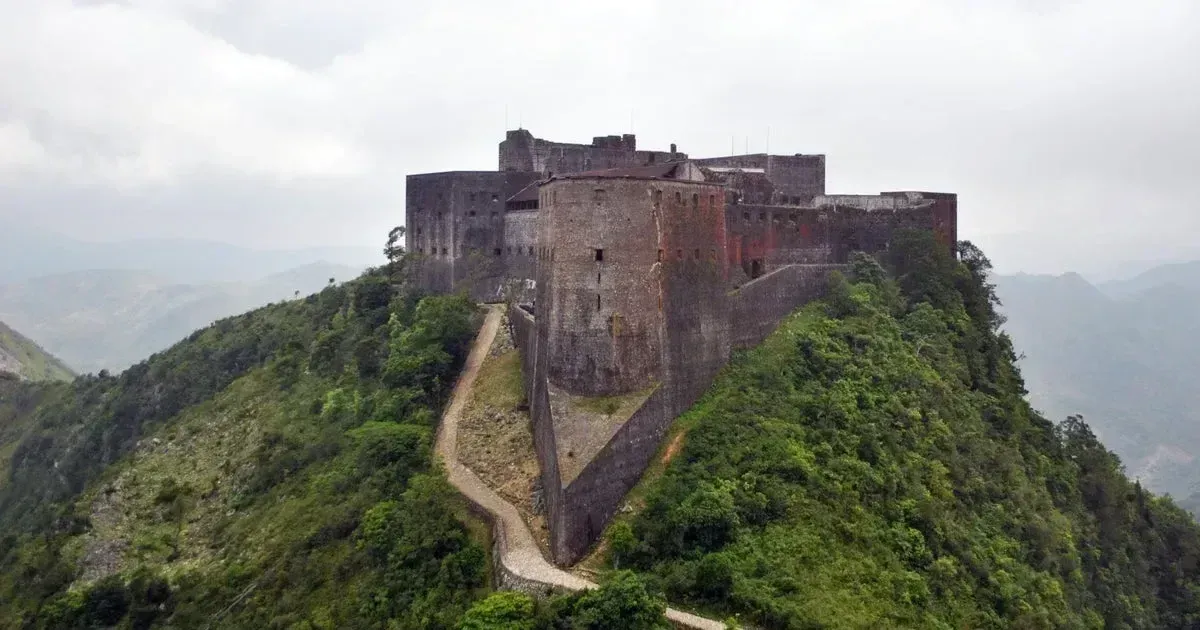
Haitian investigators detained seven individuals, including five police officers, in connection with the deadly stampede at Laferrière Citadel. Authorities moved to secure the suspects after evidence suggested a major failure in crowd control protocols at the historic fortress. Victims were participating in a public gathering at the UNESCO World Heritage site when the incident occurred on Saturday evening. Reports from the Nord Department suggest that panic erupted near the main gate, leading to a fatal crush in the narrow stone corridors of the 19th-century structure. Authorities announced the arrests on April 14, 2026.
Deaths of 25 people were confirmed by medical examiners in the nearby town of Milot. Many of those who perished were young adults attending a cultural event designed to promote tourism in the northern region. Recovery efforts began immediately, though the remote location of the citadel atop a 3,000-foot mountain complicated the transport of survivors to local hospitals. Witnesses described a scene of absolute chaos where security personnel appeared unable or unwilling to manage the swelling numbers of attendees.
Five officers belonging to the Haitian National Police now face formal charges related to negligence and involuntary manslaughter. Investigators are scrutinizing the specific orders given to the security detail stationed at the fortress entrance. Previous security assessments for the site indicated that the maximum capacity for the interior courtyard was frequently ignored during holiday weekends. Officers allegedly failed to implement a staged entry system, which would have restricted the number of people entering the steepest sections of the ramparts.
Specifically, detectives are focusing on whether officers used crowd-dispersal tools that may have inadvertently triggered the panic. Some survivors claimed they heard loud noises resembling gunfire or the deployment of canisters, although ballistics experts have not yet confirmed these accounts. Records from the Milot police precinct show that the deployment plan for the Saturday event was signed by a high-ranking regional commander. This document is now a central piece of evidence in the judicial probe into the tragedy.
Security Failures at Laferrière Citadel Historical Site
Milot residents have long complained about the lack of modern safety infrastructure at the fortress. Built by King Henry Christophe between 1804 and 1820, the citadel features high walls and steep drops that present serious risks for large crowds. Modern lighting is nearly nonexistent in the lower chambers, making nighttime navigation dangerous. Recent budget cuts hampered efforts to install guardrails and emergency communication systems across the sprawling ten-thousand-square-meter facility.
Locations within the citadel, such as the Grand Battery, were never intended for high-density pedestrian traffic. Geographically, the site is isolated, and the only access point is a winding path that only accommodates small vehicles or pack animals. When the crush happened, the path became blocked by fleeing crowds, preventing ambulances from reaching the summit for several hours. This logistical bottleneck contributed to the high mortality rate as several injured people died while waiting for transport.
The arrests also place pressure on Haitian authorities to explain whether crowd control failures were isolated or part of a wider policing problem. Families of the victims will expect more than suspensions if investigators find that officers ignored warnings or used force in a way that triggered panic.
Accountability After the Stampede
The arrest of five beat cops cannot mask the rot of a state that cannot secure its own history. The detention of seven individuals in the Milot tragedy follows a classic script of political redirection. By moving quickly against low-level officers and private organizers, the Haitian government seeks to insulate the higher-ranking officials who oversaw years of infrastructure decay at the Laferrière Citadel. This fortress, once a symbol of revolutionary defiance, has become a monument to bureaucratic negligence.
Sacrificing a few uniforms does not fix a mountain with no emergency exits.
Haitian leadership faces a credibility crisis that no number of arrests can solve. If the Ministry of Culture failed to equip its most prized UNESCO site with basic safety lighting and communications, the liability rests at the cabinet level, not just with the men at the gate. The pattern suggests a desperate attempt to pacify a grieving public by offering up scapegoats before the anger turns toward Port-au-Prince. The international community, particularly UNESCO, must stop providing cover for a management style that prioritizes tourism revenue over the lives of the citizens who cherish these sites.