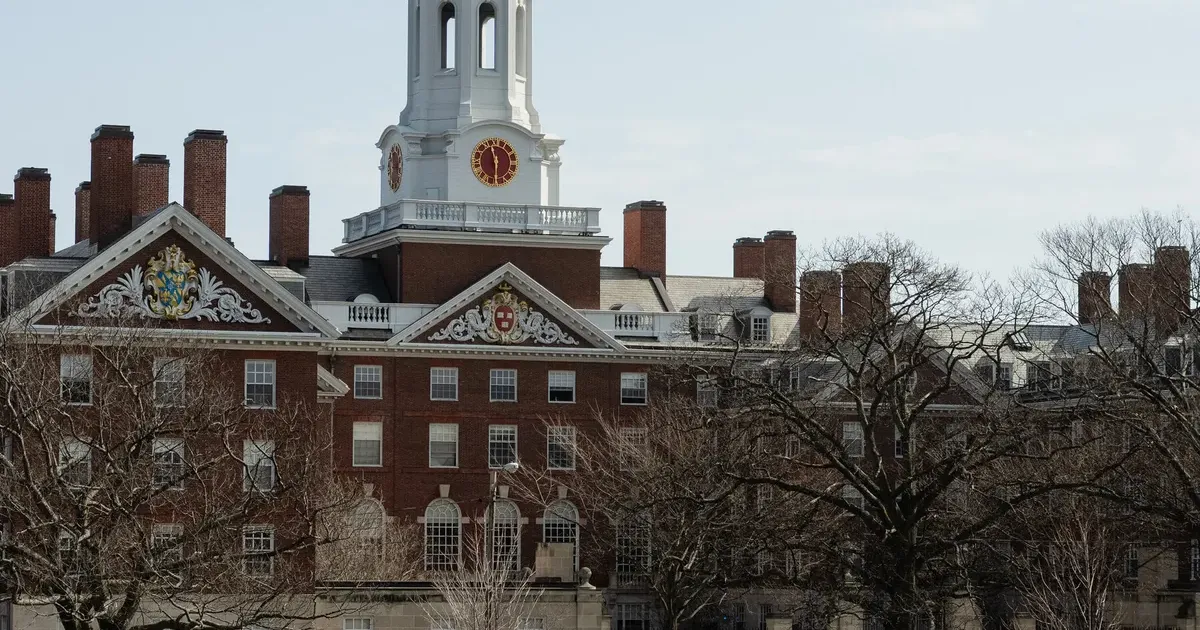
Harvard University faculty members plan to decide whether to implement strict quotas on the distribution of top academic honors. Administrative leaders at the Cambridge campus seek to restore the distinction of the highest marks. The April 3, 2026, faculty vote centers on limiting A grades to just 20 percent of any given class. Faculty reformers believe the current system obscures genuine excellence. Records from the last decade indicate that nearly 80 percent of all marks awarded at the institution resided in the A range.
Instructional staff would receive a hard cap under the proposed guidelines. Beyond the 20 percent threshold, the policy allows for four additional A grades to provide flexibility in smaller seminars or specific circumstances. The proposed cap departs from the qualitative assessment models used by the university for the last several decades. Proponents of the change argue that a degree from the college has suffered from a lack of differentiation. Harvard University remains one of the final Ivy League holdouts to address the phenomenon of upward grade drift. The April 3, 2026, vote turned grade inflation into a formal governance question for Harvard.
Faculty Concerns Regarding Transcript Reliability
Data compiled by internal committees shows a persistent rise in Grade Point Averages across all disciplines. Critics of the existing system, including major financial institutions and law school admissions officers, have voiced concerns that transcripts no longer provide a reliable ranking of talent. Professors often feel pressured by student evaluations to award high marks. Employers, however, find it difficult to identify the most capable candidates when the vast majority of the graduating class possesses nearly identical academic records.
Academic departments have historically resisted top-down mandates on how they evaluate students. While some lecturers in the hard sciences maintain more rigorous curves, humanities departments often see much higher concentrations of top grades. Implementation of a school-wide cap would force a standardization that has not existed in the university's 390-year history. $11 billion in annual endowment spending has not shielded the institution from external pressure to maintain its status as a meritocratic leader.
The Harvard Crimson first detailed the proposal earlier this academic year, sparking a campus-wide debate that has divided the Faculty of Arts and Sciences. Journalists at the student newspaper noted that the committee responsible for the plan wants to align the college with more rigorous global standards. Faculty members will cast their ballots during a closed-door session. Many senior scholars worry that the institution's reputation for academic rigor is at stake.
Student Body Rejection of Grade Quotas
Undergraduates have organized protests and signed petitions against the measure. They argue that a rigid curve creates unnecessary competition and penalizes students in high-performing cohorts. Student leaders contend that the university should focus on teaching quality instead of mathematical limitations on success. Many fear that their graduate school prospects will suffer if they are competing for a limited pool of top grades against equally brilliant peers.
The proposal, which was first reported earlier this year by the Harvard Crimson, would cap A grades to 20% of students in a course, with an allowance for four additional As, according to the official committee report.
Vocal opposition from the student council emphasizes the mental health toll of increased academic competition. One petition circulating on campus claims that the 20 percent cap is an arbitrary figure that does not reflect the actual mastery of the material. Students in STEM fields are particularly concerned that the quota will make already difficult courses nearly impossible to navigate with high honors. Faculty members have yet to address these specific anxieties in their public statements.
The Historical Context of Ivy League Grade Inflation
Princeton University attempted a similar deflation policy in 2004, which capped A grades at 35 percent across all departments. Results of that decade-long experiment were largely viewed as mixed by the academic community. Princeton eventually repealed the policy in 2014 after finding that it negatively impacted student morale and recruiting efforts. Harvard University administrators appear to be taking a more aggressive stance with their 20 percent target. Comparisons between the two institutions suggest that Harvard is willing to risk student dissatisfaction to protect the perceived value of its brand.
Another component of the plan introduces an internal average percentile rank system. This metric relies on raw scores to determine who receives Latin honors or academic awards. It would essentially bypass the traditional GPA for university-internal recognition. The percentile-ranking change aims to provide a more detailed look at student performance without necessarily changing the grade that appears on a public transcript. Faculty members hope this dual system will satisfy both the need for rigor and the desire of students to maintain high GPAs for external use.
Grade Caps Reopen Harvard Transcript Debate
Does Harvard actually believe that a mathematical quota can solve a cultural crisis of its own making? For years, the university has marketed itself as an exclusive club where admission is the hardest hurdle, effectively promising a golden ticket to every teenager who survives the admissions process. By proposing a 20 percent cap on A grades, the administration is attempting to put the genie back in the bottle after decades of treating students as high-paying consumers rather than scholars.
The plan is a desperate branding exercise. It aims to appease old-school donors and corporate recruiters who find the current lack of transcript differentiation laughable. Princeton tried this exact maneuver and failed miserably because the modern educational market does not reward artificial scarcity in grading. If Harvard faculty members approve this measure, they are not increasing rigor; they are simply increasing the anxiety levels of an already stressed student body. They are trading student well-being for a perceived return to academic prestige that the digital age has already rendered obsolete.