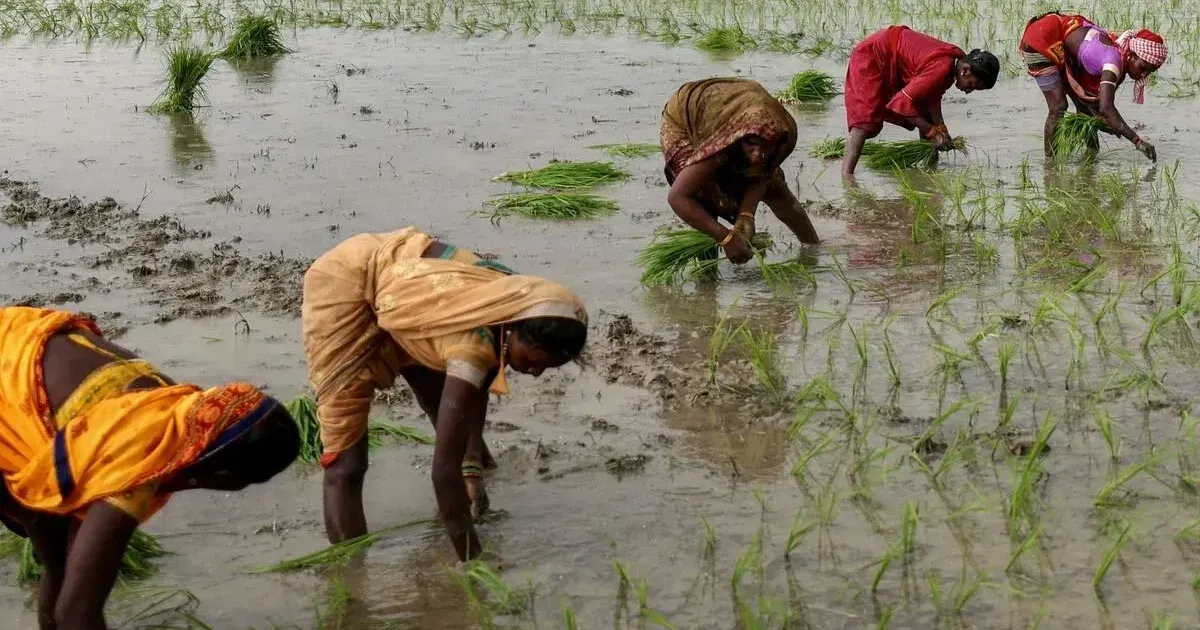
India's monsoon forecast has turned into an economic risk before the rains have even arrived. Officials expect below-normal rainfall beginning in June 2026, threatening staple crops in regions that still depend heavily on seasonal precipitation. The forecast released on April 13, 2026, comes as fuel and fertilizer costs are already squeezing rural margins.
Crop Output Faces Rainfall Risk
Rice and soybean production remain particularly vulnerable to the timing of the first rains. Most Indian farmers rely on the southwest monsoon for nearly 70 percent of their annual watering needs. Without consistent precipitation in June, the transplanting of paddy seedlings will likely be delayed. Delays often result in lower grain weight and increased susceptibility to pests. Bloomberg Economics reported that a shortfall in rain could shave 0.5 percentage points off the national GDP growth rate. Reservoirs in major states like Maharashtra and Karnataka currently hold 15 percent less water than their ten-year average. Supply chains for pulses and oilseeds are already tightening. Stockpiles of tur dal and urad dal reached a five-year low in March. Wholesale prices for staple vegetables climbed as transport costs from farms to urban centers rose. Logistic companies cited higher insurance premiums for transit through conflict-affected maritime zones as a secondary driver for these increases. Consumers in Mumbai and Delhi are seeing these costs reflected in their monthly grocery bills. Market analysts are monitoring the situation with extreme caution. Escalating oil prices continue to destabilize the rupee and erode the financial viability of rural irrigation systems.
Input Costs Squeeze Rural Incomes
Production expenses for the average Indian farmer are rising twice as fast as the minimum support prices offered by the government. Energy costs represent the largest single variable for mechanized farms. When the Middle East conflict disrupted oil exports, the impact rippled through the Indian agricultural supply chain within weeks. Phosphate and potash supplies, essential for healthy root development, are now rationed in several districts. Credit availability for the rural sector tightened as banks reassessed the risk of crop failure. Marginalized farmers often turn to informal lenders when institutional credit dries up.
A Bloomberg Economics report stated that India is likely to witness a below-average monsoon this year, adding pressure on farmers who are already facing higher input costs following the Middle East conflict.
Economic stability in the rural heartland depends on a delicate balance between rain and affordable technology. Tractors and harvesters sit idle in some regions because fuel costs outweigh the projected profit from the harvest. Labor shortages in states like Punjab are worsening as migrant workers return to their home villages to tend to their own rain-starved plots. National employment schemes have seen a 12% rise in applications over the last 30 days. This indicates a migration away from active farming toward temporary state-funded labor. Financial distress often leads to a contraction in rural demand for consumer goods.
Food Inflation and RBI Pressure
The Reserve Bank of India has signaled that its inflation-targeting framework could be tested if food prices continue to climb. Food makes up nearly half of the consumer price index basket in the country. If the monsoon fails to deliver adequate moisture, the central bank might be forced to keep interest rates high to combat rising costs. High-interest rates further increase the cost of agricultural loans, creating a circular problem for the sector. Government officials are considering expanding export bans on certain rice varieties to protect domestic supply.
International wheat markets reacted quickly to the news from the subcontinent. Buyers who previously looked to India as an alternative to Black Sea grain now face limited options. Estimates suggest that the exportable surplus of wheat could drop to zero if the heatwaves expected in May are followed by a dry June. Global food prices rose by 3% on the news of the Indian weather forecast. Foreign exchange reserves might be needed to fund emergency food imports later in the year.
Current irrigation infrastructure covers only about 45% of the total cultivated area. Reliance on subterranean aquifers has led to a dangerous drop in the water table across the Indo-Gangetic plain. Pumps must go deeper every year, consuming more electricity and diesel in the process. Sustainable farming practices are being discussed in policy circles, yet implementation remains slow at the village level.
National food security hinges on a four-month window of rain.
Monsoon Risk for the Wider Economy
Relying on the whims of a seasonal weather pattern to maintain a $400 billion agricultural sector is a gamble that the Indian government continues to lose. New Delhi has spent decades talking about irrigation reform and drought-proofing, yet the nation remains a hostage to the clouds. The current forecast is not just a weather event; it is an indictment of a systemic failure to modernize the rural economy. While the Middle East conflict provides a convenient excuse for rising input costs, the underlying fragility of the Indian farm system is the result of long-term policy neglect.
Global investors should view these weather warnings as a signal of impending stagflation. When the most populous nation on Earth cannot guarantee the price of its daily bread, the resulting social and economic instability spreads far beyond its borders. The Reserve Bank of India is effectively powerless against a dry monsoon. No amount of interest rate manipulation can replace missing rainfall.
India is one bad season away from a crisis. This vulnerability is an existential threat to its ambitions of becoming a global manufacturing hub. Workers who cannot afford food cannot sustain a factory floor. The miracle of the Indian economy is currently grounded in the dirt of a dry field. Expect volatility, expect intervention, and expect a harsh winter of high prices.