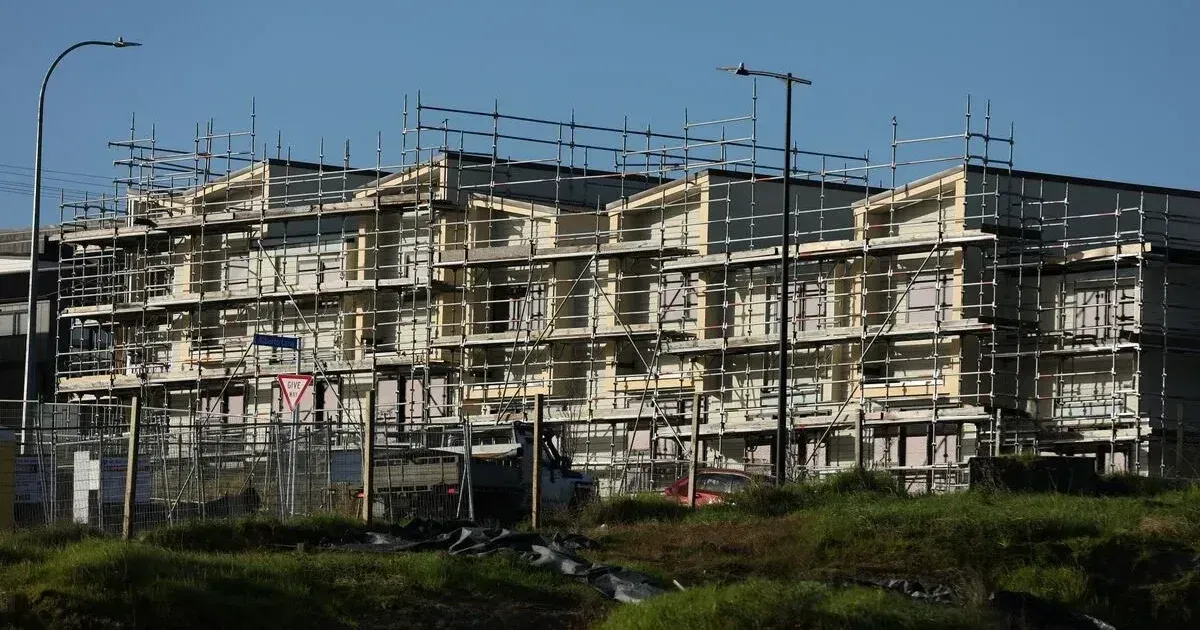
Fletcher Building moved quickly to pass higher costs through New Zealand construction markets. Contractors were left to calculate how much of the shock would reach buyers. The price pressure links distant conflict to local building budgets. That connection makes the story a household-cost issue, not only a trade story. On April 16, 2026, management announced that building material prices in New Zealand would increase immediately. Executives cited the expanding military conflict in Iran as the primary driver for a surge in operational overheads. Operational costs began climbing shortly after naval hostilities in the Persian Gulf disrupted primary maritime shipping lanes used for raw material imports. Every major category of construction supplies, from specialized steel to concrete additives, faces new price adjustments. Shareholders received a formal notice stating that supply chain volatility now dictates the company's pricing structure.
Internal projections indicate that these higher costs must pass through to commercial and residential contractors to preserve operating margins. The Auckland-based company maintains a dominant position in the domestic market, providing over 90% of certain essential materials like plasterboard and cement. Recent data shows that shipping insurance premiums for vessels transiting the Indian Ocean have tripled since the start of the year.
Regional conflict in the Middle East typically sends ripples through the global energy market, but the specific impact on New Zealand is uniquely severe. Long-haul transport relies heavily on diesel fuel, and the cost of bunkering for bulk carriers has jumped sharply. Freight forwarders are now rerouting ships away from the Strait of Hormuz, adding thousands of miles to standard delivery routes from European and Asian manufacturing hubs. Fuel surcharges on bulk carriers rose by 22% in the last quarter. This specific cost pressure forces Fletcher Building to reconsider its annual procurement budget.
Direct logistics expenses for the construction giant moved from 8% to nearly 14% of total revenue in less than three months. Analysts at various Auckland brokerages note that the geographic isolation of New Zealand makes it an outlier in global pricing sensitivity. Port congestion in Singapore has further complicated the delivery of raw chemicals used in the production of high-performance insulation.
Energy Inflation Hits New Zealand Manufacturing
Manufacturing facilities across New Zealand require enormous amounts of electricity and natural gas to produce cement and steel. Escalating global oil prices, driven by the war, have a direct correlation with local wholesale energy rates. Fletcher Building operates several energy-intensive plants that are now seeing utility bills exceed seasonal averages by 30%. Local timber processing also requires heavy machinery that runs on high-grade industrial diesel. Costs for domestic freight, moving goods from North Island factories to South Island distribution centers, have hit record levels.
The Golden Bay Cement facility, a core asset for the firm, reported a sharp increase in kiln-firing costs. Every liter of fuel consumed in the extraction of raw limestone now costs 15% more than it did in the previous fiscal year. Regional transport networks have implemented an emergency fuel levy that applies to all construction deliveries. Building site supervisors are reporting that delivery fees now account for a larger portion of their material invoices than the products themselves.
Fletcher Building said Persian Gulf volatility had disrupted its primary shipping lanes and added fuel surcharges to every metric ton of imported raw material.
Inflationary pressure is not limited to raw material acquisition. Fletcher Building executives noted that labor costs within their logistics and manufacturing arms are also rising as workers demand higher wages to combat general inflation. The national consumer price index for construction remains at a ten-year high. Publicly listed building firms are facing pressure from institutional investors to maintain dividends despite the rising costs. This tension creates a scenario where price hikes are the only viable path to short-term stability. While some smaller competitors have attempted to absorb costs, the market leader's move indicates a broader industry trend.
Small-scale residential builders are the most exposed to these sudden price adjustments. Credit terms for trade accounts are being shortened to 30 days or less to improve cash flow. Building permit applications for new residential dwellings fell by 18% in the first quarter of 2026.
Cooling New Zealand Housing Market Dynamics
Demand for new housing is starting to soften as the combination of high interest rates and rising material costs deters potential buyers. New Zealand saw a record number of new builds over the past five years, but that momentum is fading. Mortgage rates at major banks like ANZ and ASB continue to stay above 6 percent, limiting the borrowing capacity of first-time homeowners. Real estate agents in Auckland note that the number of properties sold at auction has decreased by 25% compared to last year. Fletcher Building warned its investors that the backlog of orders is beginning to shrink.
Developers are increasingly concerned about the viability of multi-unit apartment complexes in the current economic climate. Many speculative projects have been shelved until the geopolitical situation in the Middle East stabilizes. The total value of residential building work put in place fell for the second consecutive quarter. Analysts believe that the peak of the construction cycle has passed.
Government officials in New Zealand are monitoring the situation to see if a shortage of affordable housing will worsen. The Commerce Commission previously scrutinized the building materials sector for its lack of competition. Rising prices from a dominant supplier like Fletcher Building often lead to calls for more open trade with other regions. However, the global nature of the shipping crisis means that alternatives from the United States or South America are equally expensive. Construction industry trade groups are lobbying for a temporary reduction in import tariffs to help lower costs.
Some architects are redesigning plans to use less steel and more locally sourced timber to avoid the worst of the price hikes. The average time to complete a new home has increased to 14 months. Rising costs are effectively pricing a generation of New Zealanders out of the new-build market.
Fletcher Building shares traded lower on the NZX following the announcement. Investors remain wary of the company's ability to maintain its profit margins if demand continues to fall. Total revenue for the building products division is expected to remain flat despite the higher prices. The cost of environmental compliance and carbon credits is also adding to the manufacturing burden. Energy-intensive industries in New Zealand are currently paying the highest carbon price in the Pacific region. Management is looking for ways to automate more of its manufacturing processes to reduce the reliance on expensive manual labor.
A spokesperson for the company indicated that no further price hikes are planned for the next 90 days, though this depends on the status of the conflict in Iran. Total impact of these disruptions is estimated to be approximately $100 million for the current fiscal period.
Construction Cost Pass-Through
The Middle East conflict is a genuine cost pressure for Fletcher Building, but it may also shield a dominant supplier from scrutiny over modernization. The persistent reliance on global supply chains for a country as geographically isolated as New Zealand is a strategic failure of the highest order. For years, Fletcher Building has leveraged its dominance to maintain high margins, but the sudden shock of a war in Iran reveals the fragility of this model. When a single entity controls the vast majority of a nation's building materials, any external disruption becomes a national economic crisis.
The claim that higher costs must be passed to the consumer is a classic defensive maneuver for a firm that has grown complacent in its lack of competition. New Zealanders are essentially paying a tax on Fletcher's lack of supply chain diversification and its refusal to invest in local raw material resilience.
The softening demands cited by executives should be viewed with skepticism. It is not just that consumers are poorer; they are tired of being held hostage by a pricing structure that feels arbitrary and predatory. If the market continues to cool, Fletcher Building will find that its price hikes are a trade-off that kills the very volume it needs to survive. The government must stop viewing this as a simple supply-chain issue and start treating it as a competition failure. Without real structural reform, New Zealand will remain a playground for corporate giants who use every headline in the Middle East as an excuse to gouge the domestic builder. Without structural reform, the company risks losing volume as its own price increases deepen the market slowdown.