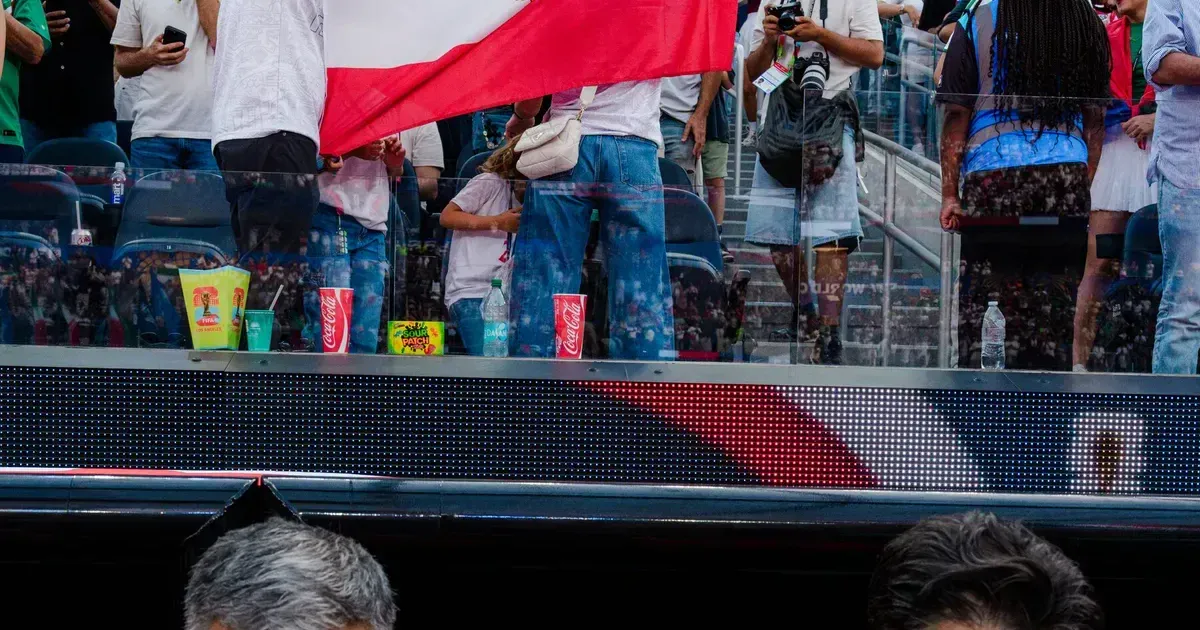
Spectators in Los Angeles transformed a Group G opener into a platform for political dissent. Security officials had to manage crowd emotion alongside normal match operations. Tournament organizers also had to protect players from becoming symbols in a dispute beyond the pitch. The match between Iran and New Zealand ended in a 2-2 draw, but the athletic performance was eclipsed by demonstrations against the regime in Tehran that began long before the first whistle. The June 16, 2026, setting made the opener an immediate test for tournament security and diplomacy.
Crowds at the Los Angeles venue included thousands of individuals who used the World Cup stage to voice opposition to the leadership in Iran. Many attendees arrived with banners and shirts referencing ongoing social movements, creating a bifurcated atmosphere where fans cheered the athletes while condemning the government they officially represent. The presence of these protesters turned the stadium into a site of active political engagement, with chants and slogans echoing throughout the ninety minutes of play.
Group G Opener Tests Security and Diplomacy in Los Angeles
Action on the pitch reflected the chaotic energy in the stands. Elijah Just provided the offensive spark for New Zealand, scoring once in each half to put the Iranian side on the defensive. Just demonstrated technical precision by exploiting gaps in the Iranian backline, forcing Team Melli into a position where an upset seemed plausible for a significant part of the match. His first goal arrived early in the opening period, silencing a segment of the crowd that had been focused on the unfolding protests.
Iran managed to claw back into the game through resilience and individual skill. Ramin Rezaeian managed to find the net first for the Iranian side, narrowing the gap and shifting the momentum. The goal was a temporary distraction from the vocal demonstrations, allowing the Iranian supporters to focus on the competitive stakes of the Group G tournament. Despite the pressure, the Iranian players maintained their composure to keep the scoreline within reach during a frantic second half.
Mohammad Mohebbi eventually leveled the score at 2-2, securing an essential point for his nation in the World Cup standings. The equalizing goal ensured that Iran avoided a devastating opening loss, though the celebration that followed the strike immediately shifted the narrative from the scoreboard to the player's personal conduct.
Mohebbi Celebration Sparks FIFA Disciplinary Debate
Celebration of the equalizing goal triggered a secondary wave of controversy that may lead to disciplinary measures. Mohebbi performed a hand gesture resembling a gun toward the crowd, a move that critics interpreted as a provocative political or social statement. This specific action caught the attention of international broadcasters and sparked an immediate debate regarding the limits of player expression during sanctioned matches.
Social media platforms filled with calls for a FIFA ban against the goal-scorer as images of the gesture circulated globally. While some observers viewed the act as a harmless surge of adrenaline, others saw it as a violation of the neutral ground the World Cup seeks to maintain.
Others defended the gesture as an emotional, sporting reaction.
The sentiment, as reported by the Times of India, highlights the divide between those who see football as inseparable from politics and those who want a focus on the sport. FIFA officials now face pressure to review the incident under regulations regarding political expressions and provocative behavior. World football’s governing body historically penalizes players who use their platform to transmit messages unrelated to the sport, although the specific intent behind the Mohebbi gesture remains a subject of intense debate among fans and analysts alike.
Iran and New Zealand Split Points in 2-2 Draw
Team Melli players currently inhabit a difficult space between their professional duties and the domestic pressures of their home country. The scene in Los Angeles confirmed that the World Cup provides no sanctuary from these geopolitical realities. Iranian athletes are often forced to navigate the expectations of the state while performing in front of a diaspora that is increasingly vocal about its desire for systemic change.
New Zealand proved to be a powerful opponent despite its lower ranking in the pre-tournament assessments. The 2-2 draw is a missed opportunity for Iran to secure an early lead in the group, particularly with more difficult fixtures on the horizon. For the New Zealand squad, the result is a significant achievement that validates its tactical preparation against a historically stronger opponent.
Security protocols at the stadium were tested by the presence of large protest groups and the emotional intensity of the match. Local law enforcement in Los Angeles maintained a perimeter to ensure the demonstrations remained peaceful, but the vocal nature of the anti-regime supporters ensured that the political context remained the primary talking point of the evening. Organizers must now consider if similar environments will materialize in future matches involving the Iranian team.
Iran must now prepare for its next Group G encounter with the threat of a potential player suspension looming over the roster. The team remains in an unstable position where every on-field success is measured against the backdrop of an ongoing national identity crisis.
Politics Around Team Melli
Iran’s presence in international sporting events often serves as a proxy for broader geopolitical struggles. The events in Los Angeles indicate that the national team cannot escape the internal divisions currently fracturing Iranian society. For the athletes, every movement is scrutinized by both the regime they represent and the global diaspora that opposes it. This duality creates a high-stakes environment where a simple goal celebration can transform into a diplomatic incident. If FIFA decides to sanction Mohebbi, it will highlight the difficulty of separating sports from political expression in the modern era.
The Iranian government views the team as a symbol of national strength, but the diaspora sees it as a stage for resistance. These competing narratives will likely persist throughout the tournament, complicating Iran's path forward both on and off the field. The draw against New Zealand is merely the first chapter in a story where the final score is only part of the equation.