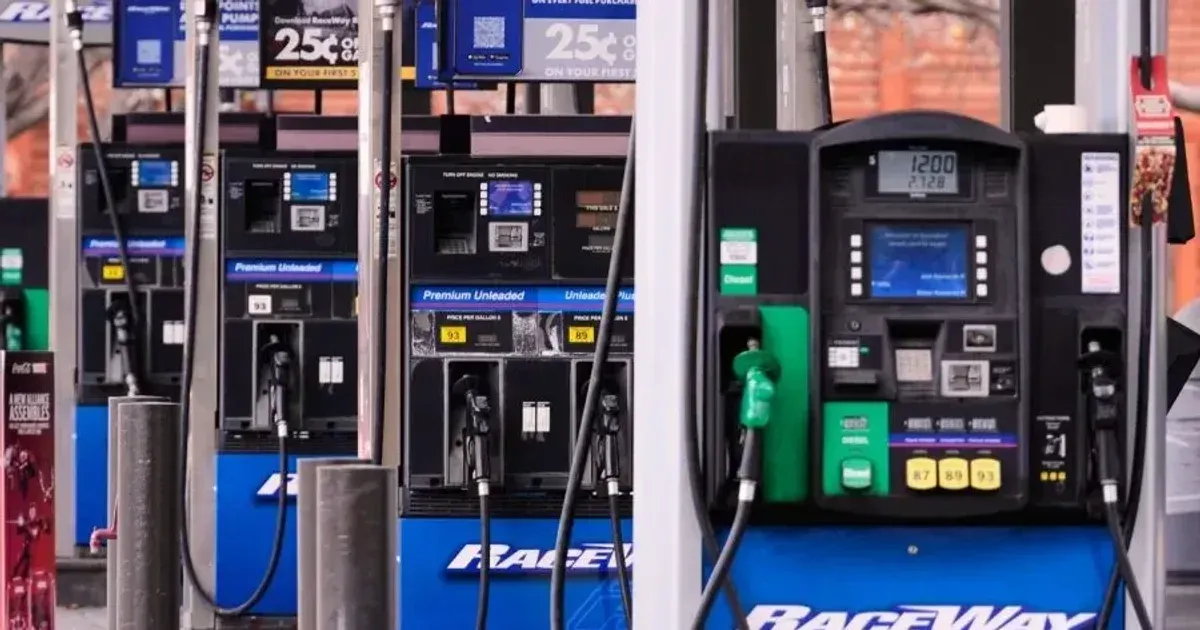
The Iran war is feeding U.S. inflation anxiety because households connect the conflict directly to gas prices and job security. Military operations may be measured in targets and timelines, but consumers feel the war through fuel, freight and grocery costs. The Federal Reserve Bank of New York data showed one-year inflation expectations rising to 3.4%. On April 7, 2026, the concern became more visible as surveys showed Americans focusing less on battlefield progress and more on the price effects of a prolonged energy shock.
Consumer Sentiment and Gas Prices
Pew Research Center documented a shift in public focus from foreign policy objectives to domestic pocketbook issues as the campaign against Iran continues. Households across the country report that the financial burden of the war has surpassed concerns over regional stability or national security. Direct involvement of U.S. forces alongside Israel has worsened these fears, particularly among low-to-middle-income families who feel the immediate impact of energy price hikes.
Survey data suggests that the duration of the conflict is a major factor in the deteriorating public mood. Early support for military intervention has met the reality of a prolonged energy crisis. Analysts at Pew Research Center noted that the intensity of this concern mirrors the public reaction to the 2022 invasion of Ukraine by Russia.
Federal Reserve Data and Inflation Trends
Officials at the Federal Reserve Bank of New York released the March Survey of Consumer Expectations, providing the first full look at how the war has altered the financial outlook of the nation. Median one-year inflation expectations jumped 0.4 percentage point to reach 3.4% last month. This move is a significant deviation from the relatively stable inflation environment of late 2025. Rising gas price expectations, which hit levels not seen since the spring of 2022, remain the primary engine of this upward trend. The strain on the logistics and travel industries is further evidenced by reports of record-breaking diesel costs across several states.
Central bankers monitor these short-term expectations closely to ensure that inflation does not become embedded in the long-term economic structure. Recent data from the Federal Reserve Bank of New York suggests that while the short-term outlook is grim, consumers still hope for an eventual return to normalcy.
Median one-year inflation expectations jumped 0.4 percentage point, to 3.4%, last month, according to the Federal Reserve Bank of New York.
Household anxiety extends beyond the gas pump and into the broader labor market as the war effort consumes national resources. Axios reported that consumers now see the labor market and their own financial situations worsening alongside the inflation spike. Pessimism regarding the year ahead reached its highest level since April 2025. Many families do not expect their financial circumstances to improve while the U.S. and Israel remain engaged in active combat. Consumers increased the odds that the unemployment rate would be higher a year from now by 3.6 percentage points.
This specific metric reached a cycle high, indicating a deep fear that the war will eventually trigger a domestic recession. Corporate hiring plans in sectors outside of defense have already begun to cool. Business leaders cite the uncertainty of energy costs as a primary reason for delaying expansion or capital investment.
Gasoline price expectations reached their highest levels in four years this month. Consumers correlate the success of the blockade and counter-blockade measures in the Persian Gulf with their personal financial health. Domestic policy experts argue that the political capital required to sustain the military effort is rapidly depleting. While the White House maintains that the operations are necessary to neutralize Iranian nuclear and conventional threats, the economic reality for the average citizen is one of shrinking disposable income. Energy departments across the U.S. have reported record-breaking price tiers in several West Coast and Northeast markets. High-occupancy travel and logistics sectors are already passing these costs to consumers through surcharges and price adjustments.
Longer-term expectations showed more resilience than the one-year figures. Three-year inflation projections ticked up only 0.1 percentage point to 3.1%, while the five-year outlook held steady at 3%. These figures suggest that the American public views the current inflationary pressure as a temporary byproduct of the conflict with Iran rather than a permanent structural failure. Economists at the Federal Reserve Bank of New York characterize this as a one-time inflation surge. If the military operations conclude within the current fiscal year, the Fed anticipates that expectations will likely revert to their previous targets.
Persistent conflict, however, could risk unmooring these long-run expectations and forcing more aggressive interest rate hikes from the central bank. The Federal Reserve Bank of New York continues to collect weekly sentiment data as the situation evolves.
Job security concerns are mounting even if the current unemployment rate remains technically low. Individuals reported a greater perceived probability of losing their current positions over the next twelve months. This measure stayed below the previous year's average, yet the trend line is moving in a direction that troubles Federal Reserve officials. Workers in the logistics, manufacturing, and travel industries feel particularly vulnerable to the energy-induced slowdown. One minor bright spot in the Federal Reserve Bank of New York report showed that workers believe it would be slightly easier to find a new job if they were laid off.
Inflation Fear Can Become Its Own Constraint
Inflation expectations matter because they can shape behavior before the official data fully moves. Households spend differently, businesses delay plans and central bankers become more cautious when people begin to assume higher prices are coming. That makes war-driven inflation fear a policy constraint. The longer the conflict affects gas prices, the harder it becomes for officials to separate foreign-policy goals from domestic economic tolerance.