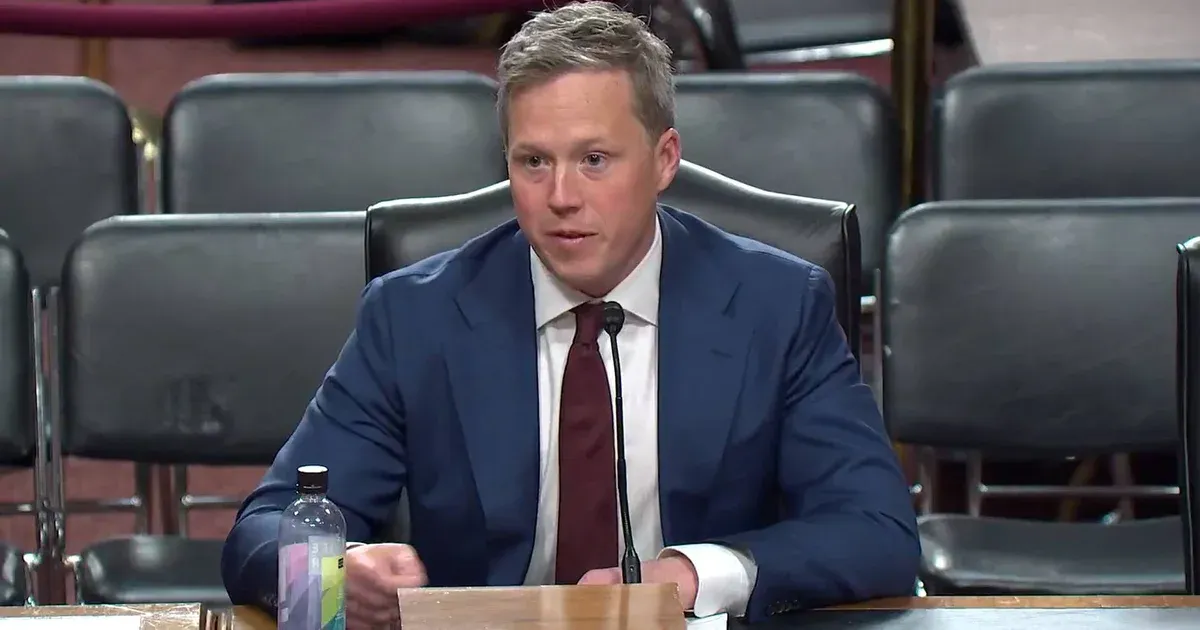
Army Secretary Dan Driscoll's refusal to resign has turned a policy disagreement inside the Pentagon into a visible leadership test. The dispute centers on modernization, budget priorities and how quickly the Army should move toward autonomous systems. The public statement came after friction with Defense Secretary Pete Hegseth had become difficult to contain. White House support for Driscoll complicates the chain of command because it gives a service secretary political protection while his direct superior pushes for faster reform. The statement was issued on April 7, 2026.
Pentagon Leadership Friction and Policy Disputes
Disagreements between Dan Driscoll and Pete Hegseth center on the speed of technological integration within the infantry. Hegseth advocates for a rapid shift toward autonomous systems and reduced traditional troop counts to fund high-tech initiatives. By contrast, Driscoll emphasizes the necessity of maintaining a resilient, human-centered ground force capable of sustained occupation and domestic disaster response. These competing visions have created a logistical bottleneck in the 2027 fiscal planning cycle.
Pentagon insiders describe the environment as professional yet increasingly strained. Meetings regarding the multi-year procurement of next-generation combat vehicles reportedly ended without consensus last month. Driscoll maintains that removing human operators from certain combat roles is premature. He argues that current sensor technology cannot yet replicate the situational awareness of a seasoned soldier. His insistence on a slower transition has frustrated reformers who view the current Army model as outdated.
White House Support for Dan Driscoll
Administration officials view Dan Driscoll as a stabilizing force during a period of major global uncertainty. The White House public praise of his performance suggests a desire to avoid a messy confirmation battle in the Senate during an election year. Replacing a service secretary requires substantial political capital that the executive branch would rather spend elsewhere. By supporting Driscoll, the president ensures continuity in the implementation of the National Defense Strategy.
Political observers note that the White House often utilizes service secretaries to balance the more radical impulses of a defense secretary. Driscoll provides a bridge to the institutional military and veteran organizations that remain skeptical of rapid cultural shifts. His deep ties to the House Armed Services Committee also make him a valuable asset for passing defense appropriations. Losing him would risk alienating key congressional allies who trust his judgment on personnel welfare.
Recruitment strategies provide another trigger point for the two leaders. Hegseth proposed a more aggressive, media-centric marketing campaign focused on elite specialized units. Driscoll, however, continues to prioritize broad-based benefits and traditional service values to attract a wider demographic of recruits. He views the Army as a vehicle for national social cohesion. Efforts to bridge these two philosophies have so far failed to produce a unified recruiting directive for the coming year.
Internal memos from the West Wing suggest that the President values Driscoll's ability to manage the Army's vast bureaucracy without generating negative headlines. His tenure has seen a reduction in public scandals and a slight improvement in retention rates. These metrics carry substantial weight in the Oval Office. While Hegseth may want a more ideologically aligned subordinate, the White House prioritizes administrative competence and political reliability. Defense Secretary Pete Hegseth arrived at the Pentagon with a mandate to disrupt traditional procurement cycles. He views the current acquisition process as an $850 billion obstacle to innovation. His office has pushed for more authority to bypass standard testing protocols for emerging drone technologies. Driscoll has resisted these efforts, citing the need for rigorous safety and reliability standards before placing new equipment in the hands of soldiers.
Staffers within the Office of the Secretary of Defense argue that Driscoll's caution borders on obstructionism. They point to the success of commercial tech companies that embrace a fail-fast mentality. Hegseth believes the Army must adopt this mindset to compete with near-peer adversaries. The secretary of defense has reportedly explored administrative ways to cut the autonomy of service secretaries. Such moves would centralize power within the Pentagon to a degree not seen in decades.
Clashes also extend to the area of military justice and internal culture. Hegseth has expressed interest in simplifying the court-martial process and giving commanders more direct control over legal proceedings. Driscoll remains a proponent of the recent reforms that moved certain legal decisions to independent prosecutors. He believes these changes are essential for maintaining troop morale and public trust. This fundamental disagreement on the nature of military law remains a primary source of friction.
Fiscal constraints have worsened the rift between the two leaders as the deadline for the next defense budget approaches. The Army faces a projected shortfall in its housing allowance fund. Driscoll has requested an emergency reallocation of funds to address substandard living conditions on several domestic bases. Hegseth suggested that these funds should instead be redirected toward a new hypersonic missile research program. This trade-off between quality of life and future weaponry has polarized the Pentagon staff.
Civilian Leadership Needs One Chain of Command
Civilian disagreement is not automatically dysfunction. The Pentagon needs debate over technology, housing, force structure and military justice because each choice affects readiness. The problem begins when debate turns into rival centers of authority. A service secretary and a defense secretary can disagree, but the Army still needs one coherent chain of command to turn decisions into policy.