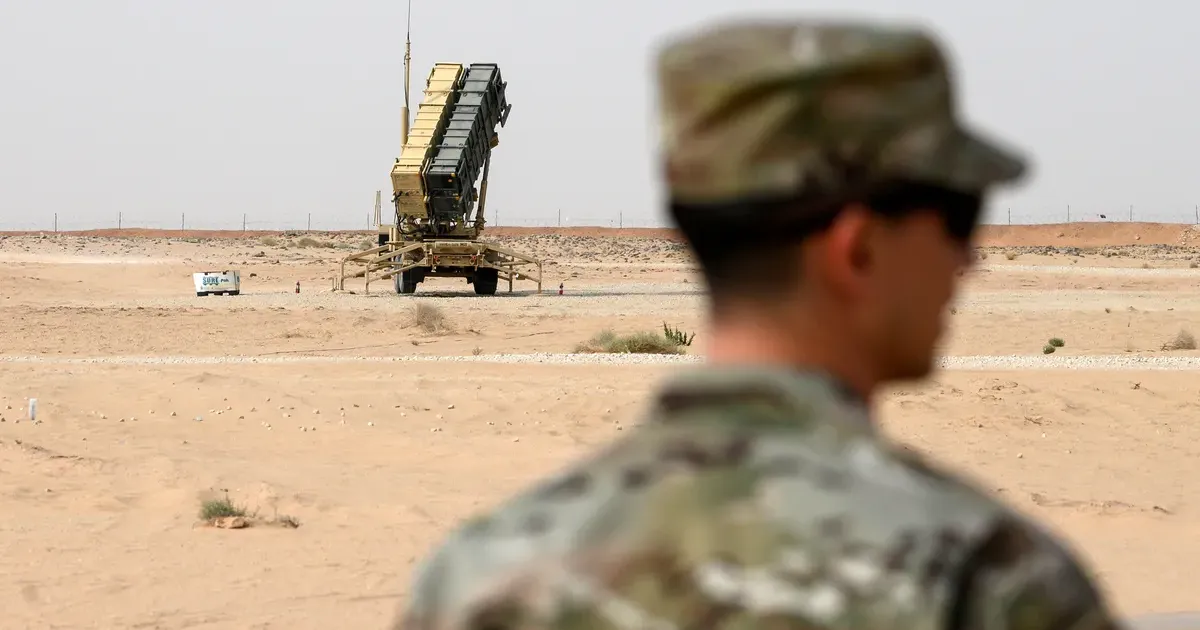
Iranian missile and drone fire on a Saudi military base has pushed American casualty figures back into the center of the regional conflict. On March 28, 2026, military officials said ten U.S. service members were wounded after a concentrated barrage struck the complex and damaged aircraft and support areas. The strike underlined a blunt military reality: even hardened bases remain exposed when drones, missiles and short warning times arrive together.
Reports attributed to U.S. Central Command said the wounded personnel received medical care on site before being moved for further treatment. The reported injuries included blast trauma and lacerations from debris. Officials did not release the names of the service members, and public accounts did not support the kind of certainty that would identify exact unit assignments or detailed medical outcomes. That restraint matters in a story where military facts can shift quickly in the first hours after an attack.
The attack also landed inside the wider frame of Operation Epic Fury, the U.S. military campaign tied to Iranian-backed threats and regional defense operations. CENTCOM has reported that American casualties have risen since the operation began in late February. One update said roughly 303 U.S. service members had been wounded since the start of the campaign, a figure that turns a single base strike into part of a larger question about force protection, escalation and the cost of keeping troops in fixed positions.
Since the start of Operation Epic Fury on Feb. 28, about 303 U.S. service members have been wounded, according to CENTCOM.
That number gives the latest Saudi base strike its political force. Ten wounded Americans would be serious on their own. Placed against a month of cumulative injuries, the incident becomes a measure of whether the current defensive posture is absorbing pressure faster than it is reducing the threat. Military planners can move aircraft, reinforce shelters and add interceptors, but each attack tests the assumption that the base network can keep functioning under repeated fire.
Operation Epic Fury Casualties and Strategic Impact
The central military problem is saturation. A mix of drones and missiles can force air defense crews to sort slow, low-cost targets from faster, more destructive threats in seconds. Public reports said some incoming weapons were intercepted while others reached the base area. The exact performance of each defense system is not fully visible from outside official channels, but the pattern is clear enough: Iran and aligned forces are trying to stretch the defensive perimeter until something gets through.
The Pentagon has moved additional counter-drone and air defense resources into the region, according to U.S. reporting on the campaign. Technical teams also examine recovered debris after strikes to identify guidance systems, motors and possible design changes. Those details are not just forensic. They shape the next round of jamming, radar coverage and hardening decisions. Every successful impact teaches the attacker something about Western defenses; every recovered component teaches defenders something about the next attack.
The broader coalition objective remains deterrence, but the casualty trend makes that word harder to use casually. Military leadership argues that U.S. forces help protect regional bases, shipping lanes and partner states. Critics in Washington and allied capitals see a different ledger: expensive deployments, repeated attacks and service members placed close to weapons designed specifically to make static bases unsafe. That argument is no longer theoretical when wounded Americans become a recurring headline.
Missile and Drone Capabilities in Saudi Airspace
Early accounts pointed to launch activity connected to Iranian territory or Iranian-backed networks, though final attribution depends on intelligence that is rarely released in full. The reported mix of drones and missiles fits the pattern of recent regional attacks: use cheaper systems to complicate detection, then force defenders to spend premium interceptors and attention across a wider target set. The goal is not always to destroy a base outright. Sometimes the goal is to slow flight operations, damage maintenance capacity and prove that no installation is beyond reach.
Saudi defense personnel assisted with recovery and security work after the strike, according to public reporting. Base engineers then faced the practical work that follows every attack: inspect runways, clear debris, assess aircraft damage and restore operations without creating new vulnerabilities. Even when command functions remain intact, repairs consume manpower and time. That is part of the pressure campaign. A base does not have to be knocked out permanently to become less efficient.
Redundancy across the regional base network limits the damage from any single strike. Aircraft and logistics can be shifted, command links can be rerouted, and alert levels can be raised at nearby facilities. But redundancy is not the same as immunity. If every facility must operate as though it is next, the whole network becomes more expensive to run and harder to relax. That is the strategic burden Iran is trying to impose.
U.S. Response and Regional Deterrence
Washington is expected to weigh a military response, but the timing and target set remain sensitive because retaliation can either restore deterrence or widen the conflict. Carrier-based assets and regional strike platforms give the United States options, yet the core decision is political: whether to hit launch infrastructure, storage sites, command nodes or only immediate battlefield systems. Each choice sends a different signal to Tehran and to U.S. partners.
Saudi Arabia condemned the violation of its territory and reaffirmed cooperation with the United States. Other Gulf partners also have reason to tighten alert levels when a base strike coincides with pressure on energy routes and commercial shipping. The military and economic fronts are linked. Insurance costs, port confidence and airline routing all respond to the same perception: that the Gulf security environment can deteriorate quickly.
The U.S. now faces a familiar contradiction. It wants to deter Iran without sliding into an open regional war, but it also cannot allow repeated attacks on American personnel to look survivable from Tehran's point of view. That is why the casualty figure matters more than the physical damage. It becomes a test of whether deterrence is still credible or whether the campaign has settled into a cycle where the United States absorbs blows, repairs bases and waits for the next salvo.
What Washington Must Answer
Washington is trapped in a cycle of reactive violence that serves no clear strategic end. If more than 300 Americans have been wounded in a single month under the banner of Operation Epic Fury, that is not a routine cost of doing business; it is a failure of deterrence. By deploying troops to fixed positions within reach of cheap, mass-produced Iranian drones, the Pentagon has handed the Islamic Republic a set of high-value targets and then asked air defense crews to solve a political problem with interceptors.
This insistence on maintaining a presence in Saudi Arabia without the political will to eliminate the source of the threat is a recipe for a slow-motion catastrophe. Why is Washington surprised when a regime that has spent decades preparing for asymmetric warfare uses those tools to bleed the U.S. military? The current administration talks about containment while service members are being used as human tripwires for a conflict they are not being allowed to win. Unless the U.S. is prepared to impose direct costs on the networks and manufacturing hubs behind these attacks, defensive operations will remain an expensive exercise in casualty management. The bloodletting will end only when the cost for Tehran exceeds the benefit of continued aggression.