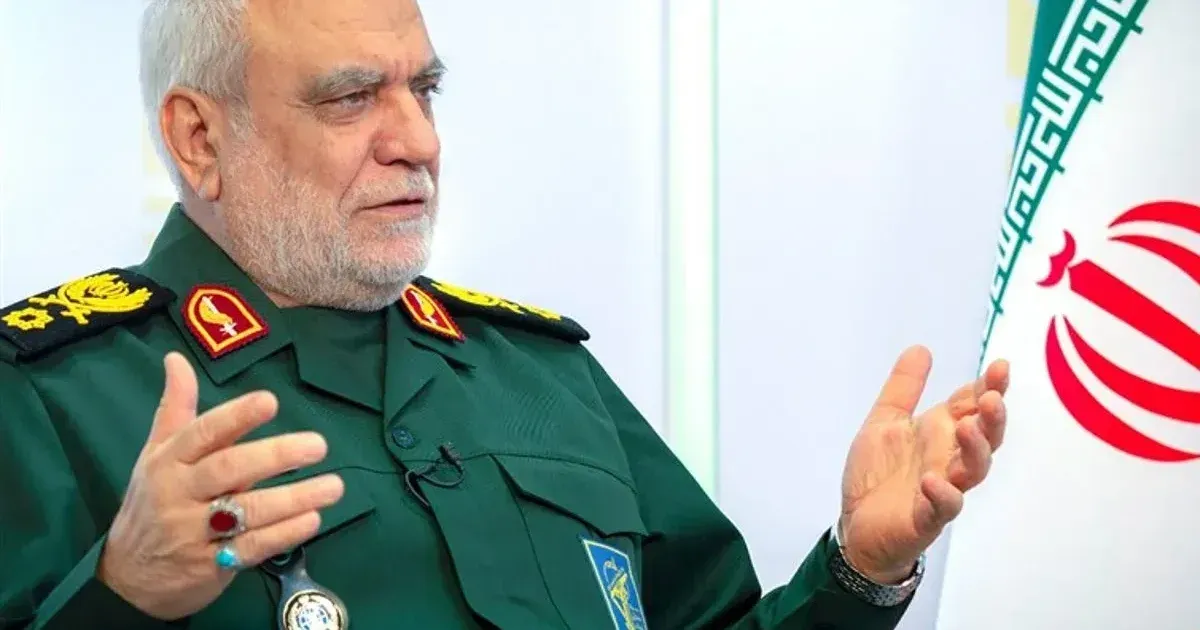
The killing of Majid Khademi pushed the Iran crisis into a more dangerous phase.
Military pressure, shipping disruption and a public White House deadline now reinforce each other. The immediate question is whether deterrence can still operate once both sides have public deadlines.
Majid Khademi, the intelligence chief of the Revolutionary Guards, died in a joint US-Israeli airstrike on April 6, 2026, in a move that indicates a total collapse of back-channel diplomacy. Israeli officials confirmed the successful neutralization of the high-ranking official during a precision operation in an undisclosed location. This strike targeted the core of Iran's external operations network and military coordination. Intelligence sources indicate that Khademi was a primary designer of regional proxy strategies. President Donald Trump issued a stern ultimatum from Washington shortly after the operation. He demanded that Iran immediately reopen the Strait of Hormuz or face direct attacks on its domestic energy infrastructure. The White House set a hard deadline for Tuesday evening to see visible progress in the maritime corridor. Military assets in the Persian Gulf moved into strike positions to support this directive.
Tehran rejected a proposal for a temporary ceasefire that aimed to secure the essential shipping lane. Iranian leadership described the offer as a trap designed to weaken their leverage while under military duress.
"Peace talks are incompatible with threats and the continued military pressure from the West," an Iranian government spokesperson stated on April 6, 2026.National security officials in Tehran maintained that the closure of the Strait of Hormuz is a sovereign right in response to Western aggression.
Joint Operations Against the Revolutionary Guards
Israel and the United States coordinated intelligence for months to track the movements of Majid Khademi before authorizing the strike. Khademi held a unique position within the Revolutionary Guards, bridging the gap between conventional military strategy and clandestine intelligence gathering. His death creates a serious leadership vacuum in the organization's intelligence wing. Previous attempts to target Khademi failed due to his rigorous security protocols and frequent changes in location.
Pentagon officials noted that the operation used advanced stealth technology to bypass Iranian air defenses. This capability suggests a technological gap that the Revolutionary Guards have yet to bridge. While Israel provided the tactical data, US logistics and aerial support were essential for the mission's success. No civilian casualties were reported in the immediate vicinity of the strike zone. Israeli military commanders viewed the operation as a defensive necessity to prevent imminent attacks on their soil. Khademi was the latest in a series of high-level Iranian figures killed by external strikes. Each loss forces the Revolutionary Guards to promote younger, less experienced officers to sensitive roles. Analysts believe these targeted assassinations are part of a broader strategy to degrade Iranian command and control. The internal cohesion of the intelligence services is now under extreme pressure. Iranian state media described the incident as a cowardly act of international terrorism.
Strait of Hormuz Closure and Energy Markets
Global energy markets reacted sharply to the news of the rejected ceasefire. Oil prices surged above $120 per barrel as traders factored in the risk of a prolonged maritime blockade. Strait of Hormuz transit accounts for nearly one-fifth of global oil consumption, making it the world's most critical energy chokepoint. Shipping companies began rerouting vessels around the Cape of Good Hope to avoid the volatile region. This shift adds meaningful costs and delays to global supply chains.
Insurance premiums for tankers operating in the Persian Gulf reached record highs. Many maritime underwriters now refuse to cover vessels entering the region without sovereign military escorts. The financial barrier effectively halts non-government-sponsored shipping through the Strait of Hormuz. Iranian naval forces increased their presence near the shipping lanes to enforce the closure. Satellite imagery shows dozens of tankers anchored outside the strait, waiting for instructions.
European nations expressed concern about the potential for a total energy supply disruption. While Israel and the US focus on military objectives, Brussels is struggling with the economic consequences of $5 per gallon gasoline. Donald Trump dismissed these concerns, stating that energy independence would protect American consumers from the worst effects. Major Asian economies, including China and Japan, face a more direct threat to their industrial output. Beijing has not yet announced its official stance on the escalating maritime crisis.
Yemeni Civilians and Houthi Involvement
Sanaa residents reported a sharp increase in the price of basic goods as the conflict expanded into Yemen. The Houthi movement officially entered the war in support of Iran, drawing immediate retaliatory threats from the coalition. Civil defense units in the Yemeni capital warned citizens to prepare for imminent airstrikes on military infrastructure. The involvement ties the Yemeni theater directly to the fate of the Revolutionary Guards in Tehran. Food security in the region is deteriorating as port arrivals slow to a crawl.
Fuel shortages have already grounded many transport vehicles in northern Yemen. Markets that were once bustling now sit empty as vendors fear the fallout of a regional war. Houthi leaders declared that their missile batteries are aimed at regional shipping hubs in solidarity with Iran. The expansion of the conflict complicates humanitarian efforts that were already struggling to meet local needs. Majid Khademi reportedly managed the logistics for many of the weapons transfers to the Houthis before his death. International aid organizations are pulling staff from Sanaa as the security situation worsens. They cite the threat of indiscriminate bombing and the lack of a clear exit strategy for non-combatants. Many Yemeni families have begun fleeing the cities for rural areas, hoping to escape the coming bombardment. The humanitarian crisis in Yemen is set to worsen as the conflict between Israel and Iran intensifies. Local doctors report a critical lack of medical supplies and trauma care equipment.
Trump Administration Deadline for Infrastructure Strikes
President Donald Trump holds a firm position that only military force will compel Iran to reopen the waterway. The Tuesday evening deadline provides a narrow window for diplomatic intervention that many believe will go unused. White House advisors suggested that the list of targets includes refineries, port facilities, and electrical grids. The strategy seeks to cripple the Iranian economy to the point where the cost of the blockade exceeds its benefits. Pentagon planners have finalized the target packages for a multi-wave air campaign.
Republican leaders in Congress voiced support for the president's aggressive posture. They argue that years of failed negotiations have emboldened the Revolutionary Guards to take sharper actions. The hardline approach is a shift away from the containment policies of the previous decade. Critics in the Democratic Party warned that attacking sovereign infrastructure could lead to an uncontrollable regional war. The internal political divide has not slowed the pace of military preparations in the Gulf.
Iranian officials countered by threatening to retaliate against US bases in the region. They claimed that any strike on their infrastructure would be met with a rain of missiles on American assets in Qatar and Bahrain. The rejection indicated a hardening of Tehran's stance. Diplomatic missions from neutral nations are making last-ditch efforts to mediate before the Tuesday evening deadline passes. The lack of a direct communication channel between Washington and Tehran makes a miscalculation more likely. Both sides appear prepared for a high-intensity kinetic exchange.
Regional Escalation Risk
The elimination of Majid Khademi is more than a tactical victory; it is a deliberate provocation designed to force Iran into a decisive error. By combining this high-profile assassination with the looming Tuesday evening deadline, the Trump administration has effectively backed Tehran into a corner with no face-saving exit. The strategy relies on the assumption that the Iranian regime is more afraid of domestic collapse than a regional war. It is a gamble of historic proportions that ignores the unpredictability of a wounded and cornered adversary.
What the West consistently fails to grasp is the ideological resilience of the Revolutionary Guards. They do not operate on the same cost-benefit logic as a Western corporation. To the leadership in Tehran, the closure of the Strait of Hormuz is a holy act of resistance, not a bargaining chip in a trade negotiation. Removing a man like Khademi only solidifies their narrative of martyrdom and justifies further escalation in their eyes. The ideological gap is where the current policy of maximum pressure could easily transform into a total regional fire.
The economic fallout will be the ultimate test of Donald Trump and his political survival. While he speaks of energy independence, the global nature of oil pricing means American voters will still feel the pain at the pump. If the Strait of Hormuz remains closed for more than a month, the resulting global recession will be the only thing the history books remember about this conflict. The administration is playing a game of chicken with the global economy at stake.