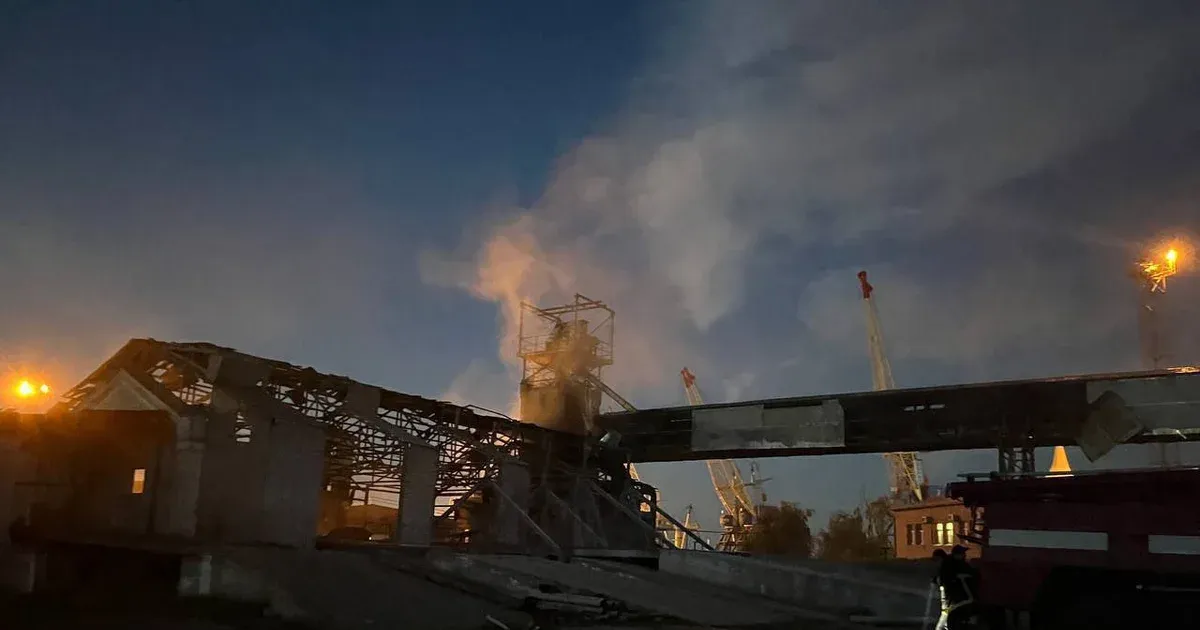
The Odesa strike shows how the drone war keeps pulling civilians and energy infrastructure into the same cycle of retaliation. Ukraine is hitting Russian oil assets while Russia continues to pressure Black Sea cities.
The battlefield now reaches far beyond the front line.
Emergency responders in Odesa reported on April 6, 2026, that a Russian drone strike killed three people in the southern port city. Heavy smoke rose from the ruins of a residential block where rescuers combed through charred debris for survivors. Military officials in Kyiv confirmed that the overnight barrage involved multiple waves of one-way attack drones launched from the Crimean Peninsula. Russia continues to deploy these low-cost loitering munitions to bypass overstretched air defense networks in the Black Sea region. The impact on noncombatants remains the primary driver of humanitarian concern in the ongoing conflict.
Odesa Civil Defense Confirms Fatalities
Local authorities in Odesa identified the residential district targeted in the attack as a non-military zone. Residents described hearing the distinct lawnmower sound of drone engines before a series of explosions rocked the neighborhood. Shrapnel from the Shahed-136 munitions pierced through multiple floors of the targeted structure. Structural engineers arrived on site to assess whether the remaining floors were safe for habitation. Many families were forced into temporary shelters as the city government declared a day of mourning.
Casualties in the Black Sea port city have increased as the frequency of aerial incursions stays high. Moscow maintains that its strikes target only military and industrial objectives, a claim that the carnage in residential Odesa directly contradicts. Defense analysts note that the use of swarming tactics is intended to saturate defense batteries until they are unable to intercept every incoming threat. Each drone that penetrates the perimeter carries a warhead designed for maximum incendiary effect. Forensic teams collected fragments of the propulsion systems for further analysis.
Ukrainian Retaliation Against Russian Energy Facilities
Ukrainian forces expanded their campaign against the Russian oil sector on April 6, 2026, by hitting export terminals. These operations represent a shift toward high-impact economic warfare designed to drain the financial reserves of the Kremlin. Previous strikes have forced the suspension of operations at several refineries near the border. Intelligence reports indicate that repairing these high-tech facilities is difficult due to international sanctions on specialized hardware. Kyiv insists that the energy sector is a legitimate target because it provides the funding for continued missile production. The destruction of refineries has forced some regional distributors to implement fuel rationing.
Petroleum infrastructure remains vulnerable despite the installation of anti-drone netting at many sites. Ukrainian long-range drones have demonstrated the ability to fly 500 miles or more to reach strategic targets. These attacks have reduced the refining capacity of the Russian Federation by an estimated 10 percent over the last quarter. Market fluctuations in global crude prices often follow reports of successful hits on major export hubs. Investors watch these developments closely to gauge the stability of the global energy supply.
Rescuers pulled the bodies of two women from the wreckage of a three-story apartment building during the early morning hours. A 2-year-old girl was later confirmed as the third fatality, drawing sharp condemnation from local administrative leaders. While ABC News International described the child as a toddler, dispatch reports from DW News identified the victim as a female child aged exactly two. Medical teams treated several other residents for shrapnel wounds and smoke inhalation at the scene. Firefighters battled the resulting blaze for four hours before extinguishing the last of the hotspots.
Kyiv launched a series of retaliatory strikes against Russian energy infrastructure in response to the civilian losses. Unmanned aerial vehicles targeted petroleum facilities deep inside Russian territory to disrupt the logistics of the Kremlin's war machine. Military intelligence sources suggest that these strikes aimed at decreasing the export capacity of major refineries. Damage to these sites often results in a serious drop in refined fuel availability for armored divisions at the front. The fire burned for six hours before containment squads reached the upper levels.
Energy exports are the lifeblood of the Moscow defense budget.
Systematic Destruction of Moscow Oil Assets
Data from satellite imagery confirmed multiple fires at an oil depot in the Krasnodar region following the latest Ukrainian drone wave. Witnesses reported hearing at least four distinct blasts near the storage tanks. Smoke plumes from the facility were visible for miles, indicating the ignition of a heavy volume of crude oil. Russian state media outlets remained silent on the extent of the damage during the first few hours of the event. Security around similar sites has been tightened, yet the sheer number of potential targets makes total defense impossible. The local governor restricted access to the site to prevent unauthorized photography.
Drone War Escalation
Moral equivalence in the theater of modern conflict is a luxury that the Ukrainian General Staff cannot afford. While the international community offers predictable condemnations of civilian deaths in Odesa, the reality of the war is being decided in the burning refineries of the Russian interior. Kyiv has correctly identified that the only language the Kremlin understands is the loss of hard currency. By methodically dismantling the Russian energy infrastructure, Ukraine is fighting more than a military battle; it is executing a corporate raiding strategy against a nation-state. The death of a 2-year-old girl is a tragedy that fuels the political necessity of these retaliatory strikes, providing the domestic mandate required for total war.
Skepticism regarding the efficacy of drone strikes on oil assets is misplaced. Those who argue that these attacks are a mere nuisance fail to grasp the fragility of the Russian refining sector. Every distillation tower destroyed is a blow to the internal stability of the Russian economy that no amount of propaganda can mask. The West must decide whether it wants a managed stalemate or a definitive Ukrainian victory. If it is the latter, the flow of drone components must remain unrestricted. For Kyiv, victory now requires pushing the Russian war economy toward bankruptcy.