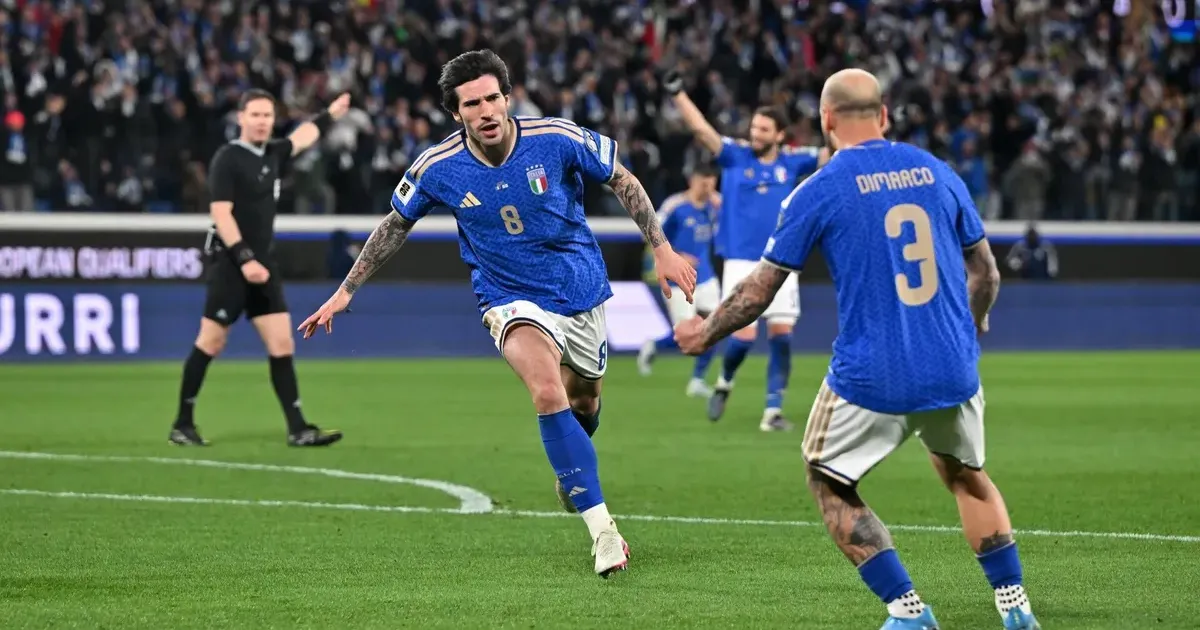
Italy's World Cup absence is no longer a bad cycle. It is a national-team breakdown that has now survived multiple coaches, generations and resets. Bosnia and Herzegovina made that official by eliminating the Azzurri in the UEFA playoff final after a 1-1 draw and a 4-1 penalty shootout.
For a four-time champion, missing one World Cup could be treated as shock. Missing two became a crisis. Missing three in a row turns the problem into something harder to explain away. No current Italian player has experienced a World Cup finals as a member of the senior national team. The fact alone should make every federation slogan sound thin.
Bosnia Earned More Than An Upset
Bosnia's win should not be written only as Italy's humiliation. The team survived the pressure of a playoff final, absorbed Italy's early advantage and handled the penalty shootout with the clarity Italy lacked. U.S.-born Esmir Bajraktarevic scoring the decisive penalty gave Bosnia a historic route back to the World Cup stage.
The result matters because smaller football nations are often treated as supporting characters in the giant's collapse. Bosnia did not qualify because Italy was owed failure. It qualified because it kept the match alive long enough for Italian anxiety to become part of the contest.
Italy Lost Control After The Lead
Italy had the kind of opening that should have settled nerves. Moise Kean's early goal gave the Azzurri a lead and a chance to manage the match. Instead, the game tightened, Alessandro Bastoni's red card changed the emotional and tactical balance, and Haris Tabakovic's equalizer dragged Italy back into the worst possible version of itself.
Once the final reached penalties, history was not an abstract weight. It was in every run-up. Italy did not only lose a shootout; it looked like a team carrying three qualifying cycles of failure into the spot kicks.
The Playoff Pattern Is The Warning
Italy has now repeatedly entered qualification's back door and failed to walk through it. The 2-0 semifinal win over Northern Ireland briefly kept the path open, but the final exposed the same deeper issue: the national team does not control enough matches against opponents it is expected to beat.
The failure is not only about mentality. It is about chance creation, attacking rhythm, squad profile, coaching continuity and the federation's willingness to confront slow decline. A team with Italy's history cannot keep treating playoff losses as isolated nights.
The Fallout Reached The Federation
The defeat did not end with the shootout. Federation president Gabriele Gravina resigned days later, and Gennaro Gattuso also stepped away after a tenure defined by emergency management rather than renewal. Silvio Baldini's caretaker role for June friendlies only underlined the scale of the reset.
The sequence matters because Italy's problem is institutional. Changing the coach can be necessary, but it is not sufficient if the pipeline, tactical identity and federation incentives stay confused. The Azzurri have been living on the memory of tournament craft while failing at the basic job of getting to the tournament.
The Cost Is Bigger Than Embarrassment
Missing the World Cup damages more than pride. It reduces commercial value, weakens sponsorship leverage, removes players from the largest global stage and leaves younger supporters without a living World Cup memory of Italy as a participant. The longer the drought lasts, the less useful old greatness becomes.
It also changes how opponents see Italy. The shirt still carries history, but fear fades when the results keep repeating. Teams no longer need to outclass Italy to threaten it. They need discipline, patience and the belief that the Azzurri can crack under qualification pressure.
The Reset Has To Be Structural
Italy is not suffering from a penalty problem or a single unlucky night in Bosnia. It is living inside a structural failure that has made World Cup absence normal. Until the federation treats player development, attacking identity, coaching authority and qualification performance as one connected problem, the next reset will sound like the last one.
Italy's history still matters, but history does not qualify. Bosnia proved that in the playoff final. The World Cup has moved on without the Azzurri again, and this time the absence cannot be explained as a shock. It is evidence.