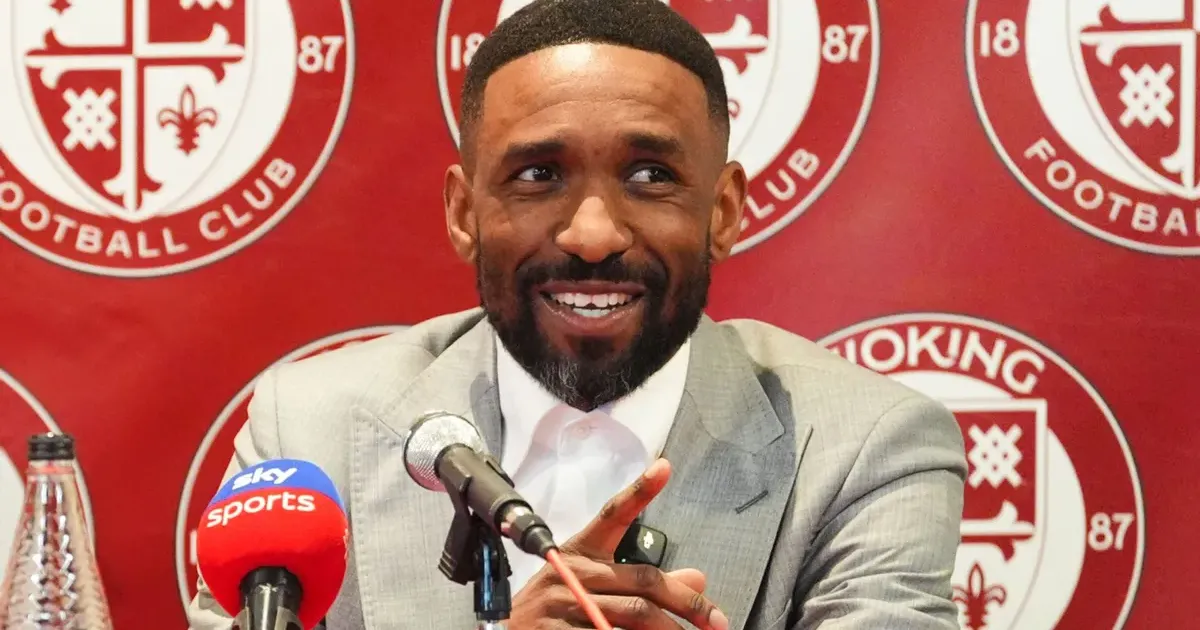
Jermain Defoe's appointment at Woking is not a soft celebrity handover. It is a difficult first managerial job in a division where name recognition lasts about as long as the first loose second ball. The former England and Tottenham striker took charge of the National League club in March 2026, replacing Neal Ardley and stepping into his first permanent senior role after coaching work with Tottenham's academy and Rangers.
The attraction is obvious. Defoe brings elite playing credibility, Premier League habits and a public profile most fifth-tier clubs cannot buy. The risk is just as clear. Woking need a manager, not a famous finisher. That means recruitment, training structure, staff management, tactical clarity and results across a long, physical season.
Woking Is an Unforgiving First Classroom
The National League is not an easy bridge between punditry and management. It is financially uneven, physically direct and full of clubs with Football League experience or Football League ambitions. Woking cannot build a promotion push on Defoe's playing record alone. The club needs a squad that can handle travel, injuries, winter pitches and tight margins.
The division makes the job a useful test. A first-time manager in a lower division has fewer layers of protection. Bad recruitment shows quickly. Weak set-piece work costs points. A dressing room can respect a playing career and still reject vague instructions. Defoe has chosen a role where practical coaching has to arrive before mythology.
The First Games Showed the Scale
Sky Sports followed Defoe's opening matches and described two contrasting draws against Eastleigh and Braintree. That was a better early signal than either instant hype or instant panic. The first weeks of a new coach rarely reveal a complete identity. They reveal habits, staff relationships, communication style and how quickly players understand the new demands.
For Defoe, the early point is translation. He scored goals through movement, timing and instinct. Coaching requires turning those instincts into repeatable instructions for players who do not see the game at the same speed. If he can explain finishing detail, pressing triggers and penalty-box movement simply, Woking gain something real. If he only carries aura, the division will strip it away.
The Representation Layer Is Real
Defoe's appointment also sits inside the long-running issue of opportunity for Black coaches in English football. Guardian coverage noted the significance of him becoming one of the very few Black managers in the top five divisions. That gives the Woking job wider meaning, though it is also an unfair burden to place on one coach.
He should not have to represent every former Black player who has struggled to find a route into management. Still, visible success matters because pathways are built partly by precedent. If Defoe succeeds, the argument for giving serious first jobs to high-level former players becomes harder to brush aside.
His Support Network Helps, But It Won't Manage Matches
Defoe has spoken about leaning on experienced voices around the game, including Harry Redknapp, Sam Allardyce and others. That kind of support can help a new manager prepare for details he has not faced alone: media pressure, recruitment calls, training rhythm and dressing-room discipline.
Advice, however, is not delegation. Woking's season will still belong to Defoe. He has to decide what kind of team he wants, what standards he enforces and which compromises he refuses. The strongest former players usually learn quickly that management is less about having answers and more about making the same answer believable every day.
The Headline Will Fade Into the Table
Woking hired both a manager and a headline. The headline helps with attention, commercial interest and perhaps a few recruitment conversations. It will not defend set pieces, win duels or manage a poor run in November. The practical test is why the appointment is interesting rather than decorative.
If Defoe builds a serious team, Woking becomes the start of a real coaching career rather than a novelty stop. If he underestimates the division, the National League will make the old lesson plain: the dugout does not care how many goals a manager scored. It cares whether his players know exactly what to do when the game turns ugly.