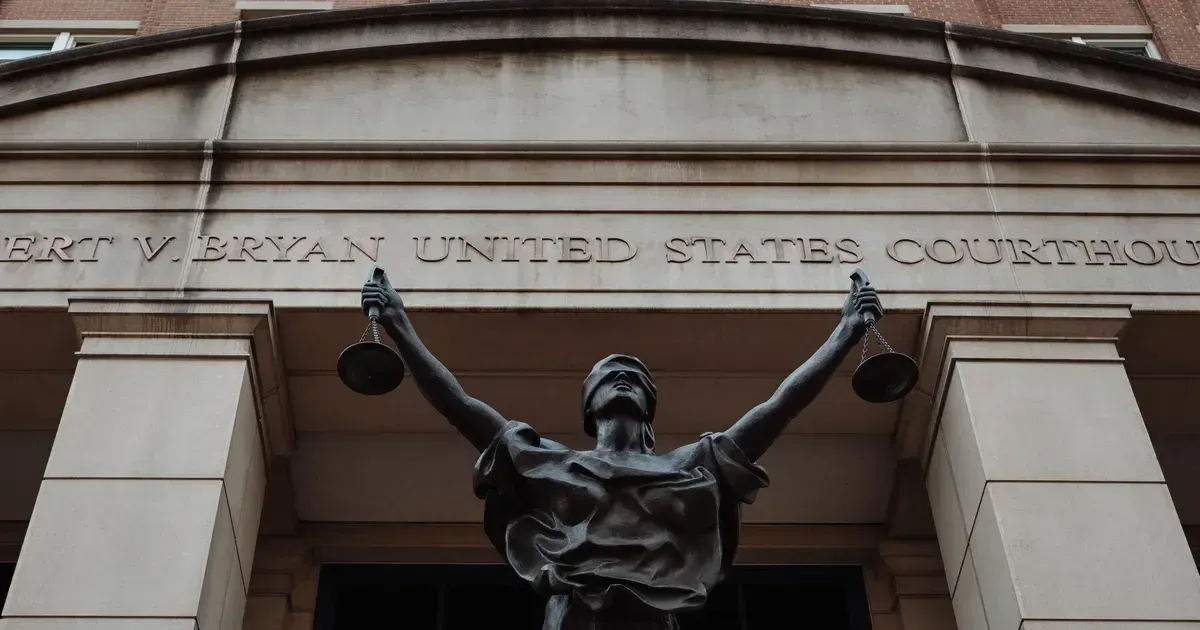
A federal judge in Virginia moved on Friday to halt the immediate deployment of a controversial $1.8 billion fund intended to compensate individuals the administration claims were targets of government persecution. Ruling on the matter on May 29, 2026, the court prevented the Justice Department from moving money in or out of the account until a full hearing can take place in June. Funding for the initiative, known as the Anti-Weaponization Fund, has been a central part of the current administration's efforts to provide restitution to supporters and officials who faced investigation by previous authorities.
Lawyers representing a January 6 prosecutor initiated the legal challenge, arguing that the creation and distribution of the money bypassed necessary legislative oversight. Court documents indicate that the judge found sufficient grounds to pause implementation while the legal merits of the suit are weighed. Officials at the Justice Department had already begun work on the infrastructure of the fund before the freeze was enacted. This pause prevents any immediate checks from being issued to claimants who had already submitted applications for relief under the program.
Critics of the program argue that the executive branch lacks the authority to unilaterally redirect such a large sum for political purposes. The judge's order in Virginia emphasized that the temporary restraining order is intended to preserve the status quo. Justice Department records show that the $1.776 billion figure was chosen for its symbolic historical resonance, though federal fiscal reports rounded the total to $1.8 billion in recent budgetary disclosures.
Legal Challenge From January 6 Prosecutors
Prosecutors involved in the Capitol riot cases led the litigation after asserting that the fund could potentially interfere with ongoing or past judicial proceedings. Their lawsuit claims that the administration attempted to use the settlement money as financial relief for individuals tied to contested events. Legal filings suggest that the plaintiffs believe the fund violates the Appropriations Clause of the Constitution. One prosecutor argued in the filing that the executive branch cannot create a multi-billion-dollar compensation scheme without a direct mandate from Congress.
The court found that the immediate transfer of these funds could harm the public interest and the separation of powers while the case proceeds.
Attorneys for the administration contend that the President holds broad authority to settle litigation and manage the distribution of settlement proceeds. Success in the upcoming June hearing will depend on whether the government can prove the fund's specific legislative or settlement-based authorization. Previous administrative actions have faced similar scrutiny, but the scale of this nearly $2 billion allocation remains a primary point of contention for legal experts. The court has scheduled oral arguments for the week of June 15 to decide if the freeze should be converted into a permanent injunction. Legislative opposition continues to mount against the administration's Anti-Weaponization Fund as the court challenge proceeds.
Funding Mechanism and IRS Settlement Background
The fund traces back to a civil lawsuit Donald Trump brought against the Internal Revenue Service regarding allegations of discriminatory auditing. The settlement of that case provided the initial capital for the anti-weaponization program. Instead of returning the funds to the general treasury, the Justice Department designated the money for the new compensation account. Financial analysts noted that the specific amount of $1,776,000,000 was a deliberate choice by the administration to frame the fund as a patriotic corrective to administrative overreach.
Proponents of the measure, including several high-ranking administration officials, argue that the fund is necessary to protect citizens from what they describe as the politicization of the legal system. They maintain that the IRS settlement provided a legitimate pool of capital that is not subject to the same congressional restrictions as traditional tax revenue. This interpretation of fiscal law is now central to the Virginia court case. Administrative law experts suggest that if the court finds the funding mechanism invalid, the entire program could be dismantled before a single payment is distributed.
Evidence presented in preliminary hearings shows that the DOJ had developed a complex rubric for determining who qualified as a victim of weaponization. Eligibility criteria reportedly included individuals who faced federal investigations, loss of professional licenses, or serious legal fees during the 2021 to 2024 period. Protests from watchdog groups increased as the list of potential recipients grew to include influential political allies of the current administration. The judge noted that the lack of transparency in the selection process was a factor in granting the temporary freeze.
The Case Tests Executive Control of Federal Funds
Federal courts now face the task of defining the boundaries between executive settlement authority and the congressional power of the purse. If the Virginia ruling is upheld on appeal, it sets a restrictive precedent for how future administrations can use civil litigation settlements to fund policy priorities without legislative approval. The specific targeting of funds for political allies creates a unique legal vulnerability under the Due Process Clause and existing anti-corruption statutes. Legal analysts expect the case to move rapidly toward the Supreme Court, given the constitutional weight of the arguments and the sheer volume of money involved.
Blocking the $1.8 billion transfer also creates a significant political obstacle for the administration ahead of the midterm election cycle. Failure to deliver promised compensation to supporters could erode trust within the president's base while providing ammunition to legislative opponents. The outcome of the June hearing will likely determine the viability of similar executive-led funding schemes across other departments. If the court finds that the IRS settlement funds were mismanaged or illegally diverted, the Justice Department may face internal audits and further litigation from congressional oversight committees. Final resolution remains several months away as both sides prepare for a protracted battle over the limits of presidential power. The ruling will also affect how agencies describe emergency funds when Congress has attached limits to their use.