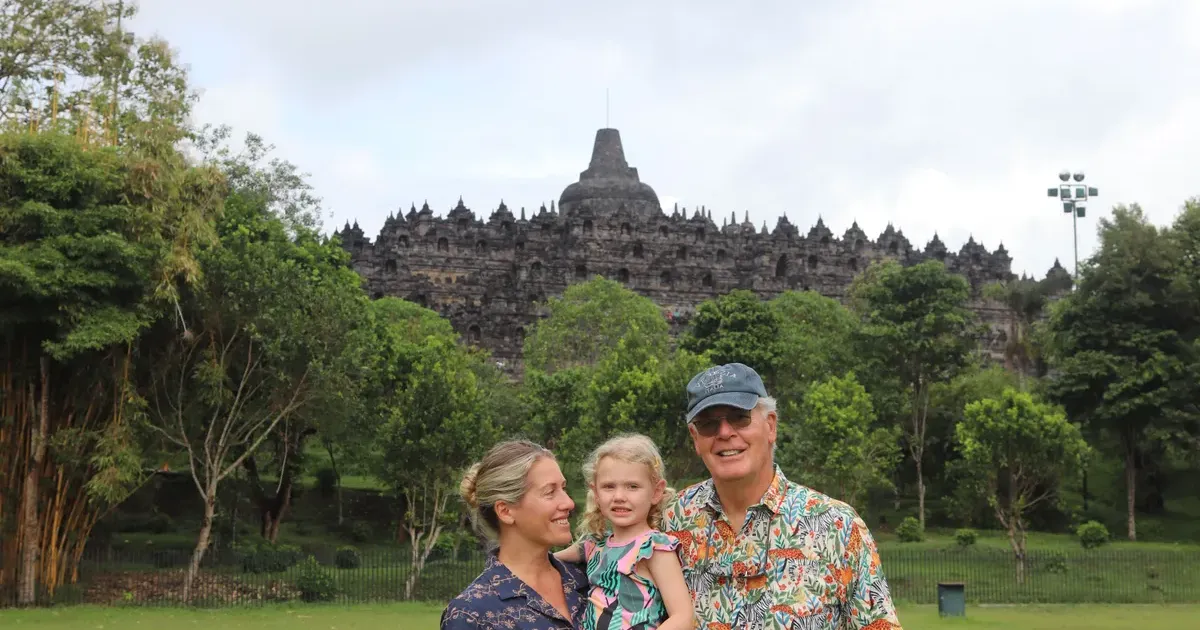
Kathryn Romeyn arrived in Indonesia to demonstrate that mobility limitations need not end international exploration for the elderly. International travel for seniors often involves sanitized cruises or sedentary resort stays, but her journey sought to maintain the spirit of adventure. Statistics from the World Bank indicate that the global population over age sixty will double by 2050, reaching 2.1 billion people. Success in these complex trips now depends on detailed planning and the willingness to pivot when physical barriers arise. By March 31, 2026, Romeyn’s trip had become a practical case study in redesigning travel around an aging parent.
Her father faced new difficulties with walking and endurance that required a complete overhaul of their typical itinerary. High-end tourism operators are increasingly seeing requests for bespoke accessibility that avoids the clinical feel of traditional medical tourism. Travelers are demanding experiences that prioritize dignity and adventure over mere safety protocols.
Indonesia presents unique challenges for those with limited mobility because of its rugged topography and developing infrastructure. Bali and the surrounding islands contain steep volcanic slopes, narrow stone pathways, and erratic sidewalks. Romeyn opted for a strategy that involved more private transport and fewer multi-stop walking tours. Private villas provided a controlled environment where her father could rest without the logistical strain of navigating large hotel lobbies. Staff at these luxury properties often provided personalized assistance that exceeded the capabilities of automated systems found in Western chains. Local hospitality culture in Southeast Asia tends to emphasize manual care for the elderly. Most guests find this human-centric approach more effective than searching for ramps that may not exist.
Logistical Barriers within the Indonesian Archipelago
Movement between the islands required her to coordinate private boat charters and ground transfers with surgical precision. Traditional ferries often lack boarding ramps, requiring passengers to step across gaps or climb narrow ladders. Romeyn bypassed these hurdles by hiring crews familiar with assisting guests who have limited range of motion. Speedboats were selected for their ability to pull directly onto sandy shores, though even these required physical support for her father. The cost of such private arrangements can exceed $15,000 for a ten-day excursion in remote regions.
Budgeting for extra hands to carry luggage or assist with stability is now a standard line item for luxury senior travel. Reliability of transport is the primary factor in determining the success of the trip. As luxury tourism operators continue to expand, they are increasingly shaping the future of high-end travel across the region.
Indonesia demands physical resilience from even the youngest visitors.
Accessibility in the region, however, is not standardized across the various provinces. Jakarta offers some modern infrastructure, but the allure of the outer islands like Sumba or Flores brings travelers back to primitive conditions. Planning for a mobility-impaired parent in these zones involves pre-scouting every bathroom and staircase. Romeyn found that many high-end eco-lodges are built on stilts or hillsides to maximize views, which creates an immediate barrier for those who cannot climb. Architectural beauty often conflicts with the practical needs of an aging demographic. Solutions often involve the use of carrying chairs or temporary ramps installed by the property owners. Most of these accommodations are made only upon specific request.
Slowing down doesn't mean stopping, according to Kathryn Romeyn, as she navigated the complex geography of the Indonesian archipelago.
Global Trends in Senior Adventure Tourism
Travelers over the age of sixty-five are currently responsible for nearly 20% of global tourism spending. This demographic is no longer satisfied with watching the world through a bus window. They are seeking immersive experiences in places like the Indonesian jungle or the Himalayan foothills. Specialized travel agencies are cropping up to serve this specific market by providing physical therapists who travel alongside the family. These professionals manage medication schedules and daily stretching routines to prevent travel-related stiffness. Romeyn relied on local expertise to gauge the difficulty of trails before attempting them with her father. Detailed reconnaissance prevented unnecessary physical strain that could have ended the trip early. Expert guides checked tide charts to ensure the easiest possible boat entries.
Medical insurance for such trips has become a complex sub-sector of the finance industry. Policies for seniors traveling to remote areas often require premiums that are 300% higher than those for younger travelers. These plans must cover emergency medevac services, which can cost upwards of $100,000 in the event of a fall or cardiac episode. Romeyn had to weigh the risks of remote islands against the availability of specialized hospitals in Singapore or Denpasar. Safety is not a static condition but a series of calculated compromises. Her father's comfort remained the central metric for every decision made on the ground. The presence of a dedicated guide reduced much of the inherent risk.
Adaptive Strategies for Mobility Challenged Travelers
Planning also involves psychological preparation for the shift in roles between parent and child. Romeyn transitioned into a caregiving role that required constant vigilance and patience. Instead of a frantic pace through ten temples in one day, the duo focused on one high-quality interaction. This adjustment allowed for a deeper connection with the local environment and the people within it. Slower travel actually revealed details that are often missed by those rushing to the next photo opportunity. Her father engaged with local artisans for hours while sitting in shaded pavilions. The lack of constant movement enabled more meaningful cultural exchange. Speed is the enemy of observation for the aging traveler.
Technological aids have improved but cannot yet replace the need for human intervention in rugged terrain. Foldable, lightweight wheelchairs made of carbon fiber are popular, yet they still struggle with the deep sand of Balinese beaches. Romeyn navigated these moments by relying on the strength of the local guides who were eager to help. Beyond the physical needs, the emotional wellbeing of the senior traveler is paramount. Feeling like a burden can discourage elderly parents from participating in future trips. Romeyn made sure to frame the slower pace as a shared benefit rather than a necessary concession. Her father regained a sense of agency by choosing which activities to skip. The trip concluded without any major medical incidents.
Accessible Travel Planning
Corporate travel planners frequently overlook the logistical nightmare of the aging demographic. While the industry pays lip service to inclusivity, the reality on the ground in emerging markets is a chaotic mess of improvised solutions. Western travelers like Romeyn are essentially forced to bribe their way into accessibility through high-priced private charters and excessive tipping for manual labor. This creates a two-tier system where only the wealthy can afford to age with dignity while exploring the planet. The travel industrial complex is reactionary, only fixing pathways when the threat of a lawsuit or a lost booking becomes imminent. Waiting for local governments to mandate ramps in the middle of a rainforest is a fool's errand.
Wealthy seniors are the only reason many of these remote luxury outposts remain profitable. If these destinations do not aggressively invest in structural accessibility, they will find themselves obsolete as the baby boomer generation loses its collective knees. The future of travel is not faster or more remote, but more accommodating. Those who fail to see the profit in a wheelchair ramp are blinded by an outdated obsession with youthful aesthetics. We are looking at a market that controls the majority of disposable income in the West. It is time to stop treating accessibility as a charitable favor and start treating it as a core business requirement. Adapt or go extinct.