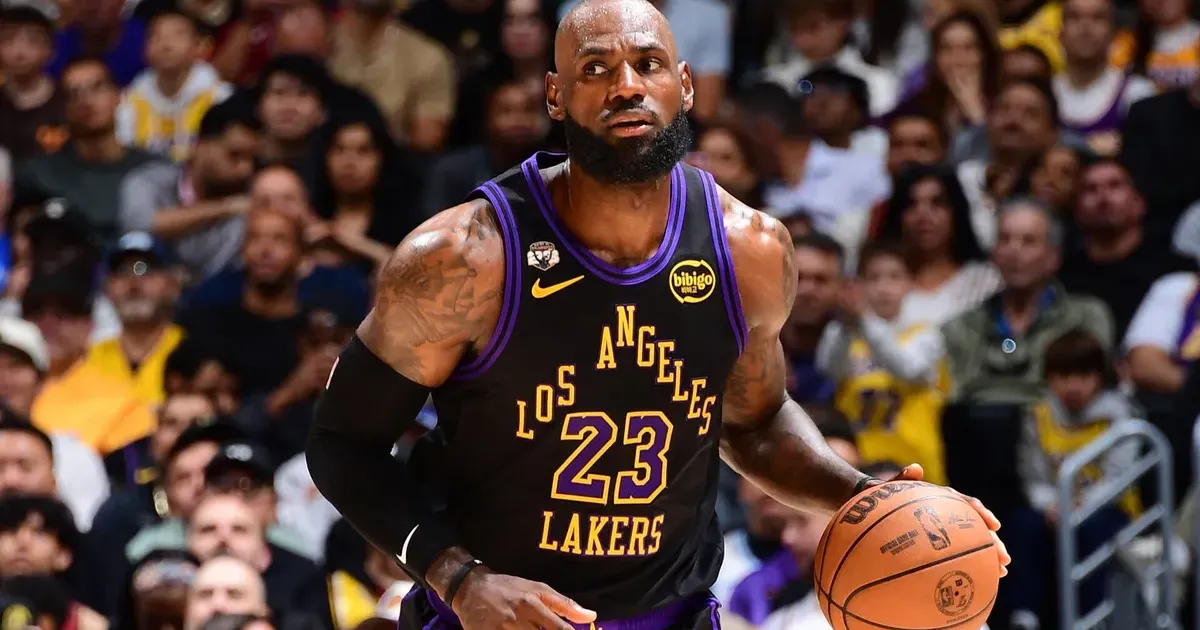
LeBron James' 1,229th combined regular-season and playoff win looked in March like another longevity milestone inside a still-active Lakers chapter. In July, it reads differently. James has since told the Lakers he will play elsewhere in 2026-27, turning the record-setting night against Cleveland into one of the final symbolic markers of his eight-year Los Angeles run.
The facts of the game were clean. The Lakers beat the Cavaliers 127-113 at Crypto.com Arena, Luka Doncic scored 42 points with 12 assists, and James passed Kareem Abdul-Jabbar for the most combined wins in NBA history. James finished with 14 points, which was exactly the kind of understated line that made the night more revealing. The record belonged to him. The game already belonged to Luka.
The Record Measures More Than Staying Around
Combined wins are not the same as championships, MVPs or peak dominance. They measure a different kind of greatness: how long a player remains good enough, trusted enough and central enough to keep appearing in winning games across regular seasons and playoffs. The longevity record therefore fits LeBron's career neatly.
His case has always been built on accumulation that still carries force. Points, minutes, playoff games, All-NBA seasons, finals trips and now wins are not empty totals. They are evidence of a player who kept surviving roster changes, league shifts, injuries, age and expectation. Nobody reaches 1,229 wins by merely being present.
Cleveland Made the Milestone Cleaner
The opponent gave the record its emotional shape. Cleveland is where James entered the league as a teenager, carried impossible local expectation, left, returned and delivered the 2016 championship that still defines his Cavaliers legacy. Passing Kareem against that franchise gave the night a symmetry a random opponent could not have supplied.
There was also a sting in it. Cleveland had to watch its former icon add another historic line in a Lakers uniform. That has always been part of LeBron's story: every achievement belongs to more than one city, and every city can feel both ownership and distance.
Doncic Showed the Lakers' Present
The basketball story underneath the ceremony was Luka Doncic's control of the game. His 42 points and 12 assists powered a win that helped the Lakers clinch a playoff place and the Pacific Division. That was not a side note. It showed where the franchise's next identity was already forming.
James could still steady possessions, punish mistakes and bend attention. He no longer had to be the whole engine. By March, the Lakers' offense was increasingly organized around Doncic's shot creation and passing pressure. By July, that transition became official in another way: the franchise was building forward without LeBron.
The Lakers Chapter Was Brilliant and Uneven
James' Lakers tenure will not be remembered as a simple second dynasty. It included the 2020 championship, the father-son milestone with Bronny, record after record and stretches of extraordinary late-career play. It also included roster churn, injuries, the failed Russell Westbrook construction, uneven playoff results and seasons that felt less coherent than his individual production.
The mixed Lakers record is why the wins milestone matters. It does not solve the debate over whether the Lakers maximized LeBron's final prime years. It does not erase the awkwardness of the ending. But it does capture what stayed true through the noise: when James was on the floor, even at 41, he was still part of winning NBA basketball.
Longevity Is Its Own Kind of Pressure
The usual criticism of records like this is that they reward duration more than peak. That is fair only up to a point. Duration at LeBron's level is not passive. It requires conditioning, reinvention, basketball intelligence and the willingness to accept roles that would have felt too small for a younger version of the same player.
The Cavaliers game made that visible. James was not the most explosive player on the floor. He was not the primary offensive force. He was still useful, connected and historically consequential. That is a strange form of pressure: the standard becomes so high that being excellent for two decades can be made to sound ordinary.
The Record Now Looks Like a Handoff
The night was not only about LeBron passing Kareem. It was about the Lakers passing from LeBron's era into Doncic's. The box score said both things at once: James took the history line, Doncic took the game.
The handoff is why the milestone has aged quickly into a closing image. LeBron left Los Angeles with a championship, a stack of records and an unresolved argument about what the franchise should have done around him. The 1,229th win will sit inside that argument. It showed the past still standing, the future already scoring 42, and a Lakers era ending before everyone in the building knew it had begun to close.