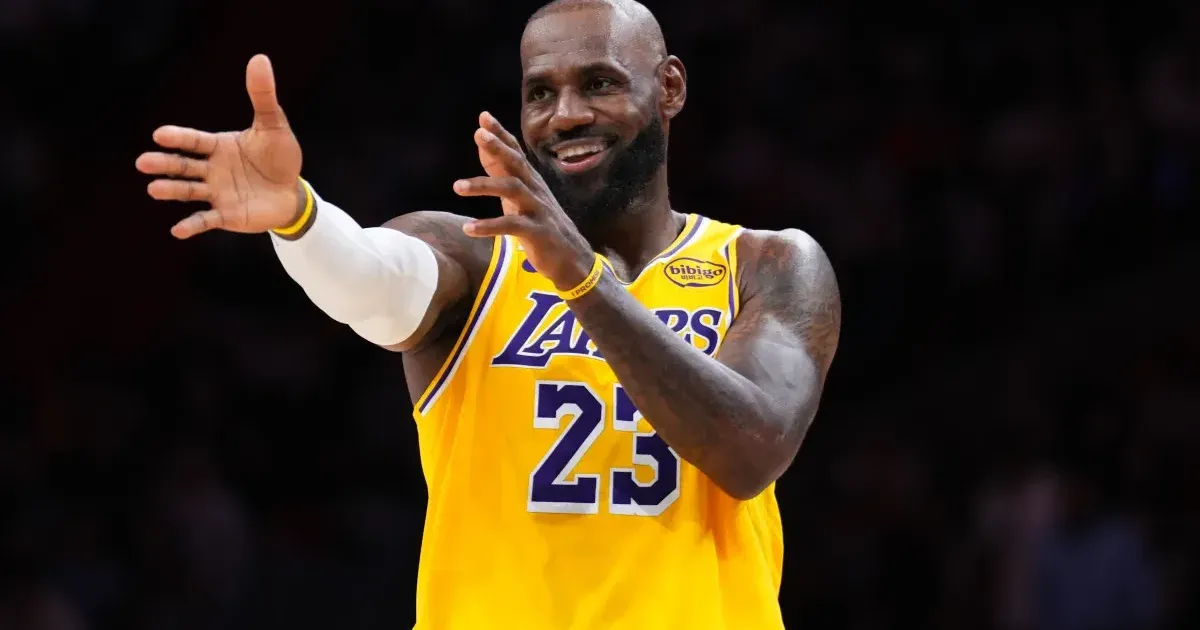
Luka Doncic's 15,000th regular-season point looked like a March milestone when it happened. The Lakers beat Cleveland 127-113, Doncic delivered 42 points and 12 assists, and LeBron James added his own historic note by passing Kareem Abdul-Jabbar for the combined regular-season and playoff wins record. At the time, it was easy to file the night under star power.
By July, the game reads differently. LeBron has told the Lakers they can move forward without him because he plans to play elsewhere in 2026-27. Los Angeles is now building more openly around Doncic, younger legs and a roster designed to make his style sustainable. That turns the Cleveland game from a shared celebration into an early signal. The Lakers' next era was already visible before the old one had officially closed.
The Milestone Was About Pace
Fifteen thousand points before age 28 is not a ceremonial number. It reflects usage, durability, shot creation and the burden of carrying an offense for years. Doncic reached that range in the company of the fastest modern scorers, but his path is not shaped like a pure scorer's sprint. He controls possessions as much with passing angles and tempo as with step-backs and post work.
Cleveland showed the full shape of his control. The 42 points were the headline. The 12 assists explained the grip he had on the game. Doncic was not only finishing possessions; he was choosing matchups, forcing help, waiting out rotations and deciding which teammate would get the cleanest look. A player who scores that fast while also organizing the floor gives a franchise more than points. He gives it an offensive identity.
Cleveland Saw the New Center
The Cavaliers game showed why the Lakers' center of gravity has moved. Doncic forced switches, punished smaller defenders, pulled slower bigs into space and made double-teams expensive. Cleveland could take away one read and still be late to the next one. That is the difference between a scorer who needs a system and a star who becomes the system.
LeBron still mattered that night. His timing, passing and feel were not decorative, and the wins record carried the weight of two decades. But the balance had shifted. LeBron supplied selective force and historic gravity. Doncic supplied the nightly pressure. The box score did not announce the end of the partnership, but it did show which player the Lakers could build around without hesitation.
LeBron's Exit Changes the Memory
Once LeBron's expected departure became public, the 15,000-point game gained a different place in the season. It was no longer only a chapter in a two-star experiment. It became evidence that the Lakers already had their next primary engine in place. The shift matters because Los Angeles is not a patient market. It does not treat transition as a quiet administrative phase.
The shift also clarifies the burden on Doncic. He no longer inherits the offense only for stretches. He inherits the franchise's daily temperature. The Lakers can celebrate his scoring pace, but they also have to build the defensive, athletic and frontcourt support that keeps that pace from becoming exhaustion. A superstar can organize a game. He cannot cover every roster flaw for 82 games and a playoff run.
Roster Influence Comes With Risk
Doncic's role now extends beyond the box score. Lakers offseason reporting has placed him in regular communication with Rob Pelinka, JJ Redick and key teammates as the club reshapes itself around a younger core. That is normal for a player of his stature. It can also become dangerous if the organization treats star preference as a substitute for roster discipline.
Doncic needs rim protection, shooting, transition speed and defenders who can absorb some of the physical cost of his offensive workload. He also needs teammates who can make decisions when traps force the ball out of his hands. Giving him influence makes sense. Giving him a roster built only to satisfy the most visible need of the week would repeat an old Lakers habit.
The Record Chase Is Secondary
Doncic's 15,000 points will naturally invite long-range scoring-record talk. That is fair, but it is not the main issue for the Lakers. Scoring records require health, conditioning, adaptation and enough team relevance to keep late-career games meaningful. The next decade will decide whether this pace remains historic or becomes a brilliant early arc slowed by wear.
The immediate question is more practical. Can Doncic turn individual control into organizational control without LeBron beside him? The Cleveland night captured the franchise between eras: LeBron added a record that belonged to the past and present, while Doncic reached a number that pointed forward. The Lakers can honor both, but the future is no longer balanced between them. It belongs to the player whose 15,000th point looked, in real time, like a milestone and now looks like a handoff.