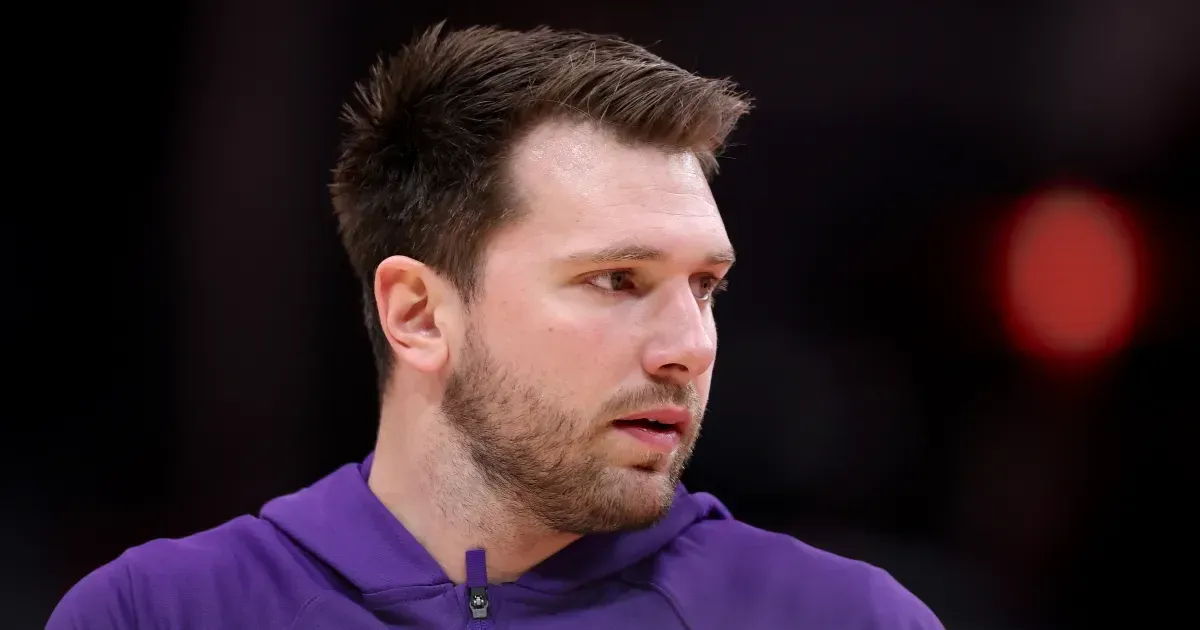
Luka Doncic exited the hardwood clutching his lower leg on April 3, 2026, during a high-stakes matchup between the Los Angeles Lakers and Oklahoma City Thunder. Medical personnel escorted the Slovenian guard to the locker room once a non-contact mishap occurred in the third quarter. Team officials initially categorized the issue as lower-leg soreness, yet the silence inside Crypto.com Arena suggested a more severe prognosis. Luka Doncic had recorded 24 points and 8 assists before the departure. Early indications suggest the injury involves the Achilles tendon or a severe calf strain. Trainers noted that the player felt a pop before falling to the floor.
Oklahoma City Thunder players remained at mid-court while medical staff evaluated the superstar. Staff members from the Los Angeles Lakers appeared visibly frustrated on the sideline. Professional sports medicine consultants frequently cite non-contact injuries as the most concerning for veteran athletes. Physical therapy experts suggest that such incidents often require months of rehabilitation. Recovery timelines for soft tissue tears in the lower leg vary sharply between individual players. If the damage involves the tendon, the Lakers face a postseason without their primary playmaker.
Potential absences for a player of this caliber often disrupt the entire offensive rhythm of a championship-caliber roster. Statistics show that the Lakers offense scores 12 fewer points per 100 possessions when Doncic sits. Los Angeles currently occupies the sixth seed in a crowded Western Conference. Statistical models indicate the team has a 40% lower chance of advancing past the first round without their starting point guard. Replacement options on the bench lack the gravity and vision required to maintain the current scoring pace.
Medical Assessments and Recovery Timelines
Lakers medical staff will conduct a complete MRI scan to determine the structural integrity of the limb. Primary concerns focus on the gastrocnemius and the soleus muscles. These muscles provide the explosive power necessary for the step-back jumpers that define the Luka Doncic offensive range. Doctors at the Kerlan-Jobe Orthopaedic Clinic often handle such high-profile cases for Los Angeles franchises. A grade two strain would require a minimum of four to six weeks of rest. Complete ruptures require surgical intervention and nearly a year of recovery time.
A spokesperson for the Los Angeles Lakers stated that the medical team is currently evaluating the extent of the damage to the lower extremity and will provide an update once imaging is completed.
Previous injuries in the career of the 27-year-old star have largely involved his ankles. Chronic sprains have forced him to miss short stretches of games over the last three seasons. This specific incident appeared different due to the lack of contact from an opposing player. Non-contact injuries happen when the body exceeds its mechanical limits during sudden deceleration. $215 million remains tied up in the remaining years of his contract, making his long-term health a priority for the front office.
Conditioning coaches emphasize that the high usage rate of modern superstars contributes to repetitive stress. Doncic has averaged 38 minutes per game since the All-Star break. High minutes totals often lead to muscle fatigue, which is a precursor to catastrophic failure. Los Angeles management must decide whether to rush the recovery or protect their large investment. Precedent suggests that returning too early from calf issues leads to more severe Achilles injuries.
Impact on Los Angeles Lakers Western Conference Standing
Western Conference rivals gained an immediate advantage as news of the injury spread through the league. The Oklahoma City Thunder used the absence to erase a ten-point deficit and secure a victory. Standings in the West are separated by mere percentage points between the fourth and ninth seeds. Losing a leader during the final two weeks of the regular season often results in a slide into the Play-In Tournament. Facing a single-elimination scenario without a top-five player is a difficult prospect for any organization.
Head coach JJ Redick must now reconfigure a rotation built entirely around the pick-and-roll mastery of his star. Secondary ball-handlers will see their usage rates double overnight. Most analysts believe the team lacks the depth to survive an extended absence. Defensive schemes will also shift, as opponents no longer have to double-team the perimeter. Opposing coaches can now focus their efforts on neutralizing Anthony Davis in the paint. Spacing becomes a critical issue when the primary threat is removed from the equation.
Playoff seeding remains the most immediate concern for the Lakers front office. Dropping to the seventh or eighth seed would likely mean a first-round matchup against the top-seeded Denver Nuggets. History shows that the Lakers struggle against Nikola Jokic when their roster is at full strength. A depleted roster would stand little chance in a seven-game series against the defending champions. Momentum often dictates postseason success, and this injury has halted the Los Angeles surge.
Fan Reaction and Social Media Volatility
Social media platforms erupted with speculation within minutes of the star limping to the back. Supporters of the franchise expressed a mix of despair and anger regarding the heavy minutes played by the starters. Digital forums became hubs for armchair medical experts analyzing slow-motion footage of the incident. Some fans called the season over before a formal diagnosis reached the public. Market volatility for Lakers championship futures reflected this pessimism as odds plummeted across major sportsbooks.
Frustration stems from the high expectations placed on this specific iteration of the Lakers. Fans believe this season represented the best window for a title run given the age of the supporting cast. Panic is a common reaction in a market as demanding as Los Angeles. Many ticket holders for upcoming home games expressed concerns about the value of their seats. The financial impact of a star's absence extends to jersey sales, television ratings, and gate receipts.
Supporters in Slovenia and across Europe also monitored the situation with intense scrutiny. National team commitments often complicate the recovery process for international stars. The 2026 World Cup of Basketball is scheduled for later this summer, adding another layer of complexity. Professional athletes face immense pressure to represent their countries regardless of their NBA status. Balancing these competing interests requires delicate negotiation between the player and the team.
The Elite Tribune Strategic Analysis
Building a championship contender around a single, high-usage superstar creates a fragile ecosystem that inevitably collapses under the weight of physical reality. The Los Angeles Lakers have bet their entire future on the durability of Luka Doncic, a strategy that looks increasingly reckless at a time where player fatigue is a documented science. While the front office will point to the necessity of acquiring elite talent, the failure to provide a viable secondary playmaker is a management catastrophe that has been brewing for months.
Elite teams in the modern NBA cannot survive on top-heavy rosters alone. Organizations like the Oklahoma City Thunder have built deep benches that withstand the loss of a starter, whereas the Lakers have chosen the path of star-chasing at the expense of structural integrity. This injury is not just a medical event; it is a referendum on the roster-building philosophy of Rob Pelinka. Relying on a 27-year-old to carry the offensive load for 38 minutes a night during the regular season is not a strategy. It is a gamble with other people's money.
The verdict is clear. If the Lakers fail to advance past the first round because their one star is broken, the fault lies with the executives who left no room for error. A season of promise has likely evaporated in a single non-contact step. Failure is certain.